Podcast
Lex Fridman Podcast
Browse Lex Fridman episodes by chapter, guest, and topic so you can jump to the part you want first.
Episodes available
490
Episode pages currently available to browse.
With transcript
111
Episodes where chapter pages can be built from the transcript.
Guests
444
People you can follow across multiple appearances.
Chapters
6997
Time-stamped moments you can open directly.
Where to start
Start with the episodes that already have the strongest archive signals, then jump into the best moment from each one.
Host
The person behind this archive and the conversations collected here.
Lex Fridman
AI researcher, interviewer, and host of Lex Fridman Podcast.
Lex Fridman is an AI researcher and interviewer known for long-form conversations across science, technology, politics, and culture.
Recurring guests
People who appear most often across this podcast archive.
Recurring topics
Themes that come up again and again in this show.
Episode timeline
Scan the archive in order, then open any episode to jump into its chapters.
Best moment
Introduction
Now, meanwhile, as far as the outside world is concerned, you've disappeared off the face of the earth, but you were actually working on a game. The following is a conversation with Jeff Kaplan, a legendary game designer of World of Warcraft and Overwatch, which are two of the biggest, most influential games ever made. He is genuinely one of the most amazing human beings I've ever met. In the many conversations I was fortunate enough to have with him, including while playing video games, he was always kind, thoughtful, hilarious, and still and forever a legit gamer, through and through. Of course, he's always quick to celebrate the incredible teams of creative minds he has gotten a chance to work with over the years, and they are truly incredible. Blizzard has created some of the greatest games ever made, games that to me personally have brought me thousands of hours of fun, meaning, and happiness, from Warcraft, to StarCraft, to Diablo, WoW, Overwatch and more. So for that, a big thank you to Jeff, to the entire Blizzard team, and to every creative mind in the video game industry, giving their heart and soul to build video game worlds that we fans get a chance to enjoy. This was a super fun, inspiring, whirlwind conversation, pun intended, with one of the most beloved gamers and game designers ever. Full of memes, lulz, wisdom, emotional rollercoaster moments, and of course, Blizzard video game lore.
March 11, 2026 / Episode #493
Jeff Kaplan: World of Warcraft, Overwatch, Blizzard, and Future of Gaming
Jeff Kaplan is a legendary Blizzard game designer of World of Warcraft and Overwatch, now preparing to launch a new game, The Legend of California, from his new studio Kintsugiyama - available to wishlist on Steam today, with alpha later in March. Thank you for listening ❤ Check out our sponsors: https://lexfridman.com/sponsors/ep493-sc See below for timestamps, and to give feedback, submit questions, contact Lex, etc.
Best moment
Introduction
The following is a conversation with Rick Beato, legendary music educator, interviewer, producer, songwriter, and a true multi-instrument musician, playing guitar, bass, cello, and piano. Rick, with his incredible YouTube channel, celebrates great musicians and musical ideas, and helps millions of people, including me, fall in love with great music all over again. This is Lex Fridman Podcast. To support it, please check out our sponsors in the description, where you can also find links to contact me, ask questions, give feedback, and so on. And now, dear friends, here's Rick Beato. You had, I think, an incredibly fun and diverse beginning to your music journey.
March 1, 2026 / Episode #492
Rick Beato: Greatest Guitarists of All Time, History & Future of Music
Rick Beato is a music educator, interviewer, producer, songwriter, and a true multi-instrument musician, playing guitar, bass, cello & piano. His incredible YouTube channel celebrates great musicians & musical ideas, and helps millions of people fall in love with great music all over again. Thank you for listening ❤ Check out our sponsors: https://lexfridman.com/sponsors/ep492-sc See below for timestamps, transcript, and to give feedback, submit questions, contact Lex, etc.
Best moment
Episode highlight
I watched my agent happily click the "I'm not a robot" button. I made the agent very aware. Like, it knows what his source code is. It understands th- how it sits and runs in its own harness. It knows where documentation is. It knows which model it runs. It understands its own system that made it very easy for an agent to... Oh, you don't like anything? You just prompted it to existence, and then the agent would just modify its own software. People talk about self-modifying software, I just built it. I actually think wipe coding is a slur. You prefer agentic engineering?
February 12, 2026 / Episode #491
OpenClaw: The Viral AI Agent that Broke the Internet - Peter Steinberger
Peter Steinberger is the creator of OpenClaw, an open-source AI agent framework that's the fastest-growing project in GitHub history. Thank you for listening ❤ Check out our sponsors: https://lexfridman.com/sponsors/ep491-sc See below for timestamps, transcript, and to give feedback, submit questions, contact Lex, etc.
Best moment
Introduction
The following is a conversation all about the state of the art in artificial intelligence, including some of the exciting technical breakthroughs and developments in AI that happened over the past year, and some of the interesting things we think might happen this upcoming year. At times, it does get super technical, but we do try to make sure that it remains accessible to folks outside the field without ever dumbing it down. It is a great honor and pleasure to be able to do this kind of episode with two of my favorite people in the AI community, Sebastian Raschka and Nathan Lambert. They are both widely respected machine learning researchers and engineers who also happen to be great communicators, educators, writers, and X posters. Sebastian is the author of two books I highly recommend for beginners and experts alike. First is Build a Large Language Model from Scratch, and Build a Reasoning Model from Scratch. I truly believe in the machine learning and computer science world, the best way to learn and understand something is to build it yourself from scratch. Nathan is the post-training lead at the Allen Institute for AI, and author of the definitive book on reinforcement learning from human feedback. Both of them have great X accounts, great Substacks. Sebastian has courses on YouTube, Nathan has a podcast. And everyone should absolutely follow all of those. This is the Lex Fridman podcast.
February 1, 2026 / Episode #490
State of AI in 2026: LLMs, Coding, Scaling Laws, China, Agents, GPUs, AGI
Nathan Lambert and Sebastian Raschka are machine learning researchers, engineers, and educators. Nathan is the post-training lead at the Allen Institute for AI (Ai2) and the author of The RLHF Book. Sebastian Raschka is the author of Build a Large Language Model (From Scratch) and Build a Reasoning Model (From Scratch). Thank you for listening ❤ Check out our sponsors: https://lexfridman.com/sponsors/ep490-sc See below for timestamps, transcript, and to give feedback, submit questions, contact Lex, etc.
Best moment
Episode highlight
... were standing there. Everyone is waiting, because at any moment an arrow could just fly through your neck, and there's people holding shotguns. And the anthropologist, this little guy, is standing there in the front, and he's going, "Wamole." He's going, "Brothers." And then it happened. Then you start hearing people screaming, "Mashco! Mashco!" And people are screaming and women are lifting children and running into the huts and the dogs and chickens are going nuts and— So fear.
January 13, 2026 / Episode #489
Paul Rosolie: Uncontacted Tribes in the Amazon Jungle
Paul Rosolie is a naturalist, explorer, author of a new book titled Junglekeeper, and is someone who has dedicated his life to protecting the Amazon rainforest. Thank you for listening ❤ Check out our sponsors: https://lexfridman.com/sponsors/ep489-sc See below for timestamps, transcript, and to give feedback, submit questions, contact Lex, etc.
Best moment
Introduction
The following is a conversation with Joel David Hamkins, a mathematician and philosopher specializing in set theory, the foundation of mathematics, and the nature of infinity. He is the number one highest rated user on MathOverflow, which I think is a legendary accomplishment. MathOverflow, by the way, is like StackOverflow but for research mathematicians. He is also the author of several books, including Proof in The Art of Mathematics and Lectures on the Philosophy of Mathematics. And he has a great blog, infinitelymore.xyz. This is a super technical and super fun conversation about the foundation of modern mathematics and some mind-bending ideas about infinity, nature of reality, truth, and the mathematical paradoxes that challenged some of the greatest minds of the 20th century. I have been hiding from the world a bit, reading, thinking, writing, soul-searching, as we all do every once in a while. But mostly, just deeply focused on work and preparing mentally for some challenging travel I plan to take on in the new year. Through all of it, a recurring thought comes to me, how damn lucky I am to be alive and to get to experience so much love from folks across the world. I want to take this moment to say thank you from the bottom of my heart for everything, for your support, for the many amazing conversations I've had with people across the world. I got a little bit of hate and a whole lot of love, and I wouldn't have it any other way. I'm grateful for all of it. This is the Lex Fridman Podcast.
December 31, 2025 / Episode #488
Infinity, Paradoxes that Broke Mathematics, Gödel Incompleteness & the Multiverse - Joel David Hamkins
Joel David Hamkins is a mathematician and philosopher specializing in set theory, the foundations of mathematics, and the nature of infinity, and he's the #1 highest-rated user on MathOverflow. He is also the author of several books, including Proof and the Art of Mathematics and Lectures on the Philosophy of Mathematics. And he has a great blog called Infinitely More. Thank you for listening ❤ Check out our sponsors: https://lexfridman.com/sponsors/ep488-sc See below for timestamps, transcript, and to give feedback, submit questions, contact Lex, etc.
Best moment
Introduction
The following is a conversation with Irving Finkel, a scholar of ancient languages, curator at the British Museum for over 45 years, and a much-admired and respected world expert on cuneiform script. More generally, he's an expert on ancient languages of Sumerian, Akkadian, and Babylonian, as well as ancient board games and Mesopotamia magic, medicine, literature, and culture. I should also mention that both on and off the mic, Irving was a super kind and fun person to talk to, with an infectious enthusiasm for ancient history that, of course, I already love but fell in love with even more. This is the Lex Fridman Podcast. To support it, please check out our sponsors in the description, or you can also find links to contact me, ask questions, get feedback, and so on.
December 12, 2025 / Episode #487
Irving Finkel: Deciphering Secrets of Ancient Civilizations & Flood Myths
Irving Finkel is a scholar of ancient languages and a longtime curator at the British Museum, renowned for his expertise in Mesopotamian history and cuneiform writing. He specializes in reading and interpreting cuneiform inscriptions, including tablets from Sumerian, Akkadian, Babylonian, and Assyrian contexts. He became widely known for studying a tablet with a Mesopotamian flood story that predates the biblical Noah narrative, which he presented in his book "The Ark Before Noah" and in a documentary that involved building a circular ark based on the tablet's technical instructions. Thank you for listening ❤ Check out our sponsors: https://lexfridman.com/sponsors/ep487-sc See below for timestamps, transcript, and to give feedback, submit questions, contact Lex, etc.
Best moment
Introduction
The following is a conversation with Michael Levin, his second time on the podcast. He is one of the most fascinating and brilliant biologists and scientists I've ever had the pleasure of speaking with. He and his labs at Tufts University study and build biological systems that help us understand the nature of intelligence, agency, memory, consciousness, and life in all of its forms here on Earth and beyond. This is the Lex Fridman Podcast. To support it, please check out our sponsors in the description, where you can also find links to contact me, ask questions, give feedback, and so on. And now, dear friends, here's Michael Levin.
November 30, 2025 / Episode #486
Michael Levin: Hidden Reality of Alien Intelligence & Biological Life
Michael Levin is a biologist at Tufts University working on novel ways to understand and control complex pattern formation in biological systems. Thank you for listening ❤ Check out our sponsors: https://lexfridman.com/sponsors/ep486-sc See below for timestamps, transcript, and to give feedback, submit questions, contact Lex, etc.
Best moment
Introduction
The following is a conversation with David Kirtley, a nuclear engineer, expert on nuclear fusion, and the CEO of Helion Energy, a company working on building nuclear fusion reactors and have made incredible progress in a short period of time that make it seem possible, like we could actually get there as a civilization. This is exciting because nuclear fusion, if achieved commercially, will solve most of our energy needs in a clean, safe way, providing virtually unlimited clean electricity. The problem is that fusion is incredibly difficult to achieve. You need to heat hydrogen to over 100 million degrees Celsius and contain it long enough for atoms to fuse. That's why the joke in the past has been that fusion is 30 years away, and always will be. Just in case you're not familiar, let me clarify the difference between nuclear fusion and nuclear fission. By the way, I believe according to the excellent Sample Size subreddit post by pmgoodbeer on this, the preferred pronunciation of the latter in the U.S. is nuclear fission, like vision. And in the U.K. and other countries is nuclear fission, like mission. I prefer the nuclear fission pronunciation because America. So today's nuclear power plants use nuclear fission. They split apart heavy uranium atoms to release energy. Fusion does the opposite. It combines light hydrogen atoms together, the same reaction that powers the sun and the stars. The result is that it's clean fuel from water, no long-lived radioactive waste, and inherently safe because a fusion reactor can't melt down.
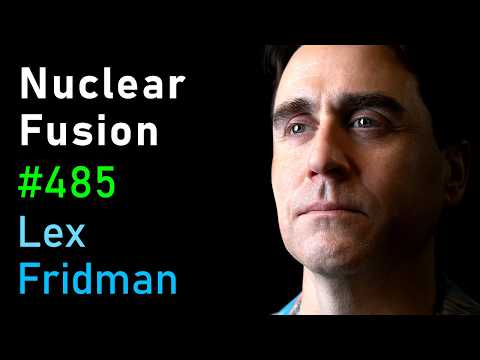
November 17, 2025 / Episode #485
David Kirtley: Nuclear Fusion, Plasma Physics, and the Future of Energy
David Kirtley is a nuclear fusion engineer and CEO of Helion Energy, a company working on building the world's first commercial fusion power plant by 2028. Thank you for listening ❤ Check out our sponsors: https://lexfridman.com/sponsors/ep485-sc See below for timestamps, transcript, and to give feedback, submit questions, contact Lex, etc.
Best moment
Episode highlight
You said that Red Dead Redemption 2, in your opinion, is the best thing you've ever done. I think there's a strong case to be made that it's the greatest game of all time. What are the elements that make that game truly great, do you think? People searching for meaning within, amongst the violence. I think the West and all of the themes around the West really lend themselves to that. And then the gunplay was fantastic, and the horses were incredible. I think we got to spend, a smaller group of us, working on it from day one, coming up with some weird, wacky ideas that we got to embed in the game. And I think it was helpful that we got to be very creative before it had a full team on it.
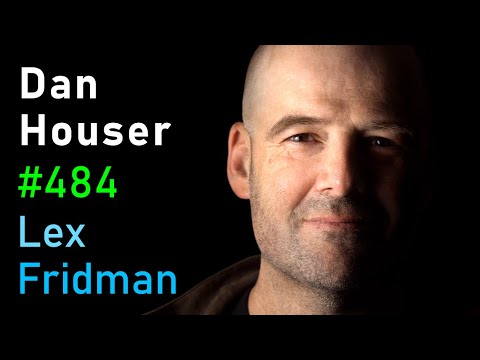
October 31, 2025 / Episode #484
Dan Houser: GTA, Red Dead Redemption, Rockstar, Absurd & Future of Gaming
Dan Houser is co-founder of Rockstar Games and is a legendary creative mind behind Grand Theft Auto (GTA) and Red Dead Redemption series of video games. Thank you for listening ❤ Check out our sponsors: https://lexfridman.com/sponsors/ep484-sc See below for timestamps, transcript, and to give feedback, submit questions, contact Lex, etc.
Best moment
Episode highlight
We all have the capacity to kill and murder people and do other terrible things. The question is, why we don't do those things, rather than why we do do those things, quite often. Most men have fantasized about killing someone, about 70% in two studies, and most women as well. More than 50% of women have fantasized about killing somebody. So, murder fantasies are incredibly common.
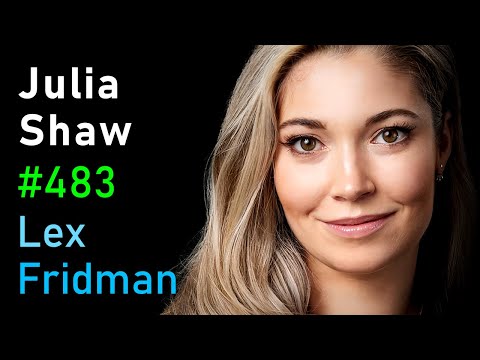
October 14, 2025 / Episode #483
Julia Shaw: Criminal Psychology of Murder, Serial Killers, Memory & Sex
Julia Shaw is a criminal psychologist and author who in her books explores human nature, including psychopathy, violent crime, the psychology of evil, police interrogation, false memory manipulation, deception detection, and human sexuality. Thank you for listening ❤ Check out our sponsors: https://lexfridman.com/sponsors/ep483-sc See below for timestamps, transcript, and to give feedback, submit questions, contact Lex, etc.
Best moment
Introduction
The following is a conversation with Pavel Durov, Founder and CEO of Telegram, a messaging platform actively used by over 1 billion people. Pavel has spent his life fighting for freedom of speech, building tools that protect human communication from surveillance and censorship. For this, he has faced pressure from some of the most powerful governments and organizations on earth. In the face of this immense pressure, he has always held his ground, continuously fighting to protect user privacy and the freedom of all of us humans to communicate with each other. I got the chance to spend a few weeks with him and can definitively say that he's one of the most principled and fearless humans I've ever met. Plus, when I posted that I'm hanging out with Pavel, a lot of people, fans of his, wrote to me asking if he does, in fact, privately live the disciplined ascetic life he's known for. No alcohol, stoic mindset, strict diet and exercise, including a crazy amount of daily pull-ups and push-ups. No phone, except to occasionally test Telegram features, and so on. Yes, he's 100% that guy, which made the experience of hanging out with him really inspiring to me. I'm grateful for it and I'm grateful to now be able to call him a friend. This podcast conversation is in parts philosophical, about freedom, life, human nature, and the nature of government bureaucracies. And it is also in parts super technical because to me, it's fascinating that Telegram has a relatively small engineering team and yet is able to basically out-innovate all of its competitors with an insane rate of introducing new, unique features. Just like the meme of the Simpsons did it first, when you consider all the features we know and love in our communication apps, in almost every case, Telegram did it first. So we discuss it all, from the Kafkaesque situation he's in the midst of France, to the roller coaster of his life and career, to his philosophy on technology, freedom, and the human condition.
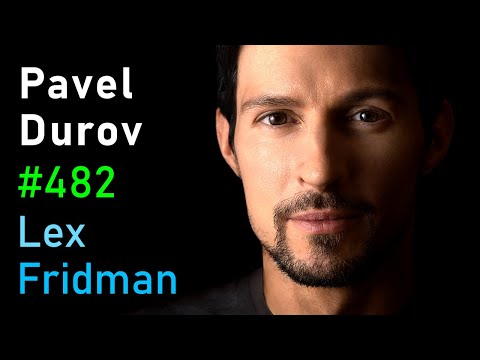
October 1, 2025 / Episode #482
Pavel Durov: Telegram, Freedom, Censorship, Money, Power & Human Nature
Pavel Durov is the founder and CEO of Telegram. Thank you for listening ❤ Check out our sponsors: https://lexfridman.com/sponsors/ep482-sc See below for timestamps, transcript, and to give feedback, submit questions, contact Lex, etc.
Best moment
Episode highlight
Hitler invited three young tank generals to his office, and they had a plan, which was the plan to go through the Ardennes Mountains. That was the victorious idea. So it's not the drugs, actually that idea to go through the Ardennes Mountain. If you, if you think monocausal, you would say that's the reason. That idea was genius, and Hitler immediately understood it, because before, the plan was to attack in the north of Belgium, which is the same as World War I. You, it, it becomes a stalemate and they fight for months, and no one really moves, and it's bloody, and it's nothing's happening. It's bad. But that was the only plan that they had. That's why the high command said, "No, we're not gonna do it. It's stupid. But these three tank generals said, "Look, if we go with the whole army through the Ardennes Mountains," and Hitler was like, "Eh, this is not possible. This is like a mountain range. How can the whole German army fit through this eye of a needle," basically. And they said, "No, we can do it because everyone misunderstands what tanks can do. Tanks are not slow machines in the back that wait for the action to happen, and then support this somehow. We're going to use tanks in the front as race cars, basically. We're going to overpower the enemy. We're going to be in France before they know it.
September 19, 2025 / Episode #481
Norman Ohler: Hitler, Nazis, Drugs, WW2, Blitzkrieg, LSD, MKUltra & CIA
Norman Ohler is a historian and author of "Blitzed: Drugs in the Third Reich," a book that investigates the role of psychoactive drugs, particularly stimulants such as methamphetamine, in the military history of World War II. It is a book that two legendary historians Ian Kershaw and Antony Beevor give very high praise for its depth of research. Norman also wrote "Tripped: Nazi Germany, the CIA, and the Dawn of the Psychedelic Age", and he is working on a new book "Stoned Sapiens" looking at the history of human civilization through the lens of drugs. Thank you for listening ❤ Check out our sponsors: https://lexfridman.com/sponsors/ep481-sc See below for timestamps, transcript, and to give feedback, submit questions, contact Lex, etc.
Best moment
Episode highlight
T. rex is definitely weird, even compared to all the other giant tyrannosaurs that are very closely related to it, because it is by far, ludicrously by far, the largest carnivore in its ecosystem. So it doesn't really have competition, actually.
September 4, 2025 / Episode #480
Dave Hone: T-Rex, Dinosaurs, Extinction, Evolution, and Jurassic Park
Dave Hone is a paleontologist, expert on dinosaurs, co-host of the Terrible Lizards podcast, and author of numerous scientific papers and books on the behavior and ecology of dinosaurs. He lectures at Queen Mary University of London on topics of Ecology, Zoology, Biology, and Evolution. Thank you for listening ❤ Check out our sponsors: https://lexfridman.com/sponsors/ep480-sc See below for timestamps, transcript, and to give feedback, submit questions, contact Lex, etc.
Best moment
Introduction
The following is a conversation with Dave Plummer, programmer and an old-school Microsoft software engineer who helped work on Windows 95, NT, and XP, building a lot of incredible tools, some of which have been continuously used by hundreds of millions of people, like the famed Windows Task Manager. Yes, the Windows Task Manager, and the zip/unzip compression support in Windows. He also ported the code for Space Cadet Pinball, also known as 3D Pinball, to Windows. Today, he's loved by many programmers and engineers for his amazing YouTube channel called Dave's Garage. You should definitely go check it out. Also, he wrote a book on autism, and about his life story, called Secrets of the Autistic Millionaire, where he gives really interesting insights about how to navigate relationships, career, and day-to-day life with autism. All this taken together, this was a super fun conversation about the history and future of programming, computing, technology, and just building cool stuff in the proverbial garage. This is the Lex Fridman Podcast. To support it, please check out our sponsors in the description, and now, dear friends, here's Dave Plummer.
August 29, 2025 / Episode #479
Dave Plummer: Programming, Autism, and Old-School Microsoft Stories
Dave Plummer is a programmer, former Microsoft software engineer (Windows 95, NT, XP), creator of Task Manager, author of two books on autism, and host of the Dave's Garage YouTube channel, where he shares stories from his career, insights on software development, and deep dives into technology. Thank you for listening ❤ Check out our sponsors: https://lexfridman.com/sponsors/ep479-sc See below for timestamps, and to give feedback, submit questions, contact Lex, etc.
Best moment
From the Cold War to the War on Terror
Scott Horton and Lex Fridman discuss from the cold war to the war on terror.
August 24, 2025 / Episode #478
Scott Horton: The Case Against War and the Military Industrial Complex
Scott Horton is the director of the Libertarian Institute, editorial director of Antiwar.com, host of The Scott Horton Show, co-host of Provoked, and for the past three decades a staunch critic of U.S. military interventionism. Thank you for listening ❤ Check out our sponsors: https://lexfridman.com/sponsors/ep478-sc See below for timestamps, and to give feedback, submit questions, contact Lex, etc.
Best moment
Introduction
The following is a conversation with Keyu Jin, an economist at the London School of Economics, specializing in China's economy, international macroeconomics, global trade imbalances, and financial policy. She wrote the highly lauded book on China titled The New China Playbook: Beyond Socialism and Capitalism that details China's economic transformation since 1978 to today. And it dispels a lot of misconceptions about China's economy that people in the West have. This is the Lex Fridman Podcast. To support it, please check out our sponsors in the description and consider subscribing to this channel. And now, dear friends, here's Keyu Jin.
August 13, 2025 / Episode #477
Keyu Jin: China's Economy, Tariffs, Trade, Trump, Communism & Capitalism
Keyu Jin is an economist specializing in China's economy, international macroeconomics, global trade imbalances, and financial policy. She is the author of The New China Playbook: Beyond Socialism and Capitalism. Thank you for listening ❤ Check out our sponsors: https://lexfridman.com/sponsors/ep477-sc See below for timestamps, transcript, and to give feedback, submit questions, contact Lex, etc.
Best moment
Origin story of Genghis Khan
Genghis Khan, born in approximately 1162, became the conqueror of the largest contiguous empire in history. But before that, he was a boy named Temüjin, who at nine years old, lost everything. His father, his tribe, living in poverty, abandoned to the harshness of the Mongolian steppe. From a boy with nothing to the conqueror of the world. So tell me about this boy, his childhood and the Mongolian steppe from which he came from. The story of Genghis Khan, like the story I think of all of us, it doesn't begin at birth, it begins... That's the beginning of life. The story begins long before birth, and sometimes it can be many generations before and sometimes only shortly before. But I think with Genghis Khan, a crucial thing is to understand how his parents met and then how he was conceived. And that is that one day a cart was coming across the Mongol territory and only women drove carts. Men rode horses, women also rode horses, but women owned the houses which were called gers, the tents. They owned all the household equipment, and so they had to have carts for moving back and forth. And the fact that a cart was moving meant that some woman was moving from one place to another. And in fact, her husband was with her. She was a new bride and her husband was on a horse close to her.
August 1, 2025 / Episode #476
Jack Weatherford: Genghis Khan and the Mongol Empire
Jack Weatherford is an anthropologist and historian specializing in Genghis Khan and the Mongol Empire. Thank you for listening ❤ Check out our sponsors: https://lexfridman.com/sponsors/ep476-sc See below for timestamps, transcript, and to give feedback, submit questions, contact Lex, etc.
Best moment
Episode highlight
It's hard for us humans to make any kind of clean predictions about highly nonlinear dynamical systems. But again, to your point, we might be very surprised what classical learning systems might be able to do about even fluid. Yes, exactly. I mean, fluid dynamics, Navier-Stokes equations, these are traditionally thought of as very, very difficult intractable problems to do on classical systems. They take enormous amounts of compute, weather prediction systems. These kinds of things all involve fluid dynamics calculations.
July 23, 2025 / Episode #475
Demis Hassabis: Future of AI, Simulating Reality, Physics and Video Games
Demis Hassabis is the CEO of Google DeepMind and Nobel Prize winner for his groundbreaking work in protein structure prediction using AI. Thank you for listening ❤ Check out our sponsors: https://lexfridman.com/sponsors/ep475-sc See below for timestamps, transcript, and to give feedback, submit questions, contact Lex, etc.
Best moment
Episode highlight
No one anywhere who's serious believes that cookie banners does anything good for anyone, yet we've been unable to get rid of it. This is the thing that really gets me about cookie banners too. It's not just the EU, it's the entire world. You can't hide from cookie banners anywhere on this planet. If you go to goddamn Mars on one of Elon's rockets and you try to access a web page, you'll still see a cookie banner. No one in the universe is safe from this nonsense. It sometimes feels like we're barely better off. Web pages aren't that different from what they were in the late '90s, early 2000s. They're still just forms. They still just write to databases. A lot of people, I think, are very uncomfortable with the fact that they are essentially crud monkeys. They just make systems that create, read, update, or delete rows in a database and they have to compensate for that existential dread by over complicating things. That's a huge part of the satisfaction of driving a race car is driving in at the edge of adhesion, as we call it, where you're essentially just a tiny movement away from spinning out. Doesn't take much. Then the car starts rotating. Once it starts rotating, you lose grip and you're going for the wall. That balance of danger and skill is what's so intoxicating.
July 12, 2025 / Episode #474
DHH: Future of Programming, AI, Ruby on Rails, Productivity & Parenting
David Heinemeier Hansson (aka DHH) is a legendary programmer, creator of Ruby on Rails, co-owner & CTO of 37signals that created Basecamp, HEY, & ONCE, and is a NYT-best-selling author (with Jason Fried) of 4 books: REWORK, REMOTE, Getting Real, and It Doesn't Have To Be Crazy At Work. He is also a race car driver, including a class-winning performance at the 24 hour Le Mans race. Thank you for listening ❤ Check out our sponsors: https://lexfridman.com/sponsors/ep474-sc See below for timestamps, transcript, and to give feedback, submit questions, contact Lex, etc.
Best moment
Episode highlight
We want to avoid wars, we have to have serious deterrence because our enemies need to understand, we will use selective, focused, overwhelming military power when we are facing threats like an Iranian nuclear weapon. I'm not seeing the peace through strength. I'm seeing permanent militarism and permanent war through strength.

June 26, 2025 / Episode #473
Iran War Debate: Nuclear Weapons, Trump, Peace, Power & the Middle East
Debate on Iran war between Scott Horton and Mark Dubowitz. Scott Horton is the author and director of the Libertarian Institute, editorial director of Antiwar.com, host of The Scott Horton Show, and for the past three decades, a staunch critic of U.S. foreign policy and military interventionism. Mark Dubowitz is the chief executive of the Foundation for Defense of Democracies, host of the Iran Breakdown podcast, and a leading expert on Iran and its nuclear program for over 20 years. This debate was recorded on Tuesday, June 24, after the Iran-Israel ceasefire was declared. Thank you for listening ❤ Check out our sponsors: https://lexfridman.com/sponsors/ep473-sc See below for timestamps, transcript, and to give feedback, submit questions, contact Lex, etc.
Best moment
Introduction
The following is a conversation with Terence Tao, widely considered to be one of the greatest mathematicians in history, often referred to as The Mozart of Math. He won the Fields Medal and the Breakthrough Prize in Mathematics, and has contributed groundbreaking work to a truly astonishing range of fields in mathematics and physics. This was a huge honor for me for many reasons, including the humility and kindness that Terry showed to me throughout all our interactions. It means the world. This is the Lex Fridman Podcast. To support it, please check out our sponsors in the description or at LexFridman.com/sponsors. And now, dear friends, here's Terence Tao.

June 15, 2025 / Episode #472
Terence Tao: Hardest Problems in Mathematics, Physics & the Future of AI
Terence Tao is widely considered to be one of the greatest mathematicians in history. He won the Fields Medal and the Breakthrough Prize in Mathematics, and has contributed to a wide range of fields from fluid dynamics with Navier-Stokes equations to mathematical physics & quantum mechanics, prime numbers & analytics number theory, harmonic analysis, compressed sensing, random matrix theory, combinatorics, and progress on many of the hardest problems in the history of mathematics. Thank you for listening ❤ Check out our sponsors: https://lexfridman.com/sponsors/ep472-sc See below for timestamps, transcript, and to give feedback, submit questions, contact Lex, etc.
Best moment
Episode highlight
It was a five-year waiting list, and we got a rotary telephone. But it dramatically changed our lives. People would come to our house to make calls to their loved ones. I would have to go all the way to the hospital to get blood test records and it would take two hours to go and they would say, "Sorry, it's not ready. Come back the next day.", two hours to come back. And that became a five-minute thing. So as a kid, this light bulb went in my head, this power of technology to change people's lives. We had no running water. It was a massive drought, so they would get water in these trucks, maybe eight buckets per household. So me and my brother, sometimes my mom, we would wait in line, get that and bring it back home. Many years later, we had running water and we had a water heater, and you could get hot water to take a shower. For me, everything was discreet like that.

June 5, 2025 / Episode #471
Sundar Pichai: CEO of Google and Alphabet
Sundar Pichai is CEO of Google and Alphabet. Thank you for listening ❤ Check out our sponsors: https://lexfridman.com/sponsors/ep471-sc See below for timestamps, transcript, and to give feedback, submit questions, contact Lex, etc.
Best moment
Episode highlight
And you see that manifest itself on D-Day, where you've got 6,939 vessels, of which there are 1,213 warships, 4,127 assault craft, 12,500 aircraft. 155,000 men landed, and dropped from the air, in a 24-hour period. It is phenomenal. It is absolutely phenomenal.
May 24, 2025 / Episode #470
James Holland: World War II, Hitler, Churchill, Stalin & Biggest Battles
James Holland is a historian specializing in World War II. He hosts a podcast called WW2 Pod: We Have Ways of Making You Talk. Thank you for listening ❤ Check out our sponsors: https://lexfridman.com/sponsors/ep470-sc See below for timestamps, transcript, and to give feedback, submit questions, contact Lex, etc.
Best moment
Introduction
The following is a conversation with Oliver Anthony, a singer-songwriter from Virginia who first gained worldwide fame with his viral hit Rich Men North of Richmond. He became a voice for many who are voiceless with his songs speaking to the struggle of the working class in modern American life. His legal name is Christopher Anthony Lunsford. Oliver Anthony was his grandfather's name. And so, Chris used this name as a dedication to his grandfather, and to 1930s Appalachia where his grandfather was born and raised.

May 20, 2025 / Episode #469
Oliver Anthony: Country Music, Blue-Collar America, Fame, Money, and Pain
Oliver Anthony is singer-songwriter who first gained worldwide fame with his viral hit Rich Men North of Richmond. He became a voice for many who are voiceless, with many of his songs speaking to the struggle of the working class in modern American life. Thank you for listening ❤ Check out our sponsors: https://lexfridman.com/sponsors/ep469-sc See below for timestamps, transcript, and to give feedback, submit questions, contact Lex, etc.
Best moment
Episode highlight
... black holes, curve space and time around them, in the way that we've been describing, things fall along the curves in space. If the black holes move around, the curves have to follow them, right? But they can't travel faster than the speed of light either. So what happens is black holes, let's say move around, maybe I've got two black holes in orbit around each other, that can happen. It takes a while. A wave is created in the actual shape of space, and that wave follows the black holes as black holes are undulating. Eventually those two black holes will merge. And as we were talking about, it doesn't take an infinite time, even though there's time dilation because they're both so big, they're really deforming spacetime a lot. I don't have a little tiny marble falling across an event horizon. I have two event horizons, and in the simulations you can see a bobble and they merge together and they make one bigger black hole. And then it radiates in the gravitational waves. It radiates away all those imperfections and it settles down to one quiescent, perfectly silent black hole that's spinning. Beautiful stuff. And it emits E equals MC squared energy. So the mass of the final black hole will be less than the sum of the two starter black holes. And that energy is radiated away in this ringing of spacetime. It's really important to emphasize that it's not light. None of this has to do literally with light that we can detect with normal things that detect light. X-rays, form of light, gamma rays are a form of light, infrared, optical. This whole electromagnetic spectrum, none of it is emitted as light. It's completely dark.

May 5, 2025 / Episode #468
Janna Levin: Black Holes, Wormholes, Aliens, Paradoxes & Extra Dimensions
Janna Levin is a theoretical physicist and cosmologist specializing in black holes, cosmology of extra dimensions, topology of the universe, and gravitational waves. Thank you for listening ❤ Check out our sponsors: https://lexfridman.com/sponsors/ep468-sc See below for timestamps, transcript, and to give feedback, submit questions, contact Lex, etc.
Best moment
Episode highlight
Humans are by far the hardest part of computer graphics because millions of years of evolution have given us dedicated brain systems to detect patterns in faces and infer emotions and intent because cavemen had to, when they see a stranger, determine whether they were likely friendly or they might be trying to kill them. And so people in the world have extraordinarily detailed expectations of a face and we can notice imperfections, especially perfections arising from computer graphics limitations. Okay, one part is capturing humans and so [inaudible 00:00:33] really advanced, dedicated hardware that puts a human in a capture sphere with dozens of cameras in them taking high resolution, high frame rate video of them as they go through a range of motions. And then capturing the human face is complicated because the nuanced detail of our faces and how all the muscles and sinews and fat work together to give us different expressions. So it's not only about the shape of a person's face, but it's also about the entire range of motion that they might go through. So that's the data problem. There's a lot of other problems with computer graphics. There's technology for rendering hair, which is really hard. Because you can't render every... Again, we know the laws of physics. It would be easy to just render every hair. It would just be a billion times too slow. So you need approximations that capture the net effect of hair on rendering and on pixels without calculating every single interaction of every light with every strand of hair. That's one part of it. There's detailed features for different parts of faces. There's subsurface scattering because we think of humans as opaque, but really our skin, light travels through it. It's not completely opaque, and the way in which light travels through skin has a huge impact on our appearance.

April 30, 2025 / Episode #467
Tim Sweeney: Fortnite, Unreal Engine, and the Future of Gaming
Tim Sweeney is a legendary video game programmer, founder and CEO of Epic Games that created the Unreal Engine, Fortnite, Gears of War, Unreal Tournament, and many other groundbreaking and influential video games. Thank you for listening ❤ Check out our sponsors: https://lexfridman.com/sponsors/ep467-sc See below for timestamps, transcript, and to give feedback, submit questions, contact Lex, etc.
Best moment
Introduction
The following is a conversation with Jeffrey Wasserstrom, a historian of modern China. This is the Lex Fridman Podcast. To support it, please check out our sponsors in the description. And now, dear friends, here's Jeffrey Wasserstrom.
April 24, 2025 / Episode #466
Jeffrey Wasserstrom: China, Xi Jinping, Trade War, Taiwan, Hong Kong, Mao
Jeffrey Wasserstrom is a historian of modern China. Thank you for listening ❤ Check out our sponsors: https://lexfridman.com/sponsors/ep466-sc See below for timestamps, transcript, and to give feedback, submit questions, contact Lex, etc.
Best moment
Episode highlight
I write the script in December. January, Josh Arnett, Marley Shelton, come down, fly Frank in. Shooting for 10 hours on my green screen. We shoot that opening sequence, incredible opening sequence and the visual Look, we've never seen that. I want to just take this and make it move. I just want the comic to move. Any other studio would just go make it look like any gritty crime movie, and they would miss the point that the visual is half of it. I want it to look just like this because it would be the boldest movie anyone's seen because that's how it reads when I read the book. It's like, if this was moving, it would be the most phenomenal movie. Just by being around him and working with him you get by osmosis, you learn stuff and it just ups your game because they're just swing way beyond you. Jim Cameron was like that. So when I first met him, I was trying to impress the hell out of him because I was such a big fan. I was about to go do Desperado and I went, "Hey, I just took a three-day Steadicam course because I can't afford a Steadicam operator, so I'm going to operate Steadicam myself on Desperado." Now if he was just my peer, he'd say, "Oh, I did the same thing," and I'm going to do the same thing. That would be hanging out with somebody of your I, but you want somebody who's above that. Do you know what he said? He goes, "I bought about a Steadicam, but not to operate it. I'm going to take it apart and design a better one. Us mere mortals trying to learn how to operate the camera. He's designing all new systems. That's the guy you want to hang out with, not someone who's doing what you're doing.
April 17, 2025 / Episode #465
Robert Rodriguez: Sin City, Desperado, El Mariachi, Alita, and Filmmaking
Robert Rodriguez is a legendary filmmaker and creator of Sin City, El Mariachi, Desperado, Spy Kids, Machete, From Dusk Till Dawn, Alita: Battle Angel, The Faculty, and his newest venture Brass Knuckle Films. Thank you for listening ❤ Check out our sponsors: https://lexfridman.com/sponsors/ep465-sc See below for timestamps, transcript, and to give feedback, submit questions, contact Lex, etc.
Best moment
Episode highlight
All the people who sold the war in Iraq, they lied us into war after a war. They've bankrupted the country, damn near destroyed the dollar and no one loses their job. No one even gets in trouble over any of this. If you make everybody monsters and they're not human beings, well, you can't do diplomacy with monsters, you can't negotiate with monsters, but you can with humans. Maybe there are times where you shouldn't negotiate or you can't negotiate with humans, but it's better if you can. And we could use a lot more of that thinking. Donald Trump has put a lot of political capital chips into the middle of the table that, "I can end this war." And he's going to look very, very bad if he can't. So he's very highly incentivized to get this thing done as quick as possible. You are fighting in a way that produces more of the thing that you're fighting, and so the first step is to stop doing that. Your cure is making the patient more sick. So stop doing that. And then let's see if maybe we could heal. Where are the tapes? Why is everyone talking about the flight logs and the files? Where are the tapes? This guy was clearly taping people to blackmail them. Why does anything need to be redacted for national security? I'm sorry. You're telling me there's a pedophile ring and we can't tell you everything about it for national security? Why would that be related to national security?

April 9, 2025 / Episode #464
Dave Smith: Israel, Ukraine, Epstein, Mossad, Conspiracies & Antisemitism
Dave Smith is a comedian, libertarian, political commentator, and the host of Part of the Problem podcast. Thank you for listening ❤ Check out our sponsors: https://lexfridman.com/sponsors/ep464-sc See below for timestamps, transcript, and to give feedback, submit questions, contact Lex, etc.
Best moment
Episode highlight
... end up chanting in front of him, "Viva la Muerte. Long-lived death." They have their counterparts today. They are the people who taunt Americans, Westerners, Israelis, and others with lines like, "We love death more than you love live."

March 30, 2025 / Episode #463
Douglas Murray: Putin, Zelenskyy, Trump, Israel, Netanyahu, Hamas & Gaza
Douglas Murray is the author of On Democracies and Death Cults, The War on The West, and The Madness of Crowds. Thank you for listening ❤ Check out our sponsors: https://lexfridman.com/sponsors/ep463-sc See below for timestamps, transcript, and to give feedback, submit questions, contact Lex, etc.
Best moment
Episode highlight
Democrats still think the currency of politics is money and the currency of politics is attention. And that's a huge difference between the two sides right now. I think the steel man is very easy to make here. Department of government efficiency. That sounds like an organization that's needed if government is inefficient. And one of the themes of our book is just how inefficient government can be, not only at building houses, building energy, often at achieving its own ends. Building high-speed rail when it wants to build high-speed rail. Adding affordable housing units when it wants to add affordable housing units. I love Ezra's line that we don't just need to think about deregulating the market. We need to think about deregulating government itself, getting the rules out of the way that keep government from achieving the democratic outcomes that it's trying to achieve. This is a world in which a department of government efficiency is a godsend. We should be absolutely obsessed with making government work well, especially if we're going to be the kind of liberals who believe that government is important in the first place.

March 26, 2025 / Episode #462
Ezra Klein and Derek Thompson: Politics, Trump, AOC, Elon & DOGE
Ezra Klein is one of the most influential voices representing the left-wing of American politics. He is a columnist for the NY Times and host of The Ezra Klein Show. Derek Thompson is a writer at The Atlantic and host of the Plain English podcast. Together they have written a new book titled Abundance that lays out a set of ideas for the future of the Democratic party. Thank you for listening ❤ Check out our sponsors: https://lexfridman.com/sponsors/ep462-sc See below for timestamps, transcript, and to give feedback, submit questions, contact Lex, etc.
Best moment
Introduction
The following is a conversation with Michael Paulson, better known online as ThePrimeagen. He is a programmer who has entertained and inspired millions of people to have fun building stuff with software, whether you're a newbie or a seasoned developer who has been battling it out in the software engineering trenches for decades. In short, ThePrimeagen is a legendary programmer and a great human being with an inspiring roller coaster of a life story. This is the Lex Fridman Podcast. To support it, please check out our sponsors in the description. And now, dear friends, here's ThePrimeagen.

March 22, 2025 / Episode #461
ThePrimeagen: Programming, AI, ADHD, Productivity, Addiction, and God
ThePrimeagen (aka Michael Paulson) is a programmer who has educated, entertained, and inspired millions of people to build software and have fun doing it. Thank you for listening ❤ Check out our sponsors: https://lexfridman.com/sponsors/ep461-sc See below for timestamps, and to give feedback, submit questions, contact Lex, etc.
Best moment
In this episode...
My strength lies not in my name, but in the backing of 1.4 billion Indians and thousands of years of timeless culture and heritage. So wherever I go, I carry with me the essence of thousands of years of Vedic tradition, the timeless teachings of Swami Vivekananda and the blessings, dreams, and aspirations of 1.4 billion Indians. When I shake hands with the world leader, it's not Modi, but 1.4 billion Indians doing so. So this isn't my strength at all. It is rather the strength of India. Whenever we speak of peace, the world listens to us, because India is the land of Gautama Buddha and Mahatma Gandhi, and Indians aren't hardwired to espouse strife and conflict. We espouse harmony instead. We seek neither to wage war against nature, nor to foster strife among nations. We stand for peace, and wherever we can act as peacemakers, we have gladly embraced that responsibility. My early life was spent in extreme poverty, but we never really felt the burden of poverty. You see, someone who is used to wearing fine shoes will feel their absence when they don't have them, but for us, we had never worn shoes in our lives. So how would we even know that wearing shoes was a big deal? We weren't in a position to compare. That's just how we lived.

March 16, 2025 / Episode #460
Narendra Modi: Prime Minister of India - Power, Democracy, War & Peace
Narendra Modi is the Prime Minister of India. On YouTube this episode is available in English, Hindi, Russian (and soon other languages). Captions and voice-over audio tracks are provided (for the main episode video on YouTube) in English, Hindi, Russian, and the original mixed-language version, with subtitles available in your preferred language. To listen to the original mixed-language version, please select the Hindi (Latin) audio track. The default is English overdub. Thank you for listening ❤ Check out our sponsors: https://lexfridman.com/sponsors/ep460-sc See below for timestamps, transcript, and to give feedback, submit questions, contact Lex, etc.
Best moment
DeepSeek-R1 and DeepSeek-V3
A lot of people are curious to understand China's DeepSeek AI models, so let's lay it out. Nathan, can you describe what DeepSeek-V3 and DeepSeek-R1 are, how they work, how they're trained? Let's look at the big picture and then we'll zoom in on the details. DeepSeek-V3 is a new mixture of experts, transformer language model from DeepSeek who is based in China. They have some new specifics in the model that we'll get into. Largely this is a open weight model and it's a instruction model like what you would use in ChatGPT. They also released what is called the base model, which is before these techniques of post-training. Most people use instruction models today, and those are what's served in all sorts of applications. This was released on, I believe, December 26th or that week. And then weeks later on January 20th, DeepSeek released DeepSeek-R1, which is a reasoning model, which really accelerated a lot of this discussion.
February 3, 2025 / Episode #459
DeepSeek, China, OpenAI, NVIDIA, xAI, TSMC, Stargate, and AI Megaclusters
Dylan Patel is the founder of SemiAnalysis, a research & analysis company specializing in semiconductors, GPUs, CPUs, and AI hardware. Nathan Lambert is a research scientist at the Allen Institute for AI (Ai2) and the author of a blog on AI called Interconnects. Thank you for listening ❤ Check out our sponsors: https://lexfridman.com/sponsors/ep459-sc See below for timestamps, transcript, and to give feedback, submit questions, contact Lex, etc.
Best moment
Introduction
I mean, look, we're adding a trillion dollars to the national debt every 100 days right now, and it's now passing the size of the Defense Department budget and it's compounding, and pretty soon it's going to be adding a trillion dollars every 90 days, and then it's going to be adding a trillion dollars every 80 days, and then it's going to be a trillion dollars every 70 days. And then if this doesn't get fixed, at some point, we enter a hyper-inflationary spiral and we become Argentina or Brazil. And ... The following is a conversation with Marc Andreessen, his second time on the podcast. Marc is a visionary tech leader and investor who fundamentally shaped the development of the internet and the tech industry in general over the past 30 years. He's the co-creator of Mosaic, the first widely used web browser, co-founder of Netscape, co-founder of the legendary Silicon Valley venture capital firm, Andreessen Horowitz, and is one of the most influential voices in the tech world, including at the intersection of technology and politics. This is the Lex Fridman Podcast. To support it, please check out our sponsors in the description. And now, dear friends, here's Marc Andreessen.

January 26, 2025 / Episode #458
Marc Andreessen: Trump, Power, Tech, AI, Immigration & Future of America
Marc Andreessen is an entrepreneur, investor, co-creator of Mosaic, co-founder of Netscape, and co-founder of the venture capital firm Andreessen Horowitz. Thank you for listening ❤ Check out our sponsors: https://lexfridman.com/sponsors/ep458-sc See below for timestamps, transcript, and to give feedback, submit questions, contact Lex, etc.
Best moment
Milton Friedman
You have written two biographies, one on Milton Friedman and one on Ayn Rand. So if we can, we will focus on each one separately, but first, let's talk about the ideas that two of them held in common, the value of individual freedom, skepticism of collectivism, and the ethics of capitalism. Can you talk about the big picture ideas they converge on? Yeah. So, Milton Friedman and Ayn Rand, in the biggest picture, they're both individualists, and they're skeptical of collectivities and collectivism. So, their unit of analysis is the individual. What's good for the individual? What works for the individual? Their understanding of society flows from that. They also both use this focus on individualism to justify and to support capitalism as a social and economic system. So, we can put them in a similar category. We can call them individualists. We could call them libertarians of a sort. They're also really different in how they approach capitalism, how they approach thinking.
January 19, 2025 / Episode #457
Jennifer Burns: Milton Friedman, Ayn Rand, Economics, Capitalism, Freedom
Jennifer Burns is a historian of ideas, focusing on the evolution of economic, political, and social ideas in the United States in the 20th century. She wrote two biographies, one on Milton Friedman, and the other on Ayn Rand. Thank you for listening ❤ Check out our sponsors: https://lexfridman.com/sponsors/ep457-sc See below for timestamps, transcript, and to give feedback, submit questions, contact Lex, etc.
Best moment
Introduction
I hope the Kyiv Airport will open soon then it will be easier to fly in. Yes. I think that the war will end and President Trump may be the first leader to travel here by airplane. I think it would be symbolic by airplane.
January 6, 2025 / Episode #456
Volodymyr Zelenskyy: Ukraine, War, Peace, Putin, Trump, NATO, and Freedom
Volodymyr Zelenskyy is the President of Ukraine. On YouTube this episode is available in English, Ukrainian, and Russian. Captions and voice-over audio tracks are provided in English, Ukrainian, Russian, and the original mixed-language version, with subtitles available in your preferred language. To listen to the original mixed language version, please select the English (UK) audio track audio track. The default is English overdub. Thank you for listening ❤ Check out our sponsors: https://lexfridman.com/sponsors/ep456-sc See below for timestamps, transcript, and to give feedback, submit questions, contact Lex, etc.
Best moment
Introduction
If we don't ask how long they last, but instead ask what's the probability that there have been any civilizations at all, now matter how long they lasted. I'm not asking whether they exist now or not, I'm just asking in general about probabilities to make a technological civilization anywhere and at any time in the history of the university. That, we're able to constrain. What we found was basically that there have been 10 billion trillion habitable zone planets in the universe. What that means is those are 10 billion trillion experiments that have been run. The only way that we're the only time that this whole process from abiogenesis to a civilization has occurred is if everyone one of those experiments failed. Therefore, you could put a probability, we called it the Pessimism Line. We don't really know what nature sets for the probability of making intelligent civilizations, but we could set a limit using this. We could say, look, if the probability per habitable zone planet is less than 10 to the minus-22, one in 10 billion trillion, then yeah, we're alone. If it's anywhere larger than that, then we're not the first. It's happened somewhere else. To me, that was mind-blowing. It doesn't tell me there's anybody nearby, the galaxy could be sterile. It just told me that unless nature's really has some bias against civilizations, we're not the first time this has happened. This has happened elsewhere over the course of cosmic history.

December 22, 2024 / Episode #455
Adam Frank: Alien Civilizations and the Search for Extraterrestrial Life
Adam Frank is an astrophysicist studying star systems and the search for extraterrestrial life and alien civilizations. Thank you for listening ❤ Check out our sponsors: https://lexfridman.com/sponsors/ep455-sc See below for timestamps, transcript, and to give feedback, submit questions, contact Lex, etc.
Best moment
Introduction
People need to go back and read the history of the first 100 days under FDR, the sheer amount of legislation that went through, his ability to bring Congress to heel and the Senate, he gets all this stuff through. But as you and I know, legislation takes a long time to put into place, right? We've had people starving on the streets all throughout 1933 under Hoover. The difference was Hoover was seen as this do nothing joke who would dine nine course meals in the White House, and he is a filthy rich banker. FDR comes in there and every single day has fireside chats, he's passing legislation, but more importantly, he tries various different programs, then they get ruled unconstitutional, he tries even more. So what does America take away from that? Every single time, if he gets knocked down, he comes back fighting. And that was, really, part of his character that he developed after he got polio. And it gave him the strength to persevere through personally what he could transfer in his calm demeanor and his feeling of fight that America really got that spirit from him and was able to climb itself out of the Great Depression. He's such an inspirational figure.

December 8, 2024 / Episode #454
Saagar Enjeti: Trump, MAGA, DOGE, Obama, FDR, JFK, History & Politics
Saagar Enjeti is a political journalist & commentator, co-host of Breaking Points with Krystal and Saagar and The Realignment Podcast. He is exceptionally well-read, and the books he recommends are always fascinating and eye-opening. You can check out all the books he mentions in this episode here: https://lexfridman.com/saagar-books Thank you for listening ❤ Check out our sponsors: https://lexfridman.com/sponsors/ep454-sc See below for timestamps, transcript, and to give feedback, submit questions, contact Lex, etc.
Best moment
Introduction
So what is the difference between a madman and a genius? Success. The following is a conversation with Javier Milei, the president of Argentina. He is a libertarian, anarcho-capitalist, and economist, who campaigned with a chainsaw that symbolized his promise to slash the corrupt bureaucracy of the state. He stepped into the presidency one year ago, with a country on the brink of hyperinflation, deepened debt and suffering from mass unemployment and poverty. He took this crisis head on, transforming one of Latin America's largest economies through pure free market principles. In just a few months in office, he already achieved Argentina's first fiscal surplus in 16 years, and not just avoided the hyperinflation but brought inflation down to its lowest in three years.

November 20, 2024 / Episode #453
Javier Milei: President of Argentina - Freedom, Economics, and Corruption
Javier Milei is the President of Argentina. This episode is available in both English and Spanish. Thank you for listening ❤ Check out our sponsors: https://lexfridman.com/sponsors/ep453-sc See below for timestamps, transcript, and to give feedback, submit questions, contact Lex, etc.
Best moment
Introduction
If you extrapolate the curves that we've had so far, right? If you say, "Well, I don't know, we're starting to get to PhD level, and last year we were at undergraduate level, and the year before we were at the level of a high school student," again, you can quibble with what tasks and for what. "We're still missing modalities, but those are being added," like computer use was added, like image generation has been added. If you just kind of eyeball the rate at which these capabilities are increasing, it does make you think that we'll get there by 2026 or 2027. I think there are still worlds where it doesn't happen in 100 years. The number of those worlds is rapidly decreasing. We are rapidly running out of truly convincing blockers, truly compelling reasons why this will not happen in the next few years. The scale-up is very quick. We do this today, we make a model, and then we deploy thousands, maybe tens of thousands of instances of it. I think by the time, certainly within two to three years, whether we have these super powerful AIs or not, clusters are going to get to the size where you'll be able to deploy millions of these.
November 11, 2024 / Episode #452
Dario Amodei: Anthropic CEO on Claude, AGI & the Future of AI & Humanity
Dario Amodei is the CEO of Anthropic, the company that created Claude. Amanda Askell is an AI researcher working on Claude's character and personality. Chris Olah is an AI researcher working on mechanistic interpretability. Thank you for listening ❤ Check out our sponsors: https://lexfridman.com/sponsors/ep452-sc See below for timestamps, transcript, and to give feedback, submit questions, contact Lex, etc.
Best moment
Introduction
Most people, most of the time are polite, cooperative, and kind until they're not. The following is a conversation with Rick Spence, a historian specializing in the history of intelligence agencies, espionage, secret societies, conspiracies, the occult and military history. This is the Lex Fridman Podcast. To support it, please check out our sponsors in the description. And now dear friends, here's Rick Spence.
October 30, 2024 / Episode #451
Rick Spence: CIA, KGB, Illuminati, Secret Societies, Cults & Conspiracies
Rick Spence is a historian specializing in the history of intelligence agencies, espionage, secret societies, conspiracies, the occult, and military history. Thank you for listening ❤ Check out our sponsors: https://lexfridman.com/sponsors/ep451-sc See below for timestamps, transcript, and to give feedback, submit questions, contact Lex, etc.
Best moment
Introduction
The ideas that I am talking about are ideas that are widely supported. Everything that I talk about raising them, minimum wage, health care for all, a tax system which demands the billionaires pay their fair share, those are all popular ideas, but people didn't know. You got to run for president and have 20,000 people come out to your rallies and win 23 states. They say, "Hmm. Well, maybe those ideas are not so crazy after all, and we've got to entertain them." The establishment doesn't like that. They really don't. They want to tell you, and this is their main... This is how they succeed. What they say, Lex, is, "The world is the way it is. It always will be this way. We got the wealth. We got the power. And don't think of anything else. This is the way it is. You have no power. Give up." They don't say it quite that way, but that's really what the intent is. And what we showed is, guess what? Running an outsider campaign, we took on the Democratic establishment, we came close to winning it, and we did win 23 states. And the ideas that we're talking about are the ideas that working class people, young people believe in.
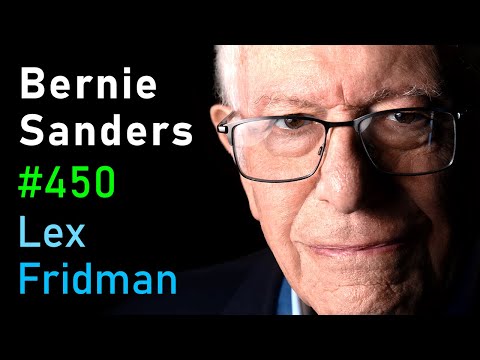
October 23, 2024 / Episode #450
Bernie Sanders Interview
Bernie Sanders is a US Senator from Vermont and a two-time presidential candidate. Thank you for listening ❤ Check out our sponsors: https://lexfridman.com/sponsors/ep450-sc See below for timestamps, transcript, and to give feedback, submit questions, contact Lex, etc.
Best moment
Introduction
The big question for me in that timeline is why didn't we do it sooner? Why did it take so long? Why did we wait until after 12,000 years ago, really after 10,000 years ago to start seeing the beginnings of civilization? The following is a conversation with Graham Hancock, a journalist and author who for over 30 years has explored the controversial possibility that there existed a lost civilization during the last ice age and that it was destroyed in a global cataclysm some 12,000 years ago. He is the presenter of the Netflix documentary series, Ancient Apocalypse, the second season of which has just been released and it's focused on the distant past of the Americas.
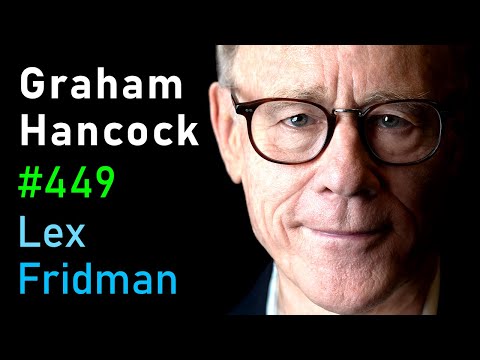
October 16, 2024 / Episode #449
Graham Hancock: Lost Civilization of the Ice Age & Ancient Human History
Graham Hancock a journalist and author who for over 30 years has explored the controversial possibility that there existed a lost civilization during the last Ice Age, and that it was destroyed in a global cataclysm some 12,000 years ago. He is the presenter of the Netflix documentary series "Ancient Apocalypse", the 2nd season of which has just been released. Thank you for listening ❤ Check out our sponsors: https://lexfridman.com/sponsors/ep449-sc See below for timestamps, and to give feedback, submit questions, contact Lex, etc.
Best moment
Nietzsche
You have given a set of lectures on Nietzsche as part of the new Peterson Academy, and the lectures were powerful. There's some element of the contradictions, the tensions, the drama, the way you like, lock in on an idea, but then are struggling with that idea, all of that, that feels like it's a Nietzschean. Well, he's a big influence on me stylistically and in terms of the way I approached writing, and also many of the people that were other influences of mine were very influenced by him. So I was blown away when I first came across his writings. They're so intellectually dense that I don't know if there's anything that approximates that. Dostoevsky maybe, although he's much more wordy. Nietzsche is very succinct partly he was so ill because he would think all day he couldn't spend a lot of time writing. And he condenses writings into very short while this Aphoristic style he had, and it's really something to strive for. And then he's also an exciting writer like Dostoevsky and dynamic and romantic in that emotional way. And so it's really something, and I really enjoyed doing that. I did that lecture that you described, that lecture series is on the first half of Beyond Good and Evil, which is a stunning book. And that was really fun to take pieces of it and then to describe what they mean and how they've echoed across the decades since he wrote them. And yeah, it's been great.

October 11, 2024 / Episode #448
Jordan Peterson: Nietzsche, Hitler, God, Psychopathy, Suffering & Meaning
Jordan Peterson is a psychologist, author, lecturer, and podcast host. Thank you for listening ❤ Check out our sponsors: https://lexfridman.com/sponsors/ep448-sc See below for timestamps, transcript, and to give feedback, submit questions, contact Lex, etc.
Best moment
Introduction
The following is a conversation with the founding members of the Cursor team, Michael Truell, Sualeh Asif, Arvid Lunnemark, and Aman Sanger. Cursor is a code editor based on VS Code that adds a lot of powerful features for AI-assisted coding. It has captivated the attention and excitement of the programming and AI communities. So I thought this is an excellent opportunity to dive deep into the role of AI in programming. This is a super technical conversation that is bigger than just about one code editor. It's about the future of programming and in general, the future of human AI collaboration in designing and engineering complicated and powerful systems. This is the Lex Fridman podcast. To support it, please check out our sponsors in the description. And now, dear friends, here's Michael, Sualeh, Arvid and Aman.

October 6, 2024 / Episode #447
Cursor Team: Future of Programming with AI
Aman Sanger, Arvid Lunnemark, Michael Truell, and Sualeh Asif are creators of Cursor, a popular code editor that specializes in AI-assisted programming. Thank you for listening ❤ Check out our sponsors: https://lexfridman.com/sponsors/ep447-sc See below for timestamps, transcript, and to give feedback, submit questions, contact Lex, etc.
Best moment
Introduction
For the vast majority of human existence, we've been nomadic and we've done these wider or tighter nomadic circles, depending on the geographic region, but they'd move. So once humans figured out how to stay in a place, that's the initial trigger to what would become civilization. I think you said beauty and blood went hand in hand for the Aztec.

September 30, 2024 / Episode #446
Ed Barnhart: Maya, Aztec, Inca, and Lost Civilizations of South America
Ed Barnhart is an archaeologist and explorer specializing in ancient civilizations of the Americas. He is the Director of the Maya Exploration Center, host of the ArchaeoEd Podcast, and lecturer on the ancient history of North, Central, and South America. Ed is in part known for his groundbreaking work on ancient astronomy, mathematics, and calendar systems. Thank you for listening ❤ Check out our sponsors: https://lexfridman.com/sponsors/ep446-sc See below for timestamps, transcript, and to give feedback, submit questions, contact Lex, etc.
Best moment
Introduction
The way I would do it, 75% headcount reduction across the board in the federal bureaucracy, send them home packing, shut down agencies that shouldn't exist, rescind every unconstitutional regulation that Congress never passed. In a true self-governing democracy, it should be our elected representatives that make the laws and the rules, not unelected bureaucrats. Merit and equity are actually incompatible. Merit and group quotas are incompatible. You can have one or the other, you can't have both. It's an assault and a crusade on the nanny state itself. And that nanny state presents itself in several forms. There's the entitlement state, it's the welfare state, presents itself in the form of the regulatory state. That's what we're talking about. And then there's the foreign nanny state where effectively we are subsidizing other countries that aren't paying their fair share of protection or other resources we provide them. If I was to summarize my ideology, in a nutshell, it is to terminate the nanny state in the United States of America in all of its forms, the entitlement state, the regulatory state and the foreign policy nanny state. Once we've done that, we've revived the republic that I think would make George Washington proud.
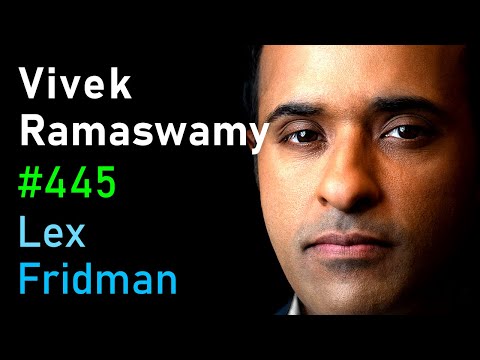
September 25, 2024 / Episode #445
Vivek Ramaswamy: Trump, Conservatism, Nationalism, Immigration, and War
Vivek Ramaswamy is a conservative politician, entrepreneur, and author of many books on politics, including his latest titled Truths: The Future of America First. Thank you for listening ❤ Check out our sponsors: https://lexfridman.com/sponsors/ep445-sc See below for timestamps, transcript, and to give feedback, submit questions, contact Lex, etc.
Best moment
Introduction
And the outcome here is a horrific man-made famine, not a natural disaster, not bad harvests, but a man-made famine as a result of then the compulsion that gets used by the Soviet state to extract those resources, cordoning off the area, not allowing starving people to escape. You put very well some of the implications of this case study in how things look in the abstract versus in practice, and those phenomena were going to haunt the rest of the experience of the Soviet Union. The whole notion that up and down the chain of command, everybody is falsifying or tinkering with or purifying the statistics or their reports in order not to look bad and not to have vengeance visited upon them reaches the point where nobody, in spite of the pretense of comprehensive knowledge, there's a state planning agency that creates five-year plans for the economy as a whole and which is supposed to have accurate statistics, all of this is founded upon a foundation of sand.

September 20, 2024 / Episode #444
Vejas Liulevicius: Communism, Marxism, Nazism, Stalin, Mao, and Hitler
Vejas Liulevicius is a historian specializing in Germany and Eastern Europe, who has lectured extensively on Marxism and the rise, the reign, and the fall of Communism. Thank you for listening ❤ Check out our sponsors: https://lexfridman.com/sponsors/ep444-sc See below for timestamps, transcript, and to give feedback, submit questions, contact Lex, etc.
Best moment
Ancient vs modern world
Rome always wins because even if they lose battles, they go to the Italian allies and half citizens and raise new armies. So how do you beat them? He can never raise that many troops himself. And Hannibal, I think correctly, figures out the one way to maybe defeat Rome is to cut them away from their allies. Well, how do you do this? Hannibal's plan is, "I'm not going to wait and fight the Romans in Spain or North Africa. I'm going to invade Italy. I'm going to strike at the heart of this growing Roman Empire. And my hope is that if I can win a couple big battles against Rome in Italy, the Italians will want their freedom back and they'll rebel from Rome and maybe even join me because most people who have been conquered want their freedom back, so this is a reasonable plan." Hannibal famously crosses the Alps with elephants. Dramatic stuff. Nobody expects him to do this. Nobody thinks you can do this. Shows up in Northern Italy. Romans send an army. Hannibal massacres them. He is a military genius. Rome takes a year, raises a second army. We know this story, sends it against Hannibal. Hannibal wipes them out.

September 12, 2024 / Episode #443
Gregory Aldrete: The Roman Empire - Rise and Fall of Ancient Rome
Gregory Aldrete is a historian specializing in ancient Rome and military history. Thank you for listening ❤ Check out our sponsors: https://lexfridman.com/sponsors/ep443-sc See below for timestamps, transcript, and to give feedback, submit questions, contact Lex, etc.
Best moment
Introduction
I don't know if you know this, but some people call you a fascist. Yeah, they do. So I figure it's all right to call them a communist. Yeah, they call me a lot worse than I call them.
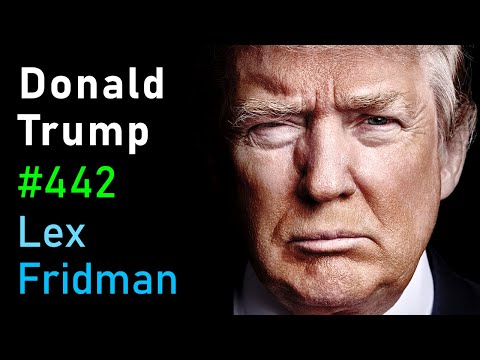
September 3, 2024 / Episode #442
Donald Trump Interview
Donald Trump is the 45th President of the United States and the Republican candidate in the 2024 US Presidential Election. Thank you for listening ❤ Check out our sponsors: https://lexfridman.com/sponsors/ep442-sc See below for timestamps, transcript, and to give feedback, submit questions, contact Lex, etc.
Best moment
Introduction
Communism makes no sense at all, totally opposed to human nature. It never works. It always evolves into dictatorship. It creates a power vacuum. When you say, "Hey, there's no structure of power here. We're all equal. It's a flat line," one guy usually gets up, because that's human nature, and goes, "I don't think so. I think if you're going to leave a power vacuum, I'm going to take that power vacuum." Corporatism hates competition. It wants monopoly and oligopoly power. Whereas capitalism loves competition and wants the free markets. When mainstream media has you hooked, you got no hope because you don't have the right information. You have propaganda, you have marketing. You don't have real news. When you're in the online world, it's chaotic. And don't get me wrong, it's got plenty of downsides, but within that chaos, the truth begins to emerge. Trump is a massive risk because of all the things we talked about earlier, but there is a percentage chance that he's such a wild card that he overturns the whole system, and that is why the establishment is a little scared of him.
August 30, 2024 / Episode #441
Cenk Uygur: Trump vs Harris, Progressive Politics, Communism & Capitalism
Cenk Uygur is a progressive political commentator and host of The Young Turks. Thank you for listening ❤ Check out our sponsors: https://lexfridman.com/sponsors/ep441-sc See below for timestamps, transcript, and to give feedback, submit questions, contact Lex, etc.
Best moment
Introduction
So I was trying to figure out how to do photorealistic AI photos, and it was ... Stable Diffusion by itself is not doing that well. The faces look all mangled, and it doesn't have enough resolution or something to do that well. But I started seeing these base models, these fine-tuned models, and people would train on porn, and I would try them and they would be very photorealistic. They would have bodies that actually made sense, body anatomy. But if you look at the photorealistic models that people use now, there's still core of porn there, of naked people. So I need to prompt out, and everybody needs to do this with AI startups, with imaging, you need to prompt out the naked stuff. You have to keep reminding the model, "You need to put clothes on the thing."
August 20, 2024 / Episode #440
Pieter Levels: Programming, Viral AI Startups, and Digital Nomad Life
Pieter Levels (aka levelsio on X) is a self-taught developer and entrepreneur who has designed, programmed, launched over 40 startups, many of which are highly successful. Thank you for listening ❤ Check out our sponsors: https://lexfridman.com/sponsors/ep440-sc See below for timestamps, transcript, and to give feedback, submit questions, contact Lex, etc.
Best moment
$1 million in cash
When you brought the $1 million in cash on Rogan's podcast, did you have security with you? We had security, but only by Joe Rogan's request. He said, "You're really going to bring it? Do you have security?" I said, "No." He's like, "Don't worry about it. I'll send my security."
August 14, 2024 / Episode #439
Craig Jones: Jiu Jitsu, $2 Million Prize, CJI, ADCC, Ukraine & Trolling
Craig Jones is a legendary jiu jitsu personality, competitor, co-founder of B-Team, and organizer of the CJI tournament that offers over $2 million in prize money. Thank you for listening ❤ Check out our sponsors: https://lexfridman.com/sponsors/ep439-sc See below for timestamps, transcript, and to give feedback, submit questions, contact Lex, etc.
Best moment
Introduction
The following is a conversation with Elon Musk, DJ Seo, Matthew MacDougall, Bliss Chapman, and Noland Arbaugh about Neuralink and the future of humanity. Elon, DJ, Matthew and Bliss are of course part of the amazing Neuralink team, and Noland is the first human to have a Neuralink device implanted in his brain. I speak with each of them individually, so use timestamps to jump around, or as I recommend, go hardcore, and listen to the whole thing. This is the longest podcast I've ever done. It's a fascinating, super technical, and wide-ranging conversation, and I loved every minute of it. And now, dear friends, here's Elon Musk, his fifth time on this, the Lex Fridman podcast,

August 2, 2024 / Episode #438
Elon Musk: Neuralink and the Future of Humanity
Elon Musk is CEO of Neuralink, SpaceX, Tesla, xAI, and CTO of X. DJ Seo is COO & President of Neuralink. Matthew MacDougall is Head Neurosurgeon at Neuralink. Bliss Chapman is Brain Interface Software Lead at Neuralink. Noland Arbaugh is the first human to have a Neuralink device implanted in his brain.
Best moment
Introduction
The following is a conversation with Jordan Jonas, winner of Alone Season 6, a show where the task is to survive alone in the arctic wilderness longer than anyone else. He is widely considered to be one of, if not the greatest competitors on that show. He has a fascinating life story that took him from a farm in Idaho and hoboing on trains across America to traveling with tribes in Siberia. All that helped make him into a world-class explorer, survivor, hunter, wilderness guide, and most importantly, a great human being with a big heart and a big smile. This was a truly fun and fascinating conversation. Let me also mention that at the end, after the episode, I'll start answering some questions and we'll try to articulate my thinking on some top-of-mind topics. So, if that's of interest to you, keep listening after the episode is over. This is The Lex Fridman Podcast. Support it. Please check out our sponsors in the description. And now, dear friends, here's Jordan Jonas.
July 21, 2024 / Episode #437
Jordan Jonas: Survival, Hunting, Siberia, God, and Winning Alone Season 6
Jordan Jonas is a wilderness survival expert, explorer, hunter, guide, and winner of Alone Season 6, a show in which the task is to survive alone in the arctic wilderness longer than anyone else. He is widely considered to be one of the greatest competitors in the history on that show.
Best moment
Introduction
The following is a conversation with Ivanka Trump, businesswoman, real estate developer, and former senior advisor to the president of the United States. I've gotten to know Ivanka well over the past two years. We've become good friends, hitting it off right away over our mutual love of reading, especially philosophical writings from Marcus Aurelius, Joseph Campbell, Alan Watts, Victor Franco, and so on. She is a truly kind, compassionate, and thoughtful human being. In the past, people have attacked her, in my view, to get indirectly at her dad, Donald Trump, as part of a dirty game of politics and clickbait journalism. These attacks obscured many projects and efforts, often bipartisan, that she helped get done, and they obscured the truth of who she is as a human being. Through all that, she never returned the attacks with anything but kindness and always walked through the fire of it all with grace. For this, and much more, she is an inspiration and I'm honored to be able to call her a friend.

July 2, 2024 / Episode #436
Ivanka Trump: Politics, Family, Real Estate, Fashion, Music, and Life
Ivanka Trump is a businesswoman, real estate developer, and former senior advisor to the President of the United States.
Best moment
Introduction
Hardship will show you who your real friends are. That's for sure. Can you read the quote once more? "Don't eat with people you wouldn't starve with."
June 28, 2024 / Episode #435
Andrew Huberman: Focus, Controversy, Politics, and Relationships
Andrew Huberman is a neuroscientist at Stanford and host of the Huberman Lab Podcast.
Best moment
Introduction
Can you have a conversation with an AI where it feels like you talked to Einstein or Feynman, where you ask them a hard question, they're like, "I don't know," and then after a week, they did a lot of research- They disappear and come back, yeah.

June 19, 2024 / Episode #434
Aravind Srinivas: Perplexity CEO on Future of AI, Search & the Internet
Arvind Srinivas is CEO of Perplexity, a company that aims to revolutionize how we humans find answers to questions on the Internet.
Best moment
Introduction
You have an origin of life event. It evolves for 4 billion years, at least on our planet. It evolves a technosphere. The technologies themselves start having this property we call life, which is the phase we're undergoing now. It solves the origin of itself and then it figures out how that process all works, understands how to make more life, and then can copy itself onto another planet so the whole structure can reproduce itself. The following is a conversation with Sara Walker, her third time in this podcast. She is an astrobiologist and theoretical physicist interested in the origin of life and in discovering alien life on other worlds. She has written an amazing new upcoming book titled Life As No One Knows It, The Physics of Life's Emergence. This book is coming out on August 6th, so please go pre-order it now. It will blow your mind. This is The Lex Fridman Podcast. To support it, please check out our sponsors in the description. And now, dear friends, here's Sara Walker.
June 13, 2024 / Episode #433
Sara Walker: Physics of Life, Time, Complexity, and Aliens
Sara Walker is an astrobiologist and theoretical physicist. She is the author of a new book titled "Life as No One Knows It: The Physics of Life's Emergence".
Best moment
Introduction
The following is a conversation with Kevin Spacey, a two-time Oscar-winning actor, who has starred in Se7en, The Usual Suspects, American Beauty, and House of Cards. He is one of the greatest actors ever, creating haunting performances of characters who often embody the dark side of human nature. Seven years ago, he was cut from House of Cards, and canceled by Hollywood and the world, when Anthony Rapp made an allegation that Kevin Spacey sexually abused him in 1986. Anthony Rapp then filed a civil lawsuit seeking $40 million. In this trial and all civil and criminal trials that followed, Kevin was acquitted. He has never been found guilty nor liable in the court of law.
June 5, 2024 / Episode #432
Kevin Spacey: Power, Controversy, Betrayal, Truth & Love in Film and Life
Kevin Spacey is a two-time Oscar-winning actor, who starred in Se7en, the Usual Suspects, American Beauty, and House of Cards, creating haunting performances of characters who often embody the dark side of human nature.
Best moment
Introduction
If we create general superintelligences, I don't see a good outcome long-term for humanity. So there is X-risk, existential risk, everyone's dead. There is S-risk, suffering risks, where everyone wishes they were dead. We have also idea for I-risk, ikigai risks, where we lost our meaning. The systems can be more creative. They can do all the jobs. It's not obvious what you have to contribute to a world where superintelligence exists. Of course, you can have all the variants you mentioned, where we are safe, we are kept alive, but we are not in control. We are not deciding anything. We're like animals in a zoo. There is, again, possibilities we can come up with as very smart humans and then possibilities something a thousand times smarter can come up with for reasons we cannot comprehend. The following is a conversation with Roman Yampolskiy, an AI safety and security researcher and author of a new book titled AI: Unexplainable, Unpredictable, Uncontrollable. He argues that there's almost 100% chance that AGI will eventually destroy human civilization. As an aside, let me say that I'll have many often technical conversations on the topic of AI, often with engineers building the state-of-the-art AI systems. I would say those folks put the infamous P(doom) or the probability of AGI killing all humans at around one to 20%, but it's also important to talk to folks who put that value at 70, 80, 90, and is in the case of Roman, at 99.99 and many more nines percent.
June 2, 2024 / Episode #431
Roman Yampolskiy: Dangers of Superintelligent AI
Roman Yampolskiy is an AI safety researcher and author of a new book titled AI: Unexplainable, Unpredictable, Uncontrollable.
Best moment
Introduction
The act of remembering can change the memory. If you remember some event and then I tell you something about the event, later on when you remember the event, you might remember some original information from the event as well as some information about what I told you. And sometimes if you're not able to tell the difference, that information that I told you gets mixed into the story that you had originally. So now I give you some more misinformation or you're exposed to some more information somewhere else and eventually your memory becomes totally detached from what happened. The following is a conversation with Charan Ranganath, a psychologist and neuroscientist at UC Davis specializing in human memory. He's the author of, Why We Remember. Unlocking Memory's Power To Hold On To What Matters. This is the Lex Fridman podcast. To support it, please check out our sponsors in the description. And now, dear friends, here's Charan Ranganath. Danny Kahneman describes the experiencing self and the remembering self and that happiness and satisfaction you gained from the outcomes of your decisions do not come from what you've experienced, but rather from what you remember of the experience. So can you speak to this interesting difference that you write about in your book of the experiencing self and the remembering self?
May 25, 2024 / Episode #430
Charan Ranganath: Human Memory, Imagination, Deja Vu, and False Memories
Charan Ranganath is a psychologist and neuroscientist at UC Davis, specializing in human memory. He is the author of a new book titled Why We Remember.
Best moment
Bushmaster snakes
So for people who don't know, bushmaster snakes, what are these things? These are vipers, I believe it's the largest viper on Earth.

May 15, 2024 / Episode #429
Paul Rosolie: Jungle, Apex Predators, Aliens, Uncontacted Tribes, and God
Paul Rosolie is a naturalist, explorer, author, and founder of Junglekeepers, dedicating his life to protecting the Amazon rainforest. Support his efforts at https://junglekeepers.org
Best moment
Introduction
The whole point of relativity is to say there's no such thing as right now when you're far away. That is doubly true for what's inside a black hole. You might think, "Well, the galaxy is very big." It's really not. It's some tens of thousands of light years across and billions of years old. You don't need to move at a high fraction of the speed of light to fill the galaxy. The number of worlds is ...

April 22, 2024 / Episode #428
Sean Carroll: General Relativity, Quantum Mechanics, Black Holes & Aliens
Sean Carroll is a theoretical physicist, author, and host of Mindscape podcast.
Best moment
Introduction
When we go to the dojos there, we all get thrown by people that never come out to be world champions. They're just in the mix or they're going through three years of university and then they go. We had a guy, we had a guy that came in. He was business guy, came in with his suitcase in his tie up like that. And he's in his lunch hour. He's in his lunch hour, right? So it's got to be quick. Yeah.
April 20, 2024 / Episode #427
Neil Adams: Judo, Olympics, Winning, Losing, and the Champion Mindset
Neil Adams is a judo world champion, 2-time Olympic silver medalist, 5-time European champion, and often referred to as the Voice of Judo.
Best moment
Introduction
Naively I certainly thought that all humans would have words for exact counting, and the Piraha don't. Okay, so they don't have any words for even one. There's not a word for one in their language. And so there's certainly not a word for two, three or four. And so that blows people's minds often. Yeah, that's blowing my mind.
April 17, 2024 / Episode #426
Edward Gibson: Human Language, Psycholinguistics, Syntax, Grammar & LLMs
Edward Gibson is a psycholinguistics professor at MIT and heads the MIT Language Lab.
Best moment
Introduction
There's two people in the back, two of her homegirls wearing sheisty masks. I'm like, "What are we doing? Where are we going?" She goes, "We're going to go film the riot. We're going to Lake Street." We drive down there, Kmart is burning, Target is burning, everything is on fire. She has the Sony a7, she gives me a microphone and she's like, "Go talk to that guy." That was the guy with a molotov cocktail in his hand who had just burned Kmart down. I go, "What should I ask him? She goes, "What's on your mind?" I walk up to him and I'm like, "What's on your mind?" The following is a conversation with Andrew Callaghan, host of Channel 5 on YouTube, where he does Gazelle style interviews with fascinating humans at the edges of society. The so-called vagrants, vagabonds, runaways, outlaws, from QAnon adherence to fish heads, O'Block residents, and much more. He created the documentary that I highly recommend called This Place Rules, on the undercurrents that led to the January 6th Capitol riots. This is the Lex Fridman podcast. To support it, please check out our sponsors in the description. Now, dear friends, here's Andrew Callaghan.
April 13, 2024 / Episode #425
Andrew Callaghan: Channel 5, Gonzo, QAnon, O-Block, Politics & Alex Jones
Andrew Callaghan is the host of Channel 5 on YouTube, where he does street interviews with fascinating humans at the edges of society, the so-called vagrants, vagabonds, runaways, outlaws, from QAnon adherents to Phish heads to O Block residents and much more.
Best moment
Introduction
If I hate you, that's great, but if I have a story to support that hate, that's even better. One of your favorite words, "Jihad."
April 5, 2024 / Episode #424
Bassem Youssef: Israel-Palestine, Gaza, Hamas, Middle East, Satire & Fame
Bassem Youssef is an Egyptian-American comedian & satirist, referred to as the Jon Stewart of the Arab World.
Best moment
Introduction
It's a sad state of affairs when some of the most influential voices in our country will label someone a lover or supporter of dictators simply because you're saying, "Hey, we shouldn't be going to war. There is another way." The following is a conversation with Tulsi Gabbard, who was a longtime Democrat, including being the vice chair of the Democratic National Committee. She endorsed Bernie in 2016 and Biden in 2020. She has been both loved and heavily criticized for her independent thinking and bold political stances, especially on topics of war and the military industrial complex. She served in the US military for many years, achieving the rank of Lieutenant Colonel. And now she's the author of a new book called For Love of Country.
April 2, 2024 / Episode #423
Tulsi Gabbard: War, Politics, and the Military Industrial Complex
Tulsi Gabbard is a politician, veteran, and author of For Love of Country.
Best moment
Introduction
The person who controls the algorithm controls the world, right? And if you are committed to one specific platform as your singular source of information or affiliated platforms, then whoever controls the algorithm or the programming there controls you. The following is a conversation with Mark Cuban, a multi-billionaire businessman, an investor and star of the series Shark Tank, longtime principal owner of the Dallas Mavericks, and is someone who is unafraid to get into frequent battles on X, most recently over topics of DEI, wokeism, gender and identity politics with the likes of Elon Musk and Jordan Peterson. This is the Lex Fridman podcast. To support it, please check out our sponsors in the description. And now, dear friends, here's Mark Cuban.
March 29, 2024 / Episode #422
Mark Cuban: Shark Tank, DEI & Wokeism Debate, Elon Musk, Politics & Drugs
Mark Cuban is a businessman, investor, star of TV series Shark Tank, long-time principal owner of Dallas Mavericks, and founder of Cost Plus Drugs.
Best moment
Introduction
Khabib beat Conor. Putin was on FaceTime before he even made it to the locker room. Trump sitting president, ex-president, watching all the fights calling, wants to talk about the fights. Valentina Shevchenko, every time she goes home, she meets with the president of the country. The list goes on and on and on. Elon Musk, Zuckerberg, I mean, the list goes on and on and on. The most powerful people in the world are all obsessed with fighting. The following is a conversation with Dana White, the president of the UFC, a mixed martial arts organization that revolutionized the art, the sport, and the business of fighting. And Dana is truly the mastermind behind the UFC. This is the Lex Fridman Podcast. To support it, please check out our sponsors in the description. And now, dear friends, here's Dana White. Do you remember when you saw your first fight?
March 25, 2024 / Episode #421
Dana White: UFC, Fighting, Khabib, Conor, Tyson, Ali, Rogan, Elon & Zuck
Dana White is the CEO and president of the UFC.
Best moment
Introduction
The United States has 1,770 nuclear weapons deployed, meaning those weapons could launch in as little as 60 seconds and up to a couple of minutes. Some of them on the bombers might take an hour or so. Russia has 1,674 deployed nuclear weapons. Same scenario. Their weapons systems are on par with ours. That's not to mention the 12,500 nuclear weapons amongst the nine nuclear armed nations. The sucking up into the nuclear stem, 300 mile an hour winds, you're talking about people miles out getting sucked up into that stem. When you see the mushroom cloud, Lex, that would be people 30, 40 mile wide mushroom cloud blocking out the sun, and that speaks nothing of the radiation poisoning that follows. In addition to the Launch on Warning concept, there's this other insane concept called Sole Presidential Authority. And you might think, in a democracy that's impossible, right? You can't just start a war. Well, you can just start a nuclear war if you are the commander in chief, the President of the United States. In fact, you're the only one who can do that. We are one misunderstanding, one miscalculation away from nuclear Armageddon. No matter how nuclear war starts, it ends with everyone dead.

March 22, 2024 / Episode #420
Annie Jacobsen: Nuclear War, CIA, KGB, Aliens, Area 51, Roswell & Secrecy
Annie Jacobsen is an investigative journalist and author of "Nuclear War: A Scenario" and many other books on war, weapons, government secrecy, and national security.
Best moment
Introduction
I think compute is going to be the currency of the future. I think it'll be maybe the most precious commodity in the world. I expect that by the end of this decade, and possibly somewhat sooner than that, we will have quite capable systems that we look at and say, "Wow, that's really remarkable." The road to AGI should be a giant power struggle. I expect that to be the case. Whoever builds AGI first gets a lot of power. Do you trust yourself with that much power?
March 18, 2024 / Episode #419
Sam Altman: OpenAI, GPT-5, Sora, Board Saga, Elon Musk, Ilya, Power & AGI
Sam Altman is the CEO of OpenAI, the company behind GPT-4, ChatGPT, Sora, and many other state-of-the-art AI technologies.
Best moment
Introduction
That's a good point. No, no, that's a good point. Now, some people accuse me of speaking very slowly, and they're advised on YouTube to turn up the speed twice to three times whenever I'm on. One of the reasons I speak slowly is because I attach value to every word I say.

March 14, 2024 / Episode #418
Israel-Palestine Debate: Finkelstein, Destiny, M. Rabbani & Benny Morris
Norman Finkelstein and Benny Morris are historians. Mouin Rabbani is a Middle East analyst. Steven Bonnell (aka Destiny) is a political livestreamer.
Best moment
Growing up in South Africa
Growing up in South Africa, you said it was a violent place. What are some formative moments that you remember from that time? South Africa was, so I grew up in apartheid South Africa, but more specifically the fall of apartheid. I was a teenager in the '80s and our community would, part of our social life frankly, was the anti-apartheid protests and to go be with white people, Black people, kind of mixing it all altogether. The most formative experiences, frankly, how much I appreciate a place like America where we have value for human life. So, that was a country where human life was not valued. It's a weird thing to come from that to here where we take it so seriously, if someone dies in a war or something like that, and we just didn't take it seriously.
March 10, 2024 / Episode #417
Kimbal Musk: The Art of Cooking, Tesla, SpaceX, Zip2, and Family
Kimbal Musk is a chef, entrepreneur, and author of The Kitchen Cookbook: Cooking for Your Community.
Best moment
Introduction
I see the danger of this concentration of power through proprietary AI systems as a much bigger danger than everything else. What works against this is people who think that for reasons of security, we should keep AI systems under lock and key because it's too dangerous to put it in the hands of everybody. That would lead to a very bad future in which all of our information diet is controlled by a small number of companies who proprietary systems. I believe that people are fundamentally good, and so if AI, especially open source AI can make them smarter, it just empowers the goodness in humans.
March 7, 2024 / Episode #416
Yann Lecun: Meta AI, Open Source, Limits of LLMs, AGI & the Future of AI
Yann LeCun is the Chief AI Scientist at Meta, professor at NYU, Turing Award winner, and one of the most influential researchers in the history of AI.
Best moment
Introduction
What happened during World War II? Was that once the Germans started to run out of manpower, they created foreign legion groups. But because those people were not Aryans, they couldn't be trusted. So they were put under the command of Heinrich Himmler and the commando SS, and became known as SS Waffen units, and one of such units was created in Ukraine. The following is a conversation with Serhii Plokhy, a historian at Harvard University and the director of the Ukrainian Research Institute, also at Harvard. As a historian, he specializes in the history of Eastern Europe with an emphasis on Ukraine. He wrote a lot of great books on Ukraine and Russia, the Soviet Union, on Slavic peoples in general across centuries, on Chernobyl and nuclear disasters, and on the current war in Ukraine, a book titled The Russo-Ukrainian War: The Return of History.
March 4, 2024 / Episode #415
Serhii Plokhy: History of Ukraine, Russia, Soviet Union, KGB, Nazis & War
Serhii Plokhy is a Ukrainian historian at Harvard University, director of the Ukrainian Research Institute, and an author of many books on history of Eastern Europe, including his latest book The Russo-Ukrainian War: The Return of History.
Best moment
Introduction
... he said very specifically, "Depending on the questions you ask Putin, you could be arrested or not." And I said, "Listen to what you're saying. You're saying the US government has control over my questions and they'll arrest me if I ask the wrong question. How are we better than Putin if that's true?" Killing Navalny during the Munich Security Conference in the middle of a debate over $60 billion in Ukraine funding. Maybe the Russians are dumb. I didn't get that vibe at all. I don't think we kill people in other countries to affect election outcomes. Oh wait, no, we do it a lot and have for 80 years. The following is a conversation with Tucker Carlson, a highly influential and often controversial political commentator. When he was a Fox, Time Magazine called him the most powerful conservative in America. After Fox. He has continued to host big, impactful interviews and shows on X, on the Tucker Carlson podcast, and on tuckercarlson.com. I recommend subscribing, even if you disagree with his views. It is always good to explore a diversity of perspectives. Most recently, he interviewed the President of Russia of Vladimir Putin. We discussed this, the topic of Russia, Putin, Navalny, and the War in Ukraine at length in this conversation. Please allow me to say a few words about the very fact that I did this interview. I have received a lot of criticism publicly and privately when I announced that I'll be talking with Tucker.
February 27, 2024 / Episode #414
Tucker Carlson: Putin, Navalny, Trump, CIA, NSA, War, Politics & Freedom
Tucker Carlson is a highly-influential political commentator. You can watch and listen to him on the Tucker Carlson Network and the Tucker Carlson Podcast.
Best moment
Introduction
The only person who'll cause you more harm than a thief with a dagger is a journalist with a pen. The following is a conversation with Bill Ackman, a legendary activist investor who has been part of some of the biggest and at times, controversial trades in history. Also, he is fearlessly vocal on X, FKA Twitter, and uses the platform to fight for ideas he believes in. For example, he was a central figure in the resignation of the President of Harvard University, Claudine Gay, the saga of which we discuss in this episode. This is the Lex Fridman podcast to support it. Please check out our sponsors in the description. And now to you, friends, here's Bill Ackman.

February 20, 2024 / Episode #413
Bill Ackman: Investing, Financial Battles, Harvard, DEI, X & Free Speech
Bill Ackman is an investor who has led some of the biggest and controversial financial trades in history. He is founder and CEO of Pershing Square Capital Management.
Best moment
Early robots
Well, I was always a builder from a young age. I was lucky. My father was a frustrated engineer, and by that, I mean he wanted to be an aerospace engineer, but his mom from the old country thought that that would be like a grease monkey, and so she said no. So he became an accountant. But the result of that was our basement was always full of tools and equipment and electronics, and from a young age, I would watch him assembling an ICO kit or something like that. I still have a couple of his old ICO kits.
February 16, 2024 / Episode #412
Marc Raibert: Boston Dynamics and the Future of Robotics
Marc Raibert is founder and former long-time CEO of Boston Dynamics, and recently Executive Director of the newly-created Boston Dynamics AI Institute.
Best moment
Introduction
You always know when you live in Gaza that it's only a matter of time before the next bombs drop. You know if you're in Gaza that you are waiting for your death. People dream about going out in the world and pursuing education. People dream about going out in the world and pursuing economic opportunity. In Gaza, your idea of opportunity is an opportunity to see the next year. That has been the case. And so, when we talk about this not existing in a vacuum, if people only hear about Gaza on October 7th, that is a major part of the problem. And that is, again, part of the problem of our ignorance and our apathy. Why is it that the plight of the people of Gaza is not brought up until an attack happens on Israel? The following is a conversation with Imam Dr. Omar Suleiman, his second time on the podcast. He is a Palestinian American, a Muslim scholar, a civil rights leader, president of the Yaqeen Institute for Islamic Research, and is one of the most influential Muslims in the world. Our previous conversation was focused on Islam. This time the focus was on Gaza and Palestine.
February 2, 2024 / Episode #411
Omar Suleiman: Palestine, Gaza, Oct 7, Israel, Resistance, Faith & Islam
Omar Suleiman is a Palestinian-American Muslim scholar, civil rights leader, and President of the Yaqeen Institute for Islamic Research.
Best moment
Introduction
Something has to happen with Iran. There has to be some diplomatic bilateral communication there. No. What has to happen is the containment of Iran.

January 23, 2024 / Episode #410
Ben Shapiro vs Destiny Debate: Politics, Jan 6, Israel, Ukraine & Wokeism
Ben Shapiro is a conservative political commentator, host of The Ben Shapiro Show, co-founder of The Daily Wire, and author of The Authoritarian Moment and other books. Steven Bonnell, aka Destiny, is a liberal political commentator and a live streamer on YouTube.
Best moment
Introduction
She found $40,000 in cash in my freezer one night. So she's like, "What is going on?" So we have this conversation and I tell her, "Look, people are looking for me." "Who?" "Law enforcement." "Which ones?" "All of them." She's like, "For what?" I go, "Mostly bank fraud." And she's like, "Well, how are they not finding you? I mean, people know you like your general contractor," which I met four months before, this guy, six months before, this one, two months before. She's like, "So-and-so, so-and-so..." And I'm like, "Right. Right." She's like, "I mean, they've got your name, they've got your... I go, "Well, that's identity theft." And she was like, "What do you mean?" I said, "Well, my name's not... it's not Joseph Carter." "What is your name?" I go "Look, don't even worry about it." The following is a conversation with Matthew Cox, a conman recently released from federal prison where he served 13 years for bank fraud, mortgage fraud, identity theft, passport fraud, and other charges. He has admitted guilt to all of it. He has written true-crime stories of many of his fellow prisoners. And now he continues this work by interviewing criminals about their crimes on his YouTube channel that I recommend called Inside True Crime. Exploring the mind of a criminal is exploring human nature at the extremes, often in its most raw and illuminating form. And that is something I definitely want to do with this podcast to understand the human mind and everything it is capable of. This is the Lex Fridman Podcast. To support it, please check out our sponsors in the description. And now, dear friends, here's Matthew Cox.
January 17, 2024 / Episode #409
Matthew Cox: FBI Most Wanted Con Man - $55 Million in Bank Fraud
Matthew Cox is a former con man who served 13 years in federal prison for bank fraud, mortgage fraud, and identity theft. He is the author of many books, including his memoir Shark in the Housing Pool, and runs the YouTube channel Inside True Crime.
Best moment
Introduction
I am standing on the edge of the cliff the entire night, and if I mess something up, mess it up, what even is a mistake? But if I do a little clunker or whatever it is, it's like, so what? I wouldn't have played half the stuff that I'm playing if I wasn't constantly standing on the edge of the cliff, like wild. Why stand at the edge of the cliff?

January 9, 2024 / Episode #408
Tal Wilkenfeld: Music, Guitar, Bass, Jeff Beck, Prince, and Leonard Cohen
Tal Wilkenfeld is a singer-songwriter, bassist, and guitarist. She has performed with legendary artists including Jeff Beck, Prince, Incubus, Eric Clapton, Herbie Hancock, Mick Jagger, Rod Stewart, Hans Zimmer, Pharrell Williams, and many more.
Best moment
Introduction
The following is a conversation with Guillaume Verdon, the man behind the previously anonymous account @BasedBeffJezos on X. These two identities were merged by a doxxing article in Forbes titled, Who Is @BasedBeffJezos, The Leader Of The Tech Elite's E/Acc Movement? So let me describe these two identities that coexist in the mind of one human. Identity number one, Guillaume, is a physicist, applied mathematician, and quantum machine learning researcher and engineer receiving his PhD in quantum machine learning, working at Google on quantum computing, and finally launching his own company called Extropic that seeks to build physics-based computing hardware for generative AI. Identity number two, Beff Jezos on X is the creator of the effective accelerationism movement, often abbreviated as e/acc, that advocates for propelling rapid technological progress as the ethically optimal course of action for humanity. For example, its proponents believe that progress in AI is a great social equalizer, which should be pushed forward. e/acc followers see themselves as a counterweight to the cautious view that AI is highly unpredictable, potentially dangerous, and needs to be regulated. They often give their opponents the labels of quote, "doomers or decels" short for deceleration, as Beff himself put it, "e/acc is a mimetic optimism virus."
December 29, 2023 / Episode #407
Guillaume Verdon: Beff Jezos, E/acc Movement, Physics, Computation & AGI
Guillaume Verdon (aka Beff Jezos on Twitter) is a physicist, quantum computing researcher, and founder of e/acc (effective accelerationism) movement.
Best moment
Introduction
That's all that matters, that he got there, that he got to the place to act like a fighter. To do what we want him to do, to be ready to persevere, to go beyond the comfort level, to do another round. He didn't want to. Damn right he didn't want to, but he knew we want him to. And he knew in order to pass the test, he had to do it. He goes, "Now, it's going to be your job to get him in the gym, make him mentally stronger, make him face things, and teach him how to slip punches and create holes, and fill those freaking holes with devastating punches..." There's a cuss, "... with punches with bad intentions." The following is a conversation with Teddy Atlas, a legendary and, at times, controversial boxing trainer and commentator. When I was going to this conversation with Teddy, I was ready to talk boxing, styles, matches, techniques, tactics, and his analysis of individual fighters, like Mike Tyson, Michael Moorer, Klitschkos, Usyk, Povetkin, Lomachenko, Triple G, Canelo, Muhammad Ali, Sugar Ray Leonard, Hagler, Duran, Floyd, and on and on and on. Like I said, I came ready to talk boxing, but I stayed for something even bigger, the Shakespearian human story of Teddy Atlas, Cus D'Amato, and Mike Tyson.
December 24, 2023 / Episode #406
Teddy Atlas: Mike Tyson, Cus D'Amato, Boxing, Loyalty, Fear & Greatness
Teddy Atlas is boxing trainer to 18 world champions, ESPN boxing commentator, and host of podcast THE FIGHT with Teddy Atlas.
Best moment
Introduction
The following is a conversation with Jeff Bezos, founder of Amazon and Blue Origin. This is his first time doing a conversation of this kind and of this length. And as he told me, it felt like we could have easily talked for many more hours, and I'm sure we will. This is the Lex Fridman Podcast. And now, dear friends, here's Jeff Bezos.
December 14, 2023 / Episode #405
Jeff Bezos: Amazon and Blue Origin
Jeff Bezos is the founder of Amazon and Blue Origin.
Best moment
Introduction
Every star in the sky probably has planets and life is probably emerging on these planets. But I think the commentorial space associated with these planets is so different. Our causal cones are never going to overlap or not easily. And this is the thing that makes me sad about alien life, why we have to create alien life in the lab as quickly as possible because I don't know if we are going to be able to build architectures that will intersect with alien intelligence architectures. Intersect, you don't mean in time or space-

December 9, 2023 / Episode #404
Lee Cronin: Controversial Nature Paper on Evolution of Life and Universe
Lee Cronin is a chemist at University of Glasgow.
Best moment
Introduction
The following is a conversation with Lisa Randall, a theoretical physicist and cosmologist at Harvard. Her work involves improving our understanding of particle physics, supersymmetry, baryogenesis, cosmological inflation, and dark matter. This is the Lex Friedman podcast. To support it, please check out our sponsors in the description. Now, dear friends, here's Lisa Randall.

December 3, 2023 / Episode #403
Lisa Randall: Dark Matter, Theoretical Physics, and Extinction Events
Lisa Randall is a theoretical physicist at Harvard.
Best moment
Humor and absurdity
So what do you find funny? What makes you giggle in the most joyful of ways? The suffering of others? I mean, there are YouTube videos of fat people falling down and they're really funny.
November 25, 2023 / Episode #402
Michael Malice: Thanksgiving Pirate Special
Michael Malice is a political thinker, podcaster, author, and anarchist.
Best moment
Introduction
The following is a conversation with John Mearsheimer, a professor at University of Chicago and one of the most influential and controversial thinkers in the world. He teaches, speaks and writes about the nature of power and war on the global stage, in history and today. Please allow me to say, once again, my hope for this little journey I'm on. I will speak to everyone on all sides with compassion, with empathy, and with backbone. I'll speak with Vladimir Putin and with Volodymyr Zelenskyy, with Russians and with Ukrainians, with Israelis and with Palestinians, with everyone. My goal is to do whatever small part I can to decrease the amount of suffering in the world by trying to reveal our common humanity. I believe that in the end, truth and love wins. I will get attacked for being naive, for being a shill, for being weak. I'm none of those things, but I do make mistakes and I will get better. I love you all.

November 18, 2023 / Episode #401
John Mearsheimer: Israel-Palestine, Russia-Ukraine, China, NATO, and WW3
John Mearsheimer is an international relations scholar at University of Chicago. He is one of the most influential and controversial thinkers in the world on the topics of war and power.
Best moment
War and human nature
The following is a conversation with Elon Musk, his fourth time on this, the Lex Fridman Podcast. I thought you were going to finish it. It's one of the greatest themes in all of film history. Yeah, that's great.
November 9, 2023 / Episode #400
Elon Musk: War, AI, Aliens, Politics, Physics, Video Games, and Humanity
Elon Musk is CEO of X, xAI, SpaceX, Tesla, Neuralink, and The Boring Company.
Best moment
Hamas attack on Israel
We did a lot of this conversation before the Hamas attack on Israel, and we decided to sit down again and finish the discussion to address the current situation which is still developing. If I may allow me to summarize the situation as it stands today, it's morning Monday, October 9th. On Saturday, October 7th at 6:30 AM Israel time, Hamas fired thousands of rockets into Southern Israel. The rocket attacks served as cover for a multi-pronged infiltration of Israel territory by over 1000 Hamas militants. This is shortly after at 7:40 AM. The Hamas militants went door to door in border towns killing civilians and taking captives, including women and children. In response to this, Israeli Air Force began carrying out strikes in Gaza, also fighting on the ground in Israel to clear out Hamas militants from Israel territory and preparing to mobilize Israeli troops for potential ground attack on Hamas and Gaza. Now, of course, this is what it appears to be right now, and this along with other things might change because the situation is still developing. The IDF is ordering civilian residents of Gaza to evacuate their homes for their safety. Benjamin Netanyahu declared war in several statements and warned Israelis to brace themselves for a long and difficult war. Just today, Israeli ministers ordered a "complete siege of Gaza interrupting supplies of electricity, food, water, and fuel from Israel to Gaza." As of now, October 9th, the death toll is over 1200 people and over 130 hostages taken to Gaza by Hamas. As I said, the events are rapidly unfolding, so these numbers will sadly increase, but hopefully our words here can at least in part, speak to the timeless underlying currents of the history and as you write about the power dynamics of the region. For people who don't know, Gaza is a 25 miles long, six miles wide strip of territory along the Mediterranean Sea. It borders Israel on the east and north and Egypt on the southwest. It's densely populated, about 2.3 million people, and there's been a blockade of Gaza by Israel and Egypt since 2007 when Hamas took power. I could just summarize that Hamas is a Palestinian militant group which rules the Gaza Strip. It originated in 1988, and it came to power in Gaza in 2006. As part of its charter, it's sworn to the destruction of Israel, and it is designated by the United States, European Union, UK, and of course Israel as a terrorist group.
October 11, 2023 / Episode #399
Jared Kushner: Israel, Palestine, Hamas, Gaza, Iran, and the Middle East
Jared Kushner is a former Senior Advisor to President Donald Trump and author of Breaking History.
Best moment
Introduction
The following is a conversation with Mark Zuckerberg, Inside the Metaverse. Mark and I are hundreds of miles apart from each other in physical space, but it feels like we're in the same room because we appear to each other as photorealistic Kodak Avatars in 3D with spatial audio. This technology is incredible and I think it's the future of how human beings connect to each other in a deeply meaningful way on the internet. These avatars can capture many of the nuances of facial expressions that we humans use to communicate and motion to each other. Now, I just need to work on upgrading my emotion expressing capabilities of the underlying human. This is the Lex Fridman Podcast. And now, dear friends, here's Mark Zuckerberg. This is so great. Lighting change? Wow.
September 28, 2023 / Episode #398
Mark Zuckerberg: First Interview in the Metaverse
Mark Zuckerberg is CEO of Meta.
Best moment
Introduction
... if the goal is the project of human knowledge, which is to know the world as it is, you cannot know the world as it is without knowing what people really think. What people really think is an incredibly important fact to know. Every time you're actually saying, "You can't say that," you're actually depriving yourself of the knowledge of what people really think. You're causing what [inaudible 00:00:24], who's on our Board of advisors calls preference falsification. You end up with an inaccurate picture of the world.
September 25, 2023 / Episode #397
Greg Lukianoff: Cancel Culture, Deplatforming, Censorship & Free Speech
Greg Lukianoff is a free speech advocate, first-amendment attorney, president of FIRE - Foundation for Individual Rights and Expression, and co-author of The Coddling of the American Mind and a new book The Canceling of the American Mind.
Best moment
Introduction
We have been encouraged culturally to criticize people we're in long-term relationships with. Not new relationships. New relationships, you put the person on a pedestal, you're allowed to just... Oh, they're wonderful. But every trope out there in every form of popular media is the wife rolling her eyes at the husband, and the husband being like, ugh, this loathsome harpy that castrated me, as if people are just passive players in their lives. And I think that is an incredibly toxic message to send to people, that this is how we should be relating to our partner. Don't take the piss out of your partner in front of people. The successful relationships I've seen are where people are just cheering for their partner, where they're thick as thieves, where there is just this feeling of, man, they like each other. They got each other's back like you wouldn't believe. Man, you could take sides against anybody. But take sides against their partner? You're going down. And when you see a couple that has that, that's so hard to break. But I think that comes from having a steadfast, no, I don't do that. I don't shit talk my partner, and you don't shit talk my partner to me. Because I think we're just so criticized by the world, the world is so full of criticism, we criticize ourselves so harshly, that having a partner who no matter what is like, "You've got this. I'm with you. Okay yeah, you screwed up. I see it. Look, I'm not going to lie to you about your blind spots. You screwed up. But you know what? People screw up sometimes. You got a right to screw up. A lot of people screw up. Come on, get up. Let's go. I know you have it in you." If you have that person, I feel like that's a superpower.
September 18, 2023 / Episode #396
James Sexton: Divorce Lawyer on Marriage, Relationships, Sex, Lies & Love
James Sexton is a divorce attorney and author.
Best moment
Introduction
I hope with my books I'm saying, "This isn't a how-to guide, but this is somebody you can walk alongside." You can see Einstein growing up Jewish in Germany. You can see Jennifer Doudna growing up or as an outsider, or Leonardo da Vinci or Elon Musk, in really violent South Africa with a psychologically difficult father, and getting off the train when he goes to an anti-apartheid concert with his brother and there's a man with a knife sticking out of his head, and they step into the pool of blood and it's sticky on their soles. This causes scars that last the rest of your life. The question is not how do you avoid getting scarred, it's how do you deal with it. The following is a conversation with Walter Isaacson, one of the greatest biography writers ever, having written incredible books on Albert Einstein, Steve Jobs, Leonardo da Vinci, Jennifer Doudna, Benjamin Franklin, Henry Kissinger, and now a new one on Elon Musk. We talked for hours, on and off the mic. I'm sure we'll talk many more times. Walter is a truly special writer, thinker, observer, and human being.
September 10, 2023 / Episode #395
Walter Isaacson: Elon Musk, Steve Jobs, Einstein, Da Vinci & Ben Franklin
Walter Isaacson is an author of biographies on Elon Musk, Steve Jobs, Einstein, Benjamin Franklin, Leonardo da Vinci, and many others.
Best moment
Introduction
Whenever we start a new project, it has to have these ingredients of simultaneous complexity. It has to be novel in terms of the synthetic biology, material science, robotics, engineering, all of these elements that are discipline based or rooted must be novel. If you can combine novelty in synthetic biology with a novelty in robotics, with a novelty in material science, with a novelty in computational design, you are bound to create something novel. The following is a conversation with Neri Oxman, an engineer, scientist, designer, architect, artist, and one of the kindest, most thoughtful and brilliant human beings I've ever gotten to know. For a long time, she led the mediated matter group at MIT that did research and built incredible stuff at the intersection of computational design, digital fabrication, material science, and synthetic biology, doing so at all scales from the microscale to the building scale. Now she's continuing this work at a very new company for now called Oxman, looking to revolutionize how humans design and build products working with nature, not against it.
September 1, 2023 / Episode #394
Neri Oxman: Biology, Art, and Science of Design & Engineering with Nature
Neri Oxman is a designer, engineer, scientist, and artist working on computational design, synthetic biology and digital fabrication, previously at MIT, and now at OXMAN.
Best moment
Introduction
Listen, when it comes to romantic relationships, if it's not a 100% in you, it ain't happening. And I've never seen a violation of that statement where it's like, "Yeah, it's mostly good." And this is like the negotiations, already it's doomed. And that doesn't mean someone has to be perfect. The relationship has to be perfect, but it's got to feel a 100% inside, like yes, yes, and yes. The following is a conversation with my dear friend Andrew Huberman, his fourth time on this podcast. It's my birthday, so this is a special birthday episode of sorts. Andrew flew down to Austin just to wish me a happy birthday, and we decided to do a podcast last second. We literally talked for hours beforehand and a long time after late into the night. He's one of my favorite human beings, brilliant scientists, incredible teacher, and a loyal friend. I'm grateful for Andrew. I'm grateful for good friends, for all the support and love I've gotten over the past few years. I'm truly grateful for this life, for the years, the days, the minutes, the seconds I've gotten to live on this beautiful earth of ours. I really don't want to leave just yet. I think I'd really like to stick around. I love you all. This is the Lex Fridman podcast. And now, dear friends, here's Andrew Huberman.
August 17, 2023 / Episode #393
Andrew Huberman: Relationships, Drama, Betrayal, Sex, and Love
Andrew Huberman is a neuroscientist at Stanford and host of the Huberman Lab Podcast.
Best moment
Introduction
There is a certain perspective where you might be thinking, what is the longest possible game that you could be playing? A short game is, for instance, cancer is playing a shorter game than your organism. Cancer is an organism playing a shorter game than the regular organism. Because the cancer cannot procreate beyond the organism, except for some infectious cancers like the ones that eradicated the Tasmanian devils, you typically end up with a situation where the organism dies together with the cancer, because the cancer has destroyed the larger system due to playing a shorter game. Ideally, you want to, I think, build agents that play the longest possible games. The longest possible games is to keep entropy at bay as long as possible, by doing interesting stuff. The following is a conversation with Joscha Bach, his third time on this podcast. Joscha is one of the most brilliant, and fascinating minds in the world, exploring the nature of intelligence, consciousness, and computation. He's one of my favorite humans to talk to about pretty much anything and everything. This is the Lex Fridman Podcast. To support it, please check out our sponsors in the description. Now, dear friends, here's Joscha Bach.
August 1, 2023 / Episode #392
Joscha Bach: Life, Intelligence, Consciousness, AI & the Future of Humans
Joscha Bach is a cognitive scientist, AI researcher, and philosopher.
Best moment
Introduction
Regardless of whatever was written in these books that were written thousands and thousands of years ago, the fact of the matter is no one has a right to go on slaughtering people, removing them from their homes and then continuing to live in their homes, continuing to drink coffee on their balconies decades and decades later, with no shame, with no introspection, with no reflection. No one has the right to do that. No one has the right to keep an entire population of people in a cage, which is what's happening to people in the West Bank who have no freedom of movement, which is what's happening in Gaza, which is blockaded to water, air, and land, and is deemed uninhabitable by human rights organizations like the UN. No one has a right to do that. The following is a conversation with Mohammed el-Kurd, a world-renowned Palestinian poet, writer, journalist, and an influential voice speaking out and fighting for the Palestinian cause. He provides a very different perspective on Israel and Palestine than my previous two episodes with Benjamin Netanyahu and Yuval Noah Harari. I hope his story and his words add to your understanding of this part of the world as it did to mine. I'll continue to have difficult long-form conversations such as these always with empathy and humility but with backbone. And please allow me to briefly comment about criticisms I receive of who I am as an interviewer and a human being. I am not afraid to travel anywhere or challenge anyone face-to-face, even if it puts my life in danger. But I'm also not afraid to be vulnerable, to truly listen, to empathize, to walk a mile in the well-worn shoes of those very different from me. It's this latter task, not the former one, that is truly the most challenging in conversations and in life, but to me, it is the only way. This is the Lex Fridman podcast. To support it, please check out our sponsors in the description. And now, dear friends, here's Mohammed el-Kurd.
July 24, 2023 / Episode #391
Mohammed El-Kurd: Palestine
Mohammed El-Kurd is a Palestinian writer and poet.
Best moment
Introduction
If we now find ourselves inside this kind of world of illusions created by an alien intelligence, that we don't understand, but it understands us, this is a kind of spiritual enslavement that we won't be able to break out of, because it understands us, it understands how to manipulate us, but we don't understand what is behind this screen of stories and images and songs. The following is a conversation with Yuval Noah Harari, a historian, philosopher, and author of several highly acclaimed, highly influential books, including Sapiens, Homo Deus and 21 Lessons for the 21st Century. He is also an outspoken critic of Benjamin Netanyahu and the current right-wing government in Israel. While much of this conversation is about the history and future of human civilization, we also discuss the political turmoil of present day Israel, providing a different perspective from that of my recent conversation with Benjamin Netanyahu.

July 17, 2023 / Episode #390
Yuval Noah Harari: Human Nature, Intelligence, Power, and Conspiracies
Yuval Noah Harari is a historian, philosopher, and author of Sapiens, Homo Deus, 21 Lessons for the 21st Century, and Unstoppable Us.
Best moment
Introduction
We should never, and I never sit aside and say, oh, they're just threatening to destroy us. They won't do it. If somebody threatens to eliminate you as Iran is doing today, and as Hitler did then and people discounted it, well, if somebody threatens to annihilate us, take them seriously and act to prevent it early on. Don't let them have the means to do so because that may be too late. The following is a conversation with Benjamin Netanyahu, prime Minister of Israel, currently serving his sixth term in office. He's one of the most influential, powerful, and controversial men in the world, leading a right-wing coalition government at the center of one of the most intense and long-lasting conflicts and crises in human history.
July 12, 2023 / Episode #389
Benjamin Netanyahu: Israel, Palestine, Power, Corruption, Hate, and Peace
Benjamin Netanyahu is the Prime Minister of Israel.
Best moment
Introduction
It's not our business to change the Russian government. And anybody who thinks it's a good idea to do regime change in Russia, which has more nuclear weapons than we do, is I think irresponsible. And Vladimir Putin himself has had... We will not live in a world without Russia and it was clear when he said that, that he was talking about himself and he has his hand on a button that could bring Armageddon to the entire planet. So why are we messing with this? It's not our job to change that regime, and we should be making friends with the Russians. We shouldn't be treating him as an enemy. Now we've pushed him into the camp with China. That's not a good thing for our country. And by the way, what we're doing now does not appear to be weakening Putin at all. The following is a conversation with Robert F. Kennedy Jr, candidate for the President of the United States, running as a Democrat. Robert is an activist, lawyer and author who has challenged some of the world's most powerful corporations seeking to hold them accountable for the harm they may cause. I love science and engineering. These two pursuits are, to me the most beautiful and powerful in the history of human civilization. Science is our journey, our fight for uncovering the laws of nature and leveraging them to understand the universe and to lessen the amount of suffering in the world. Some of the greatest human beings I've ever met, including most of my good friends, are scientists and engineers. Again, I love science, but science cannot flourish without epistemic humility, without debate, both in the pages of academic journals and in the public square, in good faith, long form conversations.
July 6, 2023 / Episode #388
Robert F. Kennedy Jr: CIA, Power, Corruption, War, Freedom, and Meaning
Robert F. Kennedy Jr. is an activist, lawyer, author, and candidate for the President of the Unites States.
Best moment
Introduction
What possible ideas do you have for how human species ends? Sure. I think the most obvious way to me is wire heading. We end up amusing ourselves to death. We end up all staring at that infinite TikTok and forgetting to eat. Maybe it's even more benign than this. Maybe we all just stop reproducing. Now, to be fair, it's probably hard to get all of humanity.
June 30, 2023 / Episode #387
George Hotz: Tiny Corp, Twitter, AI Safety, Self-Driving, GPT, AGI & God
George Hotz is a programmer, hacker, and the founder of comma-ai and tiny corp.
Best moment
Why AI will save the world
Marc Andreessen and Lex Fridman discuss why ai will save the world.
June 22, 2023 / Episode #386
Marc Andreessen: Future of the Internet, Technology, and AI
Marc Andreessen is the co-creator of Mosaic, co-founder of Netscape, and co-founder of the venture capital firm Andreessen Horowitz.
Best moment
Introduction
We've never bowed down to government pressure anywhere in the world, and we never will. We understand that we're hardcore, and actually, there is a bit of nuance about how different companies respond to this, but our response has always been just to say no. If they threaten to block, well, knock yourself out. You're going to lose Wikipedia. The following is a conversation with Jimmy Wales, co-founder of Wikipedia, one of, if not the most impactful websites ever, expanding the collective knowledge, intelligence, and wisdom of human civilization. This is Lex Fridman podcast. To support it, please check out our sponsors in the description. Now, dear friends, here's Jimmy Wales.

Best moment
Advice for young people
Matthew McConaughey and Lex Fridman discuss advice for young people.

June 13, 2023 / Episode #384
Matthew McConaughey: Freedom, Truth, Family, Hardship, and Love
Matthew McConaughey is an Oscar-winning actor and author of Greenlights.
Best moment
AI and open source movement
Mark Zuckerberg and Lex Fridman discuss ai and open source movement.
June 8, 2023 / Episode #383
Mark Zuckerberg: Future of AI at Meta, Facebook, Instagram, and WhatsApp
Mark Zuckerberg is CEO of Meta.
Best moment
Drinking with Joe Rogan and Tom Segura
Bert Kreischer and Lex Fridman discuss drinking with joe rogan and tom segura.
June 5, 2023 / Episode #382
Bert Kreischer: Comedy, Drinking, Rogan, Segura, Churchill & Kim Jong Un
Bert Kreischer is a comedian, actor, and podcaster. Check him out on Bertcast, 2 Bears 1 Cave, Something is Burning, and the new movie The Machine.
Best moment
Switching programming languages
Chris Lattner and Lex Fridman discuss switching programming languages.
June 2, 2023 / Episode #381
Chris Lattner: Future of Programming and AI
Chris Lattner is a legendary software and hardware engineer, leading projects at Apple, Tesla, Google, SiFive, and Modular AI, including the development of Swift, LLVM, Clang, MLIR, CIRCT, TPUs, and Mojo.
Best moment
Microfluidic bubble computation
Neil Gershenfeld and Lex Fridman discuss microfluidic bubble computation.

May 28, 2023 / Episode #380
Neil Gershenfeld: Self-Replicating Robots and the Future of Fabrication
Neil Gershenfeld is the director of the MIT Center for Bits and Atoms.
Best moment
Martin Luther King Jr.
Randall Kennedy and Lex Fridman discuss martin luther king jr..
May 24, 2023 / Episode #379
Randall Kennedy: The N-Word - History of Race, Law, Politics, and Power
Randall Kennedy is a law professor at Harvard and author of many seminal books on race, law, history, culture, and politics.
Best moment
Most beautiful idea in astronomy
Anna Frebel and Lex Fridman discuss most beautiful idea in astronomy.

May 18, 2023 / Episode #378
Anna Frebel: Origin and Evolution of the Universe, Galaxies, and Stars
Anna Frebel is an astronomer and astrophysicist at MIT.
Best moment
Freedom of thought and liberal arts
Harvey Silverglate and Lex Fridman discuss freedom of thought and liberal arts.
May 16, 2023 / Episode #377
Harvey Silverglate: Freedom of Speech
Harvey Silverglate is a free speech advocate, co-founder of FIRE, the Foundation for Individual Rights in Expression, and author of several books on freedom of speech and criminal justice. He is running for Harvard Board of Overseers on a platform of free speech. If you're a Harvard Alumni, please consider voting for him by Tue, May 16, 5pm ET: https://www.harvey4harvard.com/ballot
Best moment
Computation and nature of reality
Stephen Wolfram and Lex Fridman discuss computation and nature of reality.
May 9, 2023 / Episode #376
Stephen Wolfram: ChatGPT and the Nature of Truth, Reality & Computation
Stephen Wolfram is a computer scientist, mathematician, theoretical physicist, and the founder of Wolfram Research, a company behind Wolfram|Alpha, Wolfram Language, and the Wolfram Physics and Metamathematics projects.
Best moment
Donald Trump: Pros and cons
David Pakman and Lex Fridman discuss donald trump: pros and cons.
May 6, 2023 / Episode #375
David Pakman: Politics of Trump, Biden, Bernie, AOC, Socialism & Wokeism
David Pakman is a left-wing progressive political commentator and host of The David Pakman Show.
Best moment
Early days of Boston Dynamics
Robert Playter and Lex Fridman discuss early days of boston dynamics.

April 28, 2023 / Episode #374
Robert Playter: Boston Dynamics CEO on Humanoid and Legged Robotics
Robert Playter is CEO of Boston Dynamics, a legendary robotics company that over 30 years has created some of the most elegant, dextrous, and simply amazing robots ever built, including the humanoid robot Atlas and the robot dog Spot.
Best moment
Impact of AI on the job market
Manolis Kellis and Lex Fridman discuss impact of ai on the job market.
April 21, 2023 / Episode #373
Manolis Kellis: Evolution of Human Civilization and Superintelligent AI
Manolis Kellis is a computational biologist at MIT.
Best moment
Robots and human connection
Simone Giertz and Lex Fridman discuss robots and human connection.

April 16, 2023 / Episode #372
Simone Giertz: Queen of Sh*tty Robots, Innovative Engineering, and Design
Simone Giertz is an inventor, designer, engineer, and roboticist famous for a combination of humor and brilliant creative design in the systems and products she creates.
Best moment
Open letter to pause Giant AI Experiments
Max Tegmark and Lex Fridman discuss open letter to pause giant ai experiments.
April 13, 2023 / Episode #371
Max Tegmark: The Case for Halting AI Development
Max Tegmark is a physicist and AI researcher at MIT, co-founder of the Future of Life Institute, and author of Life 3.0: Being Human in the Age of Artificial Intelligence.
Best moment
Mathematics in the Soviet Union
Edward Frenkel and Lex Fridman discuss mathematics in the soviet union.

April 10, 2023 / Episode #370
Edward Frenkel: Reality is a Paradox - Mathematics, Physics, Truth & Love
Edward Frenkel is a mathematician at UC Berkeley working on the interface of mathematics and quantum physics. He is the author of Love and Math: The Heart of Hidden Reality.
Best moment
Graham Hancock and ancient civilizations
Paul Rosolie and Lex Fridman discuss graham hancock and ancient civilizations.
April 4, 2023 / Episode #369
Paul Rosolie: Amazon Jungle, Uncontacted Tribes, Anacondas, and Ayahuasca
Paul Rosolie is a conservationist, explorer, author, filmmaker, real life Tarzan, and founder of Junglekeepers which today protects over 50,000 acres of threatened habitat.
Best moment
Advice for young people
Eliezer Yudkowsky and Lex Fridman discuss advice for young people.

March 30, 2023 / Episode #368
Eliezer Yudkowsky: Dangers of AI and the End of Human Civilization
Eliezer Yudkowsky is a researcher, writer, and philosopher on the topic of superintelligent AI.
Best moment
From non-profit to capped-profit
Sam Altman and Lex Fridman discuss from non-profit to capped-profit.
March 25, 2023 / Episode #367
Sam Altman: OpenAI CEO on GPT-4, ChatGPT, and the Future of AI
Sam Altman is the CEO of OpenAI, the company behind GPT-4, ChatGPT, DALL-E, Codex, and many other state-of-the-art AI technologies.
Best moment
Johnny Depp and Amber Heard trial
Shannon Curry and Lex Fridman discuss johnny depp and amber heard trial.
March 21, 2023 / Episode #366
Shannon Curry: Johnny Depp & Amber Heard Trial, Marriage, Dating & Love
Dr. Shannon Curry is a clinical and forensic psychologist who conducts research, therapy, and clinical evaluation pertaining to trauma, violence, and relationships. She testified in the Johnny Depp and Amber Heard trial.
Best moment
Military industrial complex
Sam Harris and Lex Fridman discuss military industrial complex.
March 14, 2023 / Episode #365
Sam Harris: Trump, Pandemic, Twitter, Elon, Bret, IDW, Kanye, AI & UFOs
Sam Harris is an author, podcaster, and philosopher.
Best moment
Negotiation with terrorists
Chris Voss and Lex Fridman discuss negotiation with terrorists.
March 10, 2023 / Episode #364
Chris Voss: FBI Hostage Negotiator
Chris Voss is a former FBI hostage and crisis negotiator and author of Never Split the Difference: Negotiating As If Your Life Depended On It.
Best moment
Alexander Volkanovski vs Islam Makhachev
Craig Jones and Lex Fridman discuss alexander volkanovski vs islam makhachev.

March 6, 2023 / Episode #363
B-Team Jiu Jitsu: Craig Jones, Nicky Rod, and Nicky Ryan
Craig Jones, Nicky Rod and Nicky Ryan, together with Ethan Crelinsten are founders of the B-Team, a legendary jiu jitsu team based in Austin, TX.
Best moment
Deep Blue vs Garry Kasparov
Ginni Rometty and Lex Fridman discuss deep blue vs garry kasparov.
March 2, 2023 / Episode #362
Ginni Rometty: IBM CEO on Leadership, Power, and Adversity
Ginni Rometty is a former long-time CEO, president, and chairman of IBM.
Best moment
Separation of families
Aaron Smith-Levin and Lex Fridman discuss separation of families.

February 25, 2023 / Episode #361
Aaron Smith-Levin: Scientology
Aaron Smith-Levin is a former Scientologist, Vice President of the Aftermath Foundation, and host of the Growing Up In Scientology YouTube channel.
Best moment
Donald Trump and Republican Party
Tim Urban and Lex Fridman discuss donald trump and republican party.
February 20, 2023 / Episode #360
Tim Urban: Tribalism, Marxism, Liberalism, Social Justice, and Politics
Tim Urban is the author of the blog Wait But Why and a new book What's Our Problem?: A Self-Help Book for Societies.
Best moment
Black hole information paradox
Andrew Strominger and Lex Fridman discuss black hole information paradox.

February 15, 2023 / Episode #359
Andrew Strominger: Black Holes, Quantum Gravity, and Theoretical Physics
Andrew Strominger is a theoretical physicist at Harvard.
Best moment
Dominance and submissiveness
Aella and Lex Fridman discuss dominance and submissiveness.
February 10, 2023 / Episode #358
Aella: Sex Work, OnlyFans, Porn, Escorting, Dating, and Human Sexuality
Aella is a sex researcher, writer, and sex worker.
Best moment
Advice for young people
Paul Conti and Lex Fridman discuss advice for young people.
February 7, 2023 / Episode #357
Paul Conti: Narcissism, Sociopathy, Envy, and the Nature of Good and Evil
Paul Conti is a psychiatrist.
Best moment
Greatest car engine of all time
Tim Dodd and Lex Fridman discuss greatest car engine of all time.
February 2, 2023 / Episode #356
Tim Dodd: SpaceX, Starship, Rocket Engines, and Future of Space Travel
Tim Dodd is host of the Everyday Astronaut YouTube channel, where he teaches about rocket engines and all things space travel.
Best moment
Alien life in our Solar System
David Kipping and Lex Fridman discuss alien life in our solar system.

January 28, 2023 / Episode #355
David Kipping: Alien Civilizations and Habitable Worlds
David Kipping is an astronomer at Columbia University, director of the Cool Worlds Lab, and host of the Cool Worlds YouTube channel.
Best moment
Lincoln and election of 1860
Jeremi Suri and Lex Fridman discuss lincoln and election of 1860.
January 25, 2023 / Episode #354
Jeremi Suri: American Civil War
Jeremi Suri is a historian at UT Austin.
Best moment
2022 nuclear fusion breakthrough explained
Dennis Whyte and Lex Fridman discuss 2022 nuclear fusion breakthrough explained.

January 21, 2023 / Episode #353
Dennis Whyte: Nuclear Fusion and the Future of Energy
Dennis Whyte is a nuclear scientist at MIT and the director of the MIT Plasma Science and Fusion Center.
Best moment
Colleyville synagogue hostage crisis
Omar Suleiman and Lex Fridman discuss colleyville synagogue hostage crisis.
January 17, 2023 / Episode #352
Omar Suleiman: Islam
Imam Omar Suleiman is the Founder and President of the Yaqeen Institute for Islamic Research and a professor of Islamic Studies at Southern Methodist University.
Best moment
10 million dollars vs 10 million subscribers
MrBeast and Lex Fridman discuss 10 million dollars vs 10 million subscribers.
January 11, 2023 / Episode #351
MrBeast: Future of YouTube, Twitter, TikTok, and Instagram
MrBeast is a legendary YouTube creator.
Best moment
History of life on Earth
Betül Kaçar and Lex Fridman discuss history of life on earth.
December 29, 2022 / Episode #350
Betül Kaçar: Origin of Life, Ancient DNA, Panspermia, and Aliens
Betül Kaçar is an astrobiologist at University of Wisconsin.
Best moment
2024 presidential election
Bhaskar Sunkara and Lex Fridman discuss 2024 presidential election.
December 22, 2022 / Episode #349
Bhaskar Sunkara: The Case for Socialism
Bhaskar Sunkara is a democratic socialist, political writer, founding editor of Jacobin, president of The Nation, and author of The Socialist Manifesto.
Best moment
Surviving an earthquake on a volcano
Nathalie Cabrol and Lex Fridman discuss surviving an earthquake on a volcano.
December 19, 2022 / Episode #348
Nathalie Cabrol: Search for Alien Life
Nathalie Cabrol is an astrobiologist at the SETI Institute, directing the Carl Sagan Center for the Study of Life in the Universe.
Best moment
Trotsky, Lenin, and Stalin
Michael Malice and Lex Fridman discuss trotsky, lenin, and stalin.
December 15, 2022 / Episode #347
Michael Malice: Christmas Special
Michael Malice is a political thinker, podcaster, author, and anarchist.
Best moment
Advice for young people
Ed Calderon and Lex Fridman discuss advice for young people.
December 12, 2022 / Episode #346
Ed Calderon: Mexican Drug Cartels
Ed Calderon is a security specialist who worked on counter-narcotics and organized crime investigation in Mexico.
Best moment
Investigating politics and corruption
Coffeezilla and Lex Fridman discuss investigating politics and corruption.

December 9, 2022 / Episode #345
Coffeezilla: SBF, FTX, Fraud, Scams, Fake Gurus, Money, Fame, and Power
Coffeezilla is a journalist and investigator on YouTube who exposes financial frauds, scams, and fake gurus.
Best moment
Greatest poker player of all time
Noam Brown and Lex Fridman discuss greatest poker player of all time.
December 6, 2022 / Episode #344
Noam Brown: AI vs Humans in Poker and Games of Strategic Negotiation
Noam Brown is a research scientist at FAIR, Meta AI, co-creator of AI that achieved superhuman level performance in games of No-Limit Texas Hold'em and Diplomacy.
Best moment
Roger vs Bear, Lion, Gorilla, and Anaconda
Roger Gracie and Lex Fridman discuss roger vs bear, lion, gorilla, and anaconda.
December 3, 2022 / Episode #343
Roger Gracie: Greatest Jiu Jitsu Competitor of All Time
Roger Gracie is a legendary jiu jitsu competitor and MMA fighter.
Best moment
The essence of a video game
Todd Howard and Lex Fridman discuss the essence of a video game.
November 29, 2022 / Episode #342
Todd Howard: Skyrim, Elder Scrolls 6, Fallout, and Starfield
Todd Howard is a legendary video game designer at Bethesda Game Studios. He led the development of the Elder Scrolls series and the Fallout series, and an upcoming game Starfield.
Best moment
Benevolent Dictator for Life (BDFL)
Lex Fridman and Lex Fridman discuss benevolent dictator for life (bdfl).
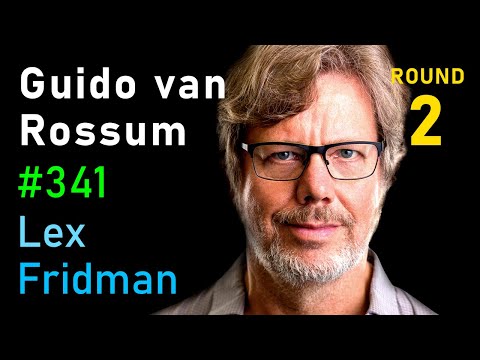
November 26, 2022 / Episode #341
Guido van Rossum: Python and the Future of Programming
Guido van Rossum is the creator of Python programming language.
Best moment
Cyber attack threats against civilians
Chris Tarbell and Lex Fridman discuss cyber attack threats against civilians.
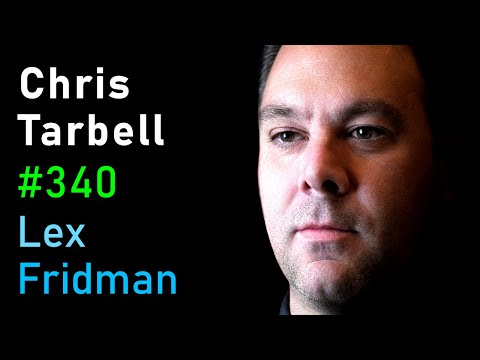
November 22, 2022 / Episode #340
Chris Tarbell: FBI Agent Who Took Down Silk Road
Chris Tarbell is a former FBI special agent and cybercrime investigation specialist who brought down Ross Ulbricht and Silk Road, and Hector Monsegur (aka Sabu) of LulzSec and Anonymous.
Best moment
Worst-case climate change scenario
Bjørn Lomborg and Lex Fridman discuss worst-case climate change scenario.
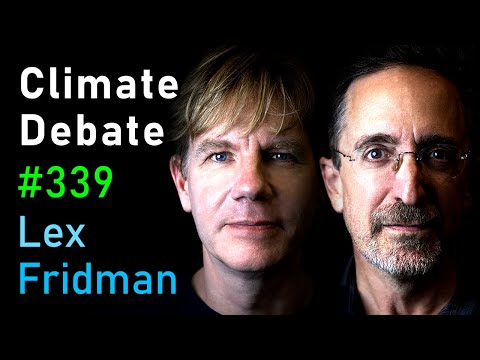
November 18, 2022 / Episode #339
Climate Change Debate: Bjørn Lomborg and Andrew Revkin
Bjørn Lomborg is author of "False Alarm". Andrew Revkin is a climate journalist (21 years at NY Times).
Best moment
Childhood and forgiveness
Chamath Palihapitiya and Lex Fridman discuss childhood and forgiveness.
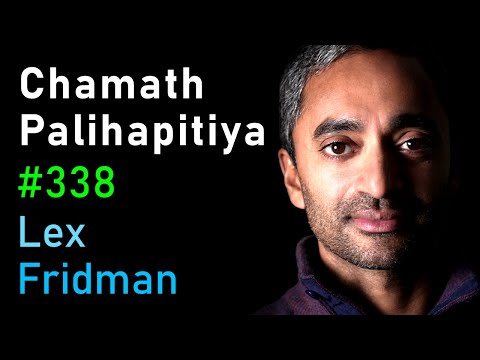
November 15, 2022 / Episode #338
Chamath Palihapitiya: Money, Success, Startups, Energy, Poker & Happiness
Chamath Palihapitiya is a venture capitalist, engineer, CEO of Social Capital, and co-host of the All-In Podcast.
Best moment
Big government and institutions
Destiny and Lex Fridman discuss big government and institutions.
November 11, 2022 / Episode #337
Destiny: Politics, Free Speech, Controversy, Sex, War, and Relationships
Steven Bonnell, aka Destiny, is a progressive political commentator and a live streamer on YouTube. Melina Goransson is a live streamer on Twitch.
Best moment
Kanye 'Ye' West
Let's start with a difficult topic. What do you think about the comments made by Ye formerly known as Kanye West about Jewish people? They're awful and antisemitic and they seem to get worse over time. They started off with the bizarre death con 3 tweet, and then they went into even more stereotypical garbage about Jews and Jews being sexual manipulators. I think that was the Pete Davidson, Kim Kardashian stuff, and then Jews running all of the media, Jews being in charge of the financial sector. Jewish people... I called it on my show, there's Sherman Nazism, and it is. It's like right from protocols of the Elders of Zion type stuff.
November 7, 2022 / Episode #336
Ben Shapiro: Politics, Kanye, Trump, Biden, Hitler, Extremism, and War
Ben Shapiro is a conservative political commentator, host of The Ben Shapiro Show, co-founder of The Daily Wire, and author of The Authoritarian Moment and other books.
Best moment
Testifying against Donald Trump
Fiona Hill and Lex Fridman discuss testifying against donald trump.
November 4, 2022 / Episode #335
Fiona Hill: Vladimir Putin and Donald Trump
Fiona Hill is a presidential advisor and foreign policy expert specializing in Russia.
Best moment
Supreme Leader Ruhollah Khomeini
Abbas Amanat and Lex Fridman discuss supreme leader ruhollah khomeini.
November 2, 2022 / Episode #334
Abbas Amanat: Iran Protests, Mahsa Amini, History, CIA & Nuclear Weapons
Abbas Amanat is a historian at Yale specializing in the modern history of Iran.
Best moment
Artificial general intelligence
Andrej Karpathy and Lex Fridman discuss artificial general intelligence.
October 29, 2022 / Episode #333
Andrej Karpathy: Tesla AI, Self-Driving, Optimus, Aliens, and AGI
Andrej Karpathy is a legendary AI researcher, engineer, and educator. He's the former director of AI at Tesla, a founding member of OpenAI, and an educator at Stanford.
Best moment
Sex and the future of humanity
Lex Fridman and Lex Fridman discuss sex and the future of humanity.
October 24, 2022 / Episode #332
Kanye 'Ye' West Interview
Ye is a legendary artist, producer, and designer.
Best moment
Donald Trump's ban from social media
Balaji Srinivasan and Lex Fridman discuss donald trump's ban from social media.

October 20, 2022 / Episode #331
Balaji Srinivasan: How to Fix Government, Twitter, Science, and the FDA
Balaji Srinivasan is an angel investor, tech founder, philosopher, and author of The Network State: How to Start a New Country. He was formerly the CTO of Coinbase and General Partner at Andreessen Horowitz.
Best moment
Greatest chess player of all time
Hikaru Nakamura and Lex Fridman discuss greatest chess player of all time.
October 17, 2022 / Episode #330
Hikaru Nakamura: Chess, Magnus, Kasparov, and the Psychology of Greatness
Hikaru Nakamura is a chess super grandmaster and is currently the #1 ranked blitz chess player in the world. He is also one of the top chess streamers on Twitch and YouTube.
Best moment
Love and relationships
Kate Darling and Lex Fridman discuss love and relationships.
October 15, 2022 / Episode #329
Kate Darling: Social Robots, Ethics, Privacy and the Future of MIT
Kate Darling is a researcher at MIT Media Lab interested in human robot interaction and robot ethics.
Best moment
Bear vs Gorilla vs Lion vs Anaconda
John Danaher and Lex Fridman discuss bear vs gorilla vs lion vs anaconda.
October 10, 2022 / Episode #328
John Danaher: Submission Grappling, ADCC, Animal Combat, and Knives
John Danaher is one of the greatest coaches and minds in martial arts history.
Best moment
Hans Niemann cheating scandal continued
GothamChess and Lex Fridman discuss hans niemann cheating scandal continued.
October 7, 2022 / Episode #327
GothamChess: Hans Niemann, Magnus Carlsen, Cheating Scandal & Chess Bots
Levy Rozman, also known as GothamChess, is a professional chess player, streamer, and educator.
Best moment
Meaning of life
Annaka Harris and Lex Fridman discuss meaning of life.
October 5, 2022 / Episode #326
Annaka Harris: Free Will, Consciousness, and the Nature of Reality
Annaka Harris is the author of Conscious: A Brief Guide to the Fundamental Mystery of the Mind.
Best moment
Multi-scale competency architecture
Michael Levin and Lex Fridman discuss multi-scale competency architecture.

October 1, 2022 / Episode #325
Michael Levin: Biology, Life, Aliens, Evolution, Embryogenesis & Xenobots
Michael Levin is a biologist at Tufts University working on novel ways to understand and control complex pattern formation in biological systems.
Best moment
Greatest poker player of all time
Daniel Negreanu and Lex Fridman discuss greatest poker player of all time.
September 27, 2022 / Episode #324
Daniel Negreanu: Poker
Daniel Negreanu is one of the greatest poker players of all time.
Best moment
Loneliness and depression
Will Sasso and Lex Fridman discuss loneliness and depression.
September 24, 2022 / Episode #323
Will Sasso: Comedy, MADtv, AI, Friendship, Madness, and Pro Wrestling
Will Sasso is a comedian, actor, and co-host of the Dudesy podcast.
Best moment
Women in the Middle East
Lex Fridman and Lex Fridman discuss women in the middle east.
September 21, 2022 / Episode #322
Rana el Kaliouby: Emotion AI, Social Robots, and Self-Driving Cars
Rana el Kaliouby is a pioneer in the field of emotion recognition and human-centric AI. She is the founder of Affectiva, deputy CEO of Smart Eye, and author of Girl Decoded.
Best moment
Evolution of information processing
Ray Kurzweil and Lex Fridman discuss evolution of information processing.

September 17, 2022 / Episode #321
Ray Kurzweil: Singularity, Superintelligence, and Immortality
Ray Kurzweil is an author, inventor, and futurist.
Best moment
How World War I started
Christopher Capozzola and Lex Fridman discuss how world war i started.

September 14, 2022 / Episode #320
Christopher Capozzola: World War I, Ideology, Propaganda, and Politics
Christopher Capozzola is a professor of history at MIT.
Best moment
Greatest chess player of all time
Botez Sisters and Lex Fridman discuss greatest chess player of all time.

September 9, 2022 / Episode #319
Botez Sisters: Chess, Streaming, and Fame
Alexandra and Andrea Botez are chess players, commentators, educators, entertainers, and streamers.
Best moment
Introduction
Well, the source of energy at the origin of life is the reaction between carbon dioxide and hydrogen. And amazingly, most of these reactions are exergonic, which is to say they release energy. If you have hydrogen and CO2, and you put them together in a Falcon tube and you warm it up to, say, 50 degrees centigrade, and you put in a couple of catalysts and you shake it, nothing's going to happen. But thermodynamically that is less stable. Two gases, hydrogen and CO2, is less stable than cells. What should happen is you get cells coming out. Why doesn't that happen is because of the kinetic barriers. That's where you need the spark. The following is a conversation with Nick Lane, a biochemist at University College London, and author of some of my favorite books on biology, science, and life ever written, including his two most recent titles, Transformer: The Deep Chemistry of Life and Death, and The Vital Question: Why Is Life the Way It Is? This is the Lex Fridman Podcast. To support it, please check out our sponsors in the description. And now, dear friends, here's Nick Lane.

September 7, 2022 / Episode #318
Nick Lane: Origin of Life, Evolution, Aliens, Biology, and Consciousness
Nick Lane is a biochemist at UCL and author of Transformer, The Vital Question, and many other amazing books on biology, chemistry, and life.
Best moment
Advice for young people
John Vervaeke and Lex Fridman discuss advice for young people.
September 4, 2022 / Episode #317
John Vervaeke: Meaning Crisis, Atheism, Religion & the Search for Wisdom
John Vervaeke is a psychologist and cognitive scientist at University of Toronto.
Best moment
China and American relations
Noam Chomsky and Lex Fridman discuss china and american relations.
August 31, 2022 / Episode #316
Noam Chomsky: Putin, Ukraine, China, and Nuclear War
Noam Chomsky is a linguist, philosopher, and political activist.
Best moment
Game 6 of the 2021 World Chess Championship
Magnus Carlsen and Lex Fridman discuss game 6 of the 2021 world chess championship.
August 27, 2022 / Episode #315
Magnus Carlsen: Greatest Chess Player of All Time
Magnus Carlsen is the highest-rated chess player in history and widely considered to be the greatest chess player of all time.
Best moment
Mutually assured destruction
Liv Boeree and Lex Fridman discuss mutually assured destruction.
August 24, 2022 / Episode #314
Liv Boeree: Poker, Game Theory, AI, Simulation, Aliens & Existential Risk
Liv Boeree is a poker champion and science educator on topics of game theory, physics, complexity, and life.
Best moment
Advice for young people
Jordan Peterson and Lex Fridman discuss advice for young people.
August 19, 2022 / Episode #313
Jordan Peterson: Life, Death, Power, Fame, and Meaning
Jordan Peterson is a psychologist, lecturer, podcast host, and author.
Best moment
Nietzsche's eternal recurrence
Duncan Trussell and Lex Fridman discuss nietzsche's eternal recurrence.
August 16, 2022 / Episode #312
Duncan Trussell: Comedy, Sentient Robots, Suffering, Love & Burning Man
Duncan Trussell is a comedian, host of The Duncan Trussell Family Hour podcast, and co-creator of The Midnight Gospel.
Best moment
Advice for young people
Magatte Wade and Lex Fridman discuss advice for young people.
August 13, 2022 / Episode #311
Magatte Wade: Africa, Capitalism, Communism, and the Future of Humanity
Magatte Wade is an entrepreneur with a passion for creating positive change in Africa through economic freedom.
Best moment
Most powerful intelligence agencies
Andrew Bustamante and Lex Fridman discuss most powerful intelligence agencies.
August 8, 2022 / Episode #310
Andrew Bustamante: CIA Spy
Andrew Bustamante is a former CIA covert intelligence officer. Check out his work and podcast at https://everydayspy.com
Best moment
Advice for young people
John Carmack and Lex Fridman discuss advice for young people.
August 4, 2022 / Episode #309
John Carmack: Doom, Quake, VR, AGI, Programming, Video Games, and Rockets
John Carmack is a legendary programmer, co-founder of id Software, and lead programmer of many revolutionary video games including Wolfenstein 3D, Doom, Quake, and the Commander Keen series. He is also the founder of Armadillo Aerospace, and for many years the CTO of Oculus VR.
Best moment
Autonomous weapon systems
Ryan Graves and Lex Fridman discuss autonomous weapon systems.
August 1, 2022 / Episode #308
Ryan Graves: UFOs, Fighter Jets, and Aliens
Lt. Ryan Graves is a former Navy fighter pilot, who has worked on advanced research and development programs for DARPA, Office of Naval Research, and Air Force Research Labs on topics of multi-agent collaborative autonomy, AI-assisted air-to-air combat, and manned-unmanned teaming technologies. Ryan and people in his squadron detected and engaged with UFOs on multiple occasions, and he has been one of the few people willing to speak publicly about these experiences.
Best moment
Advice for young people
Brian Armstrong and Lex Fridman discuss advice for young people.
July 29, 2022 / Episode #307
Brian Armstrong: Coinbase, Cryptocurrency, and Government Regulation
Brian Armstrong is the CEO of Coinbase.
Best moment
Neural networks
Oriol Vinyals and Lex Fridman discuss neural networks.
July 26, 2022 / Episode #306
Oriol Vinyals: Deep Learning and Artificial General Intelligence
Oriol Vinyals is the Research Director and Deep Learning Lead at DeepMind.
Best moment
Understanding the universe
Martin Rees and Lex Fridman discuss understanding the universe.

July 23, 2022 / Episode #305
Martin Rees: Black Holes, Alien Life, Dark Matter, and the Big Bang
Lord Martin Rees is a cosmologist and astrophysicist at Cambridge University and co-founder of the Centre for the Study of Existential Risk.
Best moment
Advice for young people
Robert Barron and Lex Fridman discuss advice for young people.
July 20, 2022 / Episode #304
Bishop Robert Barron: Christianity and the Catholic Church
Robert Barron is a bishop and founder of Word on Fire Catholic Ministries.
Best moment
Advice for young people
Steve Keen and Lex Fridman discuss advice for young people.

July 17, 2022 / Episode #303
Steve Keen: Marxism, Capitalism, and Economics
Steve Keen is a heterodox economist and author.
Best moment
Testing artificial intelligence
Richard Haier and Lex Fridman discuss testing artificial intelligence.

July 14, 2022 / Episode #302
Richard Haier: IQ Tests, Human Intelligence, and Group Differences
Richard Haier is a psychologist specializing in the science of human intelligence.
Best moment
Becoming a KGB agent
Jack Barsky and Lex Fridman discuss becoming a kgb agent.
July 9, 2022 / Episode #301
Jack Barsky: KGB Spy
Jack Barsky is a former KGB spy and author of "Deep Undercover: My Secret Life and Tangled Allegiances as a KGB Spy in America".
Best moment
Putin, Ukraine, and Russia
Joe Rogan and Lex Fridman discuss putin, ukraine, and russia.

July 4, 2022 / Episode #300
Joe Rogan: Comedy, Controversy, Aliens, UFOs, Putin, CIA, and Freedom
Joe Rogan is a comedian, UFC commentator, and host of the Joe Rogan Experience.
Best moment
Open sourcing AlphaFold & MuJoCo
Demis Hassabis and Lex Fridman discuss open sourcing alphafold & mujoco.
July 1, 2022 / Episode #299
Demis Hassabis: DeepMind
Demis Hassabis is the CEO and co-founder of DeepMind.
Best moment
Famous Blue Raincoat by Leonard Cohen
Susan Cain and Lex Fridman discuss famous blue raincoat by leonard cohen.
June 28, 2022 / Episode #298
Susan Cain: The Power of Introverts and Loneliness
Susan Cain is the author of Quiet: The Power of Introverts in a World That Can't Stop Talking, and Bittersweet: How Sorrow and Longing Make Us Whole.
Best moment
Living in the Far North
Jonathan Reisman and Lex Fridman discuss living in the far north.
June 25, 2022 / Episode #297
Jonathan Reisman: The Human Body - From Sex & Sperm to Hands & Heart
Jonathan Reisman is a physician and author of The Unseen Body who has practiced medicine in some of the most remote places in the world.
Best moment
Advice for young people
Douglas Murray and Lex Fridman discuss advice for young people.
June 21, 2022 / Episode #296
Douglas Murray: Racism, Marxism, and the War on the West
Douglas Murray is an author and political commentator.
Best moment
Governments and corporations
Richard Wolff and Lex Fridman discuss governments and corporations.
June 17, 2022 / Episode #295
Richard Wolff: Marxism and Communism
Richard Wolff is a Marxist philosopher and economist.
Best moment
Advice for young people
Tony Fadell and Lex Fridman discuss advice for young people.
June 15, 2022 / Episode #294
Tony Fadell: iPhone, iPod, and Nest
Tony Fadell is an engineer and designer, co-creator of the iPod, iPhone, Nest Thermostat, and author of the new book Build: An Unorthodox Guide to Making Things Worth Making.
Best moment
Evolutionary game theory
Donald Hoffman and Lex Fridman discuss evolutionary game theory.
June 12, 2022 / Episode #293
Donald Hoffman: Reality is an Illusion - How Evolution Hid the Truth
Donald Hoffman is a cognitive scientist at UC Irvine and author of The Case Against Reality.
Best moment
Artificial intelligence
Robin Hanson and Lex Fridman discuss artificial intelligence.
June 9, 2022 / Episode #292
Robin Hanson: Alien Civilizations, UFOs, and the Future of Humanity
Robin Hanson is a professor at George Mason University and researcher at Future of Humanity Institute at Oxford.
Best moment
Political division on social media
Jonathan Haidt and Lex Fridman discuss political division on social media.

June 4, 2022 / Episode #291
Jonathan Haidt: The Case Against Social Media
Jonathan Haidt is a social psychologist at NYU and author of The Coddling of the American Mind, The Righteous Mind, and The Happiness Hypothesis.
Best moment
Cat Stevens and Harry Chapin
Dan Reynolds and Lex Fridman discuss cat stevens and harry chapin.
May 30, 2022 / Episode #290
Dan Reynolds: Imagine Dragons
Dan Reynolds is the lead singer of Imagine Dragons, one of the most popular bands in the world.
Best moment
Russian invasion of Ukraine
Stephen Kotkin and Lex Fridman discuss russian invasion of ukraine.
May 25, 2022 / Episode #289
Stephen Kotkin: Putin, Zelenskyy, and War in Ukraine
Stephen Kotkin is a historian specializing in Stalin and Soviet history.
Best moment
Is Anthony Strangis a sociopath?
Sarma Melngailis and Lex Fridman discuss is anthony strangis a sociopath?.
May 23, 2022 / Episode #288
Sarma Melngailis: Bad Vegan
Sarma Melngailis is a chef and restauranteur who was the subject of the Netflix documentary Bad Vegan: Fame, Fraud, Fugitives.
Best moment
George and Gilbert
Bobby Lee and Lex Fridman discuss george and gilbert.

May 20, 2022 / Episode #287
Bobby Lee: Comedy, Skyrim, Sex Robots, Love, Fame, and Power
Bobby Lee is a comedian and co-host of TigerBelly and Bad Friends podcasts.
Best moment
Putin interview language barrier
Oliver Stone and Lex Fridman discuss putin interview language barrier.
May 17, 2022 / Episode #286
Oliver Stone: Vladimir Putin and War in Ukraine
Oliver Stone is a filmmaker with 3 Oscar wins and 11 Oscar nominations. His films include Platoon, Wall Street, Born on the Fourth of July, Scarface, JFK, Nixon, Alexander, W, Snowden, and documentaries where he has interviewed Fidel Castro, Hugo Chavez, and Vladimir Putin.
Best moment
Martin Luther King Jr.
Glenn Loury and Lex Fridman discuss martin luther king jr..
May 14, 2022 / Episode #285
Glenn Loury: Race, Racism, Identity Politics, and Cancel Culture
Glenn Loury is a professor of economics and social sciences at Brown University, and a prominent podcaster and social critic who speaks and writes about race, inequality, and social policy.
Best moment
Austrian vs Keynesian economics
Saifedean Ammous and Lex Fridman discuss austrian vs keynesian economics.
May 11, 2022 / Episode #284
Saifedean Ammous: Bitcoin, Anarchy, and Austrian Economics
Saifedean Ammous is an Austrian economist and author of The Bitcoin Standard and The Fiat Standard.
Best moment
Launch toward the Second Sun
Chris Mason and Lex Fridman discuss launch toward the second sun.
May 8, 2022 / Episode #283
Chris Mason: Space Travel, Colonization, and Long-Term Survival in Space
Chris Mason is a professor of genomics, physiology, and biophysics at Cornell, doing research on the long-term effects of space on the human body. He is the author of The Next 500 Years: Engineering Life to Reach New Worlds.
Best moment
Evolution of mating evaluation
David Buss and Lex Fridman discuss evolution of mating evaluation.
May 4, 2022 / Episode #282
David Buss: Sex, Dating, Relationships, and Sex Differences
David Buss is an evolutionary psychologist at UT Austin. He is one of the founders of the field of evolutionary psychology. His current research is on sex differences in mate selection, mate attraction, infidelity, and the emotions of jealousy, lust, and love.
Best moment
Rise and Fall of the Third Reich
Grimes and Lex Fridman discuss rise and fall of the third reich.
April 29, 2022 / Episode #281
Grimes: Music, AI, and the Future of Humanity
Grimes is a musician, artist, singer, songwriter, producer, and director.
Best moment
Advice for young people
Cristiano Amon and Lex Fridman discuss advice for young people.
April 27, 2022 / Episode #280
Cristiano Amon: Qualcomm CEO
Cristiano Amon is the CEO of Qualcomm, world-leader in 5G wireless communication and computation systems inside premium Android phones and other robots.
Best moment
Communication with aliens
Sara Walker and Lex Fridman discuss communication with aliens.

April 24, 2022 / Episode #279
Alien Debate: Sara Walker and Lee Cronin
Sara Walker is an astrobiologist and theoretical physicist. Lee Cronin is a chemist. This is a conversation and debate about alien life and alien civilizations.
Best moment
Advice for young people
Skye Fitzgerald and Lex Fridman discuss advice for young people.
April 20, 2022 / Episode #278
Skye Fitzgerald: Hunger, War, and Human Suffering
Skye Fitzgerald is a two-time Oscar-nominated documentary filmmaker, his films include Hunger Ward, Lifeboat, and 50 Feet from Syria.
Best moment
Difficult conversations
Andrew Huberman and Lex Fridman discuss difficult conversations.
April 17, 2022 / Episode #277
Andrew Huberman: Focus, Stress, Relationships, and Friendship
Andrew Huberman is a neuroscientist at Stanford and host of the Huberman Lab Podcast.
Best moment
Introduction
Remember George Washington, you know how he died? Well-meaning physicians bled him to death. And this was the most important patient in the country, maybe in the history of the country, and we bled him to death trying to help him. So when you're actually inflating the money supply at 7%, but you're calling it 2% because you want to help the economy, you're literally bleeding the free market to death. But the sad fact is, George Washington went along with it because he thought that they were going to do him good. And the majority of the society, most companies, most conventional thinkers, the working class, they go along with this because they think that someone has their best interest in mind and the people that are bleeding them to death, they believe that prescription because their mental models are just so defective. The following is a conversation with Michael Saylor, one of the most prominent and brilliant Bitcoin proponents in the world. He is the CEO of MicroStrategy, founder of Saylor Academy, graduate of MIT. And Michael was one of the most fascinating and rigorous thinkers I've ever gotten a chance to explore ideas with. He can effortlessly zoom out to the big perspectives of human civilization and human history, and zoom back in to the technical details of blockchains, markets, governments and financial systems. This is the Lex Fridman podcast. To support it, please check out our sponsors in the description. And now, dear friends, here's Michael Saylor.

April 14, 2022 / Episode #276
Michael Saylor: Bitcoin, Inflation, and the Future of Money
Michael Saylor is the CEO of MicroStrategy and a prominent holder and proponent of Bitcoin.
Best moment
Beautiful simplicity in music
Rick Rubin and Lex Fridman discuss beautiful simplicity in music.
April 10, 2022 / Episode #275
Rick Rubin: Legendary Music Producer
Rick Rubin is one of the greatest music producers of all time, working with many of the greats including Beastie Boys, Eminem, Metallica, LL Cool J, Kanye West, Slayer, Tom Petty, Johnny Cash, Dixie Chicks, Aerosmith, Adele, Danzig, Red Hot Chili Peppers, System of a Down, Jay-Z, Black Sabbath.
Best moment
Talk therapy and psychoanalysis
Karl Deisseroth and Lex Fridman discuss talk therapy and psychoanalysis.

April 7, 2022 / Episode #274
Karl Deisseroth: Depression, Schizophrenia, and Psychiatry
Karl Deisseroth is a professor of bioengineering, psychiatry, and behavioral sciences at Stanford University.
Best moment
Israeli–Palestinian conflict
Chris Blattman and Lex Fridman discuss israeli–palestinian conflict.
April 3, 2022 / Episode #273
Chris Blattman: War and Violence
Chris Blattman is a professor at the University of Chicago studying the causes and consequences of violence and war.
Best moment
Phishing and social engineering
Brett Johnson and Lex Fridman discuss phishing and social engineering.
March 27, 2022 / Episode #272
Brett Johnson: US Most Wanted Cybercriminal
Brett Johnson was a US Most Wanted cybercriminal, called the Original Internet Godfather by US Secret Service for building the the first organized cybercrime community called ShadowCrew, which was the precursor to today's darknet and darknet markets.
Best moment
Swarm robotics and self-assembling space habitats
Ariel Ekblaw and Lex Fridman discuss swarm robotics and self-assembling space habitats.
March 23, 2022 / Episode #271
Ariel Ekblaw: Space Colonization and Self-Assembling Space Megastructures
Ariel Ekblaw is the director of the MIT Space Exploration Initiative.
Best moment
Advice for young people
David Wolpe and Lex Fridman discuss advice for young people.
March 16, 2022 / Episode #270
David Wolpe: Judaism
David Wolpe is a Rabbi of Sinai Temple in Los Angeles.
Best moment
Universal programming language for chemistry
Lee Cronin and Lex Fridman discuss universal programming language for chemistry.

March 11, 2022 / Episode #269
Lee Cronin: Origin of Life, Aliens, Complexity, and Consciousness
Lee Cronin is a chemist at the University of Glasgow.
Best moment
Nazi tobacco industry's denial campaign
Robert Proctor and Lex Fridman discuss nazi tobacco industry's denial campaign.
March 5, 2022 / Episode #268
Robert Proctor: Nazi Science and Ideology
Robert Proctor is a historian of science at Stanford University.
Best moment
Social media and mental health
Mark Zuckerberg and Lex Fridman discuss social media and mental health.
February 26, 2022 / Episode #267
Mark Zuckerberg: Meta, Facebook, Instagram, and the Metaverse
Mark Zuckerberg is CEO of Meta, formerly Facebook.
Best moment
Snowden and whistleblowers
Nicole Perlroth and Lex Fridman discuss snowden and whistleblowers.
February 20, 2022 / Episode #266
Nicole Perlroth: Cybersecurity and the Weapons of Cyberwar
Nicole Perlroth is a cybersecurity journalist and author.
Best moment
Strength vs skill vs strategy
Devon Larratt and Lex Fridman discuss strength vs skill vs strategy.
February 16, 2022 / Episode #265
Devon Larratt: Arm Wrestling
Devon Larratt is a professional arm wrestler, widely considered to be one of the best of all time.
Best moment
How our brain processes film and music
Tim Urban and Lex Fridman discuss how our brain processes film and music.
February 13, 2022 / Episode #264
Tim Urban: Elon Musk, Neuralink, AI, Aliens, and the Future of Humanity
Tim Urban is the author and illustrator of the popular blog 'Wait But Why'.
Best moment
Biggest problem with big pharma
John Abramson and Lex Fridman discuss biggest problem with big pharma.
February 11, 2022 / Episode #263
John Abramson: Big Pharma
John Abramson is faculty at Harvard Medical School and a family physician for over two decades. He's the author of the new book Sickening about how big pharma broke American healthcare and how we can fix it.
Best moment
Alien hardware in US possession
Garry Nolan and Lex Fridman discuss alien hardware in us possession.
February 6, 2022 / Episode #262
Garry Nolan: UFOs and Aliens
Garry Nolan is a professor at Stanford University School of Medicine. His research is in microbiology, immunology, bio-computation, and analysis of UFO artifacts, materials, and reports of UFO encounters.
Best moment
Death, mystical experiences and collective consciousness
Philip Goff and Lex Fridman discuss death, mystical experiences and collective consciousness.

February 3, 2022 / Episode #261
Philip Goff: Consciousness, Panpsychism, and the Philosophy of Mind
Philip Goff is a philosopher of mind and consciousness at Durham University and author of Galileo's Error.
Best moment
Effective grappling and takedowns
Georges St-Pierre and Lex Fridman discuss effective grappling and takedowns.
January 30, 2022 / Episode #260
Georges St-Pierre, John Danaher & Gordon Ryan: The Greatest of All Time
Georges St-Pierre is an MMA fighter. John Danaher is a martial arts coach. Gordon Ryan is a submission grappler. Each are considered by many to be the greatest of all time in each of their respective disciplines.
Best moment
Intellectual honest and life lessons
Thomas Tull and Lex Fridman discuss intellectual honest and life lessons.
January 26, 2022 / Episode #259
Thomas Tull: From Batman Dark Knight Trilogy to AI and the Rolling Stones
Thomas Tull is founder of Legendary Entertainment, Tulco, part-owner of Pittsburgh Steelers, and guitarist for the band Ghost Hounds.
Best moment
Three challenges of machine learning
Yann LeCun and Lex Fridman discuss three challenges of machine learning.
January 22, 2022 / Episode #258
Yann LeCun: Dark Matter of Intelligence and Self-Supervised Learning
Yann LeCun is the Chief AI Scientist at Meta, professor at NYU, Turing Award winner, and one of the seminal researchers in the history of machine learning.
Best moment
What it's like to be a scientist
Brian Keating and Lex Fridman discuss what it's like to be a scientist.
January 18, 2022 / Episode #257
Brian Keating: Cosmology, Astrophysics, Aliens & Losing the Nobel Prize
Brian Keating is an experimental physicist at the UCSD, author of Losing the Nobel Prize, and host of the Into the Impossible podcast.
Best moment
Edmund Burke and the French Revolution
Yaron Brook and Lex Fridman discuss edmund burke and the french revolution.
January 15, 2022 / Episode #256
Nationalism Debate: Yaron Brook and Yoram Hazony
Yaron Brook is an objectivist. Yoram Hazony is a national conservative. This is a conversation and debate about national conservatism vs individualism.
Best moment
Future of human interaction
Mark Normand and Lex Fridman discuss future of human interaction.
Best moment
Great Barrington Declaration and lockdowns
Jay Bhattacharya and Lex Fridman discuss great barrington declaration and lockdowns.
January 4, 2022 / Episode #254
Jay Bhattacharya: The Case Against Lockdowns
Jay Bhattacharya is a professor of medicine at Stanford University and co-author of the Great Barrington Declaration.
Best moment
Joe Rogan and Bret Weinstein vs Sam Harris
Michael Malice and Lex Fridman discuss joe rogan and bret weinstein vs sam harris.
December 31, 2021 / Episode #253
Michael Malice: New Year's Special
Michael Malice is a political thinker, podcaster, author, and anarchist.
Best moment
When will Tesla solve self-driving?
Elon Musk and Lex Fridman discuss when will tesla solve self-driving?.
December 28, 2021 / Episode #252
Elon Musk: SpaceX, Mars, Tesla Autopilot, Self-Driving, Robotics, and AI
Elon Musk is CEO of SpaceX, Tesla, Neuralink, and Boring Company.
Best moment
Collapse of the American Empire
Ray Dalio and Lex Fridman discuss collapse of the american empire.
December 25, 2021 / Episode #251
Ray Dalio: Money, Power, and the Collapse of Empires
Ray Dalio is an investor, author, and founder of Bridgewater Associates.
Best moment
Programming language design
Peter Wang and Lex Fridman discuss programming language design.
December 23, 2021 / Episode #250
Peter Wang: Python and the Source Code of Humans, Computers, and Reality
Peter Wang is the co-founder & CEO of Anaconda and one of the most impactful leaders and developers in the Python community. Also, he is a physicist and philosopher.
Best moment
Clinical trials
Albert Bourla and Lex Fridman discuss clinical trials.
December 18, 2021 / Episode #249
Albert Bourla: Pfizer CEO
Albert Bourla is the Chairman and CEO of Pfizer.
Best moment
Our role in fighting against atrocities
Norman Naimark and Lex Fridman discuss our role in fighting against atrocities.
December 13, 2021 / Episode #248
Norman Naimark: Genocide, Stalin, Hitler, Mao, and Absolute Power
Norman Naimark is a historian at Stanford, specializing in the history of genocide.
Best moment
Joe Rogan, Brett Weinstein, and Sam Harris
Jamie Metzl and Lex Fridman discuss joe rogan, brett weinstein, and sam harris.
December 8, 2021 / Episode #247
Jamie Metzl: Lab Leak Theory
Jamie Metzl is an author specializing in topics of genetic engineering, biotechnology, and geopolitics.
Best moment
Nobel Prize likelihood for theory of everything
Peter Woit and Lex Fridman discuss nobel prize likelihood for theory of everything.

December 3, 2021 / Episode #246
Peter Woit: Theories of Everything and Why String Theory is Not Even Wrong
Peter Woit is a theoretical physicist, mathematician, critic of string theory, and author of the popular science blog Not Even Wrong.
Best moment
1996 Olympic Games in Atlanta
Tom Brands and Lex Fridman discuss 1996 olympic games in atlanta.
November 30, 2021 / Episode #245
Tom Brands: Iowa Wrestling
Tom Brands is an Olympic and World Champion in freestyle wrestling and the head wrestling coach at the University of Iowa.
Best moment
U.S. invasion of Afghanistan
Robert Crews and Lex Fridman discuss u.s. invasion of afghanistan.

November 28, 2021 / Episode #244
Robert Crews: Afghanistan, Taliban, Bin Laden, and War in the Middle East
Robert Crews is a historian at Stanford, specializing in Afghanistan, Russia, Islam, Central Asia, and South Asia.
Best moment
Selling Instagram to Facebook
Kevin Systrom and Lex Fridman discuss selling instagram to facebook.
November 23, 2021 / Episode #243
Kevin Systrom: Instagram
Kevin Systrom is the co-founder and former CEO of Instagram.
Best moment
Champion mentality and handling losses
Ben Askren and Lex Fridman discuss champion mentality and handling losses.
November 20, 2021 / Episode #242
Ben Askren: Wrestling and MMA
Ben Askren is a wrestler and MMA fighter, former Bellator and ONE Championship welterweight champion, a two-time NCAA wrestling champion and four-time finalist.
Best moment
Sensor suites for long haul trucking
Boris Sofman and Lex Fridman discuss sensor suites for long haul trucking.
November 16, 2021 / Episode #241
Boris Sofman: Waymo, Cozmo, Self-Driving Cars, and the Future of Robotics
Boris Sofman is the Senior Director Of Engineering and Head of Trucking at Waymo, formerly the Google Self-Driving Car project. He was also the CEO and co-founder of Anki, a home robotics company.
Best moment
Writing, storytelling, and books
Neal Stephenson and Lex Fridman discuss writing, storytelling, and books.
November 11, 2021 / Episode #240
Neal Stephenson: Sci-Fi, Space, Aliens, AI, VR & the Future of Humanity
Neal Stephenson is a sci-fi writer (Snow Crash, Cryptonomicon, and new book Termination Shock), former Chief Futurist at Magic Leap and first employee of Blue Origin.
Best moment
How history will remember the current pandemic
Niall Ferguson and Lex Fridman discuss how history will remember the current pandemic.
November 8, 2021 / Episode #239
Niall Ferguson: History of Money, Power, War, and Truth
Niall Ferguson is a historian at Hoover Institution, Stanford University. He is the author of 16 books on the history of money, war, power, and catastrophe.
Best moment
Gain-of-function research of viruses
Francis Collins and Lex Fridman discuss gain-of-function research of viruses.
November 5, 2021 / Episode #238
Francis Collins: National Institutes of Health (NIH)
Francis Collins is the director of the NIH and former head of the Human Genome Project.
Best moment
Tesla and revolutionizing the trucking industry
Steve Viscelli and Lex Fridman discuss tesla and revolutionizing the trucking industry.
November 3, 2021 / Episode #237
Steve Viscelli: Trucking and the Decline of the American Dream
Steve Viscelli is a former truck driver and now an economic sociologist at University of Pennsylvania studying freight transportation, including autonomous trucks.
Best moment
Russian approach to randori
Jimmy Pedro and Lex Fridman discuss russian approach to randori.
October 31, 2021 / Episode #236
Jimmy Pedro: Judo and the Forging of Champions
Jimmy Pedro is a judo competitor and coach, world champion, 3x world medalist, 2x Olympic medalist.
Best moment
Medical devices and FDA classification
Michael Mina and Lex Fridman discuss medical devices and fda classification.
October 29, 2021 / Episode #235
Michael Mina: Rapid COVID Testing
Michael Mina is an immunologist, epidemiologist, and physician at Harvard.
Best moment
Cardano NFT collaboration with Wolfram Alpha
Stephen Wolfram and Lex Fridman discuss cardano nft collaboration with wolfram alpha.

October 27, 2021 / Episode #234
Stephen Wolfram: Complexity and the Fabric of Reality
Stephen Wolfram is a computer scientist, mathematician, and theoretical physicist.
Best moment
Proper, positive, and misuse of drugs
Carl Hart and Lex Fridman discuss proper, positive, and misuse of drugs.
October 23, 2021 / Episode #233
Carl Hart: Heroin, Cocaine, MDMA, Alcohol & the Role of Drugs in Society
Carl Hart is a psychologist at Columbia University.
Best moment
Emergence and complexity
Brian Greene and Lex Fridman discuss emergence and complexity.
October 20, 2021 / Episode #232
Brian Greene: Quantum Gravity, Big Bang, Aliens, Life, Death, and Meaning
Brian Greene is a theoretical physicist.
Best moment
Edward Snowden and government surveillance
Alex Gladstein and Lex Fridman discuss edward snowden and government surveillance.
October 16, 2021 / Episode #231
Alex Gladstein: Bitcoin, Authoritarianism, and Human Rights
Alex Gladstein is the Chief Strategy Officer at the Human Rights Foundation and the Oslo Freedom Forum.
Best moment
Yeonmi Park, starvation, and mental health
Kelsi Sheren and Lex Fridman discuss yeonmi park, starvation, and mental health.
October 14, 2021 / Episode #230
Kelsi Sheren: War, Artillery, PTSD, and Love
Kelsi Sheren is a veteran, artillery gunner, and founder of Brass and Unity.
Best moment
A map of how chimps, gorillas, and humans are all related
Richard Wrangham and Lex Fridman discuss a map of how chimps, gorillas, and humans are all related.
October 10, 2021 / Episode #229
Richard Wrangham: Role of Violence, Sex, and Fire in Human Evolution
Richard Wrangham is a biological anthropologist at Harvard, specializing in the study of primates and the evolution of violence, sex, cooking, culture, and other aspects of ape and human behavior.
Best moment
Advice for young people
RZA and Lex Fridman discuss advice for young people.

October 5, 2021 / Episode #228
RZA: Wu-Tang Clan, Kung Fu, Chess, God, Life, and Death
RZA is a rapper, record producer, filmmaker, actor, writer, philosopher, and the mastermind of the legendary hip hop group Wu-Tang Clan.
Best moment
Nietzsche and nihilism
Sean Kelly and Lex Fridman discuss nietzsche and nihilism.

September 30, 2021 / Episode #227
Sean Kelly: Existentialism, Nihilism, and the Search for Meaning
Sean Kelly is a philosopher at Harvard specializing in existentialism and the philosophy of mind.
Best moment
What is beautiful about mathematics?
Jo Boaler and Lex Fridman discuss what is beautiful about mathematics?.
September 27, 2021 / Episode #226
Jo Boaler: How to Learn Math
Jo Boaler is a professor of mathematics education at Stanford and the co-founder of youcubed.
Best moment
Electrons for computation and light for communication
Jeffrey Shainline and Lex Fridman discuss electrons for computation and light for communication.
September 26, 2021 / Episode #225
Jeffrey Shainline: Neuromorphic Computing and Optoelectronic Intelligence
Jeffrey Shainline is a physicist at NIST working on. Note: Opinions expressed by Jeff do not represent NIST.
Best moment
Advice for young people
Travis Oliphant and Lex Fridman discuss advice for young people.
September 23, 2021 / Episode #224
Travis Oliphant: NumPy, SciPy, Anaconda, Python & Scientific Programming
Travis Oliphant is a data scientist, entrepreneur, and creator of NumPy, SciPy, and Anaconda.
Best moment
Lex on his judo competition experience
Travis Stevens and Lex Fridman discuss lex on his judo competition experience.
September 21, 2021 / Episode #223
Travis Stevens: Judo, Olympics, and Mental Toughness
Travis Stevens is the 2016 Olympic Judo silver medalist and BJJ black belt.
Best moment
Learning representations by back-propagating errors
Jay McClelland and Lex Fridman discuss learning representations by back-propagating errors.

September 20, 2021 / Episode #222
Jay McClelland: Neural Networks and the Emergence of Cognition
Jay McClelland is a cognitive scientist at Stanford.
Best moment
How to form a knowledge base of the universe
Douglas Lenat and Lex Fridman discuss how to form a knowledge base of the universe.

September 15, 2021 / Episode #221
Douglas Lenat: Cyc and the Quest to Solve Common Sense Reasoning in AI
Douglas Lenat is the founder of Cyc, a 37 year project aiming to solve common-sense knowledge and reasoning in AI.
Best moment
What it means to be a great firefighter
Niels Jorgensen and Lex Fridman discuss what it means to be a great firefighter.
September 11, 2021 / Episode #220
Niels Jorgensen: New York Firefighters and the Heroes of 9/11
Niels Jorgensen is a former New York firefighter for over 21 years, who was there at Ground Zero on September 11th, 2001.
Best moment
Knuth-Morris-Pratt Algorithm
Donald Knuth and Lex Fridman discuss knuth-morris-pratt algorithm.

September 9, 2021 / Episode #219
Donald Knuth: Programming, Algorithms, Hard Problems & the Game of Life
Donald Knuth is a computer scientist, Turing Award winner, father of algorithm analysis, author of The Art of Computer Programming, and creator of TeX.
Best moment
Video games and other immersive experiences
Jaron Lanier and Lex Fridman discuss video games and other immersive experiences.
September 6, 2021 / Episode #218
Jaron Lanier: Virtual Reality, Social Media & the Future of Humans and AI
Jaron Lanier is a computer scientist, composer, artist, author, and founder of the field of virtual reality.
Best moment
Sharing an office with AI experts
Rodney Brooks and Lex Fridman discuss sharing an office with ai experts.
September 3, 2021 / Episode #217
Rodney Brooks: Robotics
Rodney Brooks is a roboticist, former head of CSAIL at MIT, and co-founder of iRobot, Rethink Robotics, and Robust.AI.
Best moment
Coronaviruses and Influenza. What's the difference?
Vincent Racaniello and Lex Fridman discuss coronaviruses and influenza. what's the difference?.

September 1, 2021 / Episode #216
Vincent Racaniello: Viruses and Vaccines
Vincent Racaniello is a virologist, immunologist, and microbiologist at Columbia. He is a co-author of the textbook Principles of Virology and co-host of This Week in Virology podcast.
Best moment
Will we spend more time in virtual reality?
Wojciech Zaremba and Lex Fridman discuss will we spend more time in virtual reality?.
August 29, 2021 / Episode #215
Wojciech Zaremba: OpenAI Codex, GPT-3, Robotics, and the Future of AI
Wojciech Zaremba is a co-founder of OpenAI.
Best moment
Most Beautiful Moments in Science
Jed Buchwald and Lex Fridman discuss most beautiful moments in science.
August 27, 2021 / Episode #214
Jed Buchwald: Isaac Newton and the Philosophy of Science
Jed Buchwald is a historian and philosopher of science at Caltech.
Best moment
Philosophical Implications of General Relativity
Barry Barish and Lex Fridman discuss philosophical implications of general relativity.
August 23, 2021 / Episode #213
Barry Barish: Gravitational Waves and the Most Precise Device Ever Built
Barry Barish is a theoretical physicist at Caltech and the winner of the Nobel Prize in Physics.
Best moment
Humans vs AI: Who is more dangerous?
Joscha Bach and Lex Fridman discuss humans vs ai: who is more dangerous?.
August 21, 2021 / Episode #212
Joscha Bach: Nature of Reality, Dreams, and Consciousness
Joscha Bach is a cognitive scientist, AI researcher, and philosopher.
Best moment
Psychedelics were the source of collective intelligence
Brian Muraresku and Lex Fridman discuss psychedelics were the source of collective intelligence.
August 15, 2021 / Episode #211
Brian Muraresku: The Secret History of Psychedelics
Brian Muraresku is the author of The Immortality Key.
Best moment
Scent of a Woman is better than "John Wick"
Matt Walker and Lex Fridman discuss scent of a woman is better than "john wick".
August 11, 2021 / Episode #210
Matt Walker: Sleep
Matt Walker is a sleep scientist at Berkeley, author of Why We Sleep, and the host of a new podcast called The Matt Walker Podcast.
Best moment
What it takes to build a successful startup
Luís and Lex Fridman discuss what it takes to build a successful startup.
August 9, 2021 / Episode #209
Luís and João Batalha: Fermat's Library and the Art of Studying Papers
Luis and Joao Batalha are co-founders of Fermat's Library.
Best moment
Will AI prevent the self-destruction of human civilization?
Jeff Hawkins and Lex Fridman discuss will ai prevent the self-destruction of human civilization?.
August 8, 2021 / Episode #208
Jeff Hawkins: The Thousand Brains Theory of Intelligence
Jeff Hawkins is a neuroscientist and cofounder of Numenta, a neuroscience research company.
Best moment
The Eagle and the Dragon: A Story of Strength and Reinvention
Chris Duffin and Lex Fridman discuss the eagle and the dragon: a story of strength and reinvention.
August 3, 2021 / Episode #207
Chris Duffin: The Mad Scientist of Strength
Chris Duffin is a strength athlete, coach, and engineer, setting multiple strength world records including squatting and deadlifting 1000 lbs for multiple reps.
Best moment
Non-contrastive learning energy based self supervised learning methods
Ishan Misra and Lex Fridman discuss non-contrastive learning energy based self supervised learning methods.
July 31, 2021 / Episode #206
Ishan Misra: Self-Supervised Deep Learning in Computer Vision
Ishan Misra is a research scientist at FAIR working on self-supervised visual learning.
Best moment
Who is the greatest endurance athlete of all time?
Zach Bitter and Lex Fridman discuss who is the greatest endurance athlete of all time?.
July 29, 2021 / Episode #205
Zach Bitter: Ultramarathon Running
Zach Bitter is an ultramarathon runner and coach.
Best moment
How can ancient geometry be used to understand reality
Cumrun Vafa and Lex Fridman discuss how can ancient geometry be used to understand reality.
July 26, 2021 / Episode #204
Cumrun Vafa: String Theory
Cumrun Vafa is a theoretical physicist at Harvard.
Best moment
What does it take to be a woman CEO of a meat company?
Anya Fernald and Lex Fridman discuss what does it take to be a woman ceo of a meat company?.
July 23, 2021 / Episode #203
Anya Fernald: Regenerative Farming and the Art of Cooking Meat
Anya Fernald is the co-founder of Belcampo farms, chef, and regenerative agriculture expert.
Best moment
Psychedelics reveals the inner depths of humans
Rick Doblin and Lex Fridman discuss psychedelics reveals the inner depths of humans.
July 21, 2021 / Episode #202
Rick Doblin: Psychedelics
Rick Doblin is a psychedelics researcher and the founder and executive director of the Multidisciplinary Association for Psychedelic Studies (MAPS).
Best moment
Will it be possible to simulate the full history of the Solar System?
Konstantin Batygin and Lex Fridman discuss will it be possible to simulate the full history of the solar system?.
July 19, 2021 / Episode #201
Konstantin Batygin: Planet 9 and the Edge of Our Solar System
Konstantin Batygin is a planetary astrophysicist at Caltech.
Best moment
Lex and Michael argue: can most people think on their own?
Michael Malice and Lex Fridman discuss lex and michael argue: can most people think on their own?.
July 15, 2021 / Episode #200
Michael Malice: Totalitarianism and Anarchy
Michael Malice is a political thinker, podcaster, and author.
Best moment
Story of torture in a Mexican prison
Roger Reaves and Lex Fridman discuss story of torture in a mexican prison.
July 11, 2021 / Episode #199
Roger Reaves: Smuggling Drugs for Pablo Escobar and the Medellin Cartel
Roger Reaves is one of the most prolific drug smugglers in history.
Best moment
Life is the most deterministic part of physics
Sara Walker and Lex Fridman discuss life is the most deterministic part of physics.
July 9, 2021 / Episode #198
Sara Walker: The Origin of Life on Earth and Alien Worlds
Sara Walker is an astrobiologist and theoretical physicist interested in the origin of life.
Best moment
Sundar Pichai - a leadership case study
Jocko Willink and Lex Fridman discuss sundar pichai - a leadership case study.
July 5, 2021 / Episode #197
Jocko Willink: War, Leadership, and Discipline
Jocko Willink is a retired Navy SEAL, co-author of Extreme Ownership, and host of Jocko Podcast.
Best moment
The world is ignoring the genocide in North Korea
Yeonmi Park and Lex Fridman discuss the world is ignoring the genocide in north korea.

July 1, 2021 / Episode #196
Yeonmi Park: North Korea
Yeonmi Park is a North Korean defector, human rights activist, and author of the book In Order to Live.
Best moment
Searching for molecular fingerprints
Clara Sousa-Silva and Lex Fridman discuss searching for molecular fingerprints.

June 28, 2021 / Episode #195
Clara Sousa-Silva: Searching for Signs of Life on Venus and Other Planets
Clara Sousa-Silva is a quantum astrochemist at Harvard.
Best moment
The paper on mice with long telomeres
Bret Weinstein and Lex Fridman discuss the paper on mice with long telomeres.
June 25, 2021 / Episode #194
Bret Weinstein: Truth, Science, and Censorship in the Time of a Pandemic
Bret Weinstein is and evolutionary biologist, author, and co-host of the DarkHorse Podcast.
Best moment
Engineered viruses as a threat to human civilization
Rob Reid and Lex Fridman discuss engineered viruses as a threat to human civilization.
June 21, 2021 / Episode #193
Rob Reid: The Existential Threat of Engineered Viruses and Lab Leaks
Rob Reid is an author and podcaster.
Best moment
Cryptocurrency will inject capitalism with long-term incentives
Charles Hoskinson and Lex Fridman discuss cryptocurrency will inject capitalism with long-term incentives.
June 16, 2021 / Episode #192
Charles Hoskinson: Cardano
Charles Hoskinson is the founder of Cardano, co-founder of Ethereum, a mathematician, and a farmer.
Best moment
How much computation does the human brain perform?
Daniel Schmachtenberger and Lex Fridman discuss how much computation does the human brain perform?.
June 14, 2021 / Episode #191
Daniel Schmachtenberger: Steering Civilization Away from Self-Destruction
Daniel Schmachtenberger is a philosopher interested understanding the rise and fall of societies and individuals.
Best moment
Grigori Perelman and the Poincare Conjecture
Jordan Ellenberg and Lex Fridman discuss grigori perelman and the poincare conjecture.
June 13, 2021 / Episode #190
Jordan Ellenberg: Mathematics of High-Dimensional Shapes and Geometries
Jordan Ellenberg is a mathematician and author of Shape and How Not to Be Wrong.
Best moment
Genetic reset switch that reverses aging
David Sinclair and Lex Fridman discuss genetic reset switch that reverses aging.
June 7, 2021 / Episode #189
David Sinclair: Extending the Human Lifespan Beyond 100 Years
David Sinclair is a geneticist at Harvard and author of Lifespan.
Best moment
Lessons learned from Ethereum 2.0 failure incidents
Vitalik Buterin and Lex Fridman discuss lessons learned from ethereum 2.0 failure incidents.
June 3, 2021 / Episode #188
Vitalik Buterin: Ethereum 2.0
Vitalik Buterin is the co-founder of Ethereum.
Best moment
Are there limits to what physics can understand?
Frank Wilczek and Lex Fridman discuss are there limits to what physics can understand?.

May 29, 2021 / Episode #187
Frank Wilczek: Physics of Quarks, Dark Matter, Complexity, Life & Aliens
Frank Wilczek is a Nobel Prize winning physicist at MIT.
Best moment
The future of brain-computer interfaces
Bryan Johnson and Lex Fridman discuss the future of brain-computer interfaces.
May 24, 2021 / Episode #186
Bryan Johnson: Kernel Brain-Computer Interfaces
Bryan Johnson is the founder and CEO of Kernel, OS Fund, and previously Braintree.
Best moment
How will human civilization destroy itself?
Sam Harris and Lex Fridman discuss how will human civilization destroy itself?.
May 20, 2021 / Episode #185
Sam Harris: Consciousness, Free Will, Psychedelics, AI, UFOs, and Meaning
Sam Harris is an author, podcaster, and philosopher.
Best moment
What is interesting about Earth as a planet?
Lex Fridman and Lex Fridman discuss what is interesting about earth as a planet?.
May 17, 2021 / Episode #184
Katherine de Kleer: Planets, Moons, and Asteroids in Our Solar System
Katherine de Kleer is a professor of Planetary Science and Astronomy at Caltech.
Best moment
Contact tracing that preserves privacy
Po-Shen Loh and Lex Fridman discuss contact tracing that preserves privacy.

May 14, 2021 / Episode #183
Po-Shen Loh: Mathematics, Math Olympiad, Combinatorics & Contact Tracing
Po-Shen Loh is a mathematician at CMU and coach of the USA International Math Olympiad team.
Best moment
Superintelligent Robot vs Cyborg Gordon Ryan
John Danaher and Lex Fridman discuss superintelligent robot vs cyborg gordon ryan.
May 9, 2021 / Episode #182
John Danaher: The Path to Mastery in Jiu Jitsu, Grappling, Judo, and MMA
John Danaher is a coach, scholar, and educator of jiu jitsu, submission grappling, judo, MMA, and the martial arts.
Best moment
What agreements can be turned into smart contracts?
Sergey Nazarov and Lex Fridman discuss what agreements can be turned into smart contracts?.
May 1, 2021 / Episode #181
Sergey Nazarov: Chainlink, Smart Contracts, and Oracle Networks
Sergey Nazarov is the Co-Founder of Chainlink, a decentralized oracle network that provides data to smart contracts.
Best moment
Vaccines and the future of the human species
Jeremi Suri and Lex Fridman discuss vaccines and the future of the human species.
April 30, 2021 / Episode #180
Jeremi Suri: History of American Power
Jeremi Suri is a historian at UT Austin.
Best moment
Best martial art for self-defense
Georges St-Pierre and Lex Fridman discuss best martial art for self-defense.
April 26, 2021 / Episode #179
Georges St-Pierre: The Science of Fighting
Georges St-Pierre is a martial artist.
Best moment
Ben Shapiro: facts don't care about your feelings
Michael Malice and Lex Fridman discuss ben shapiro: facts don't care about your feelings.
April 24, 2021 / Episode #178
Michael Malice and Yaron Brook: Ayn Rand, Human Nature, and Anarchy
Michael Malice is an anarchist. Yaron Brook is an objectivist. Both are podcasters and authors.
Best moment
If we re-ran Earth over 1 million times
Risto Miikkulainen and Lex Fridman discuss if we re-ran earth over 1 million times.
April 19, 2021 / Episode #177
Risto Miikkulainen: Neuroevolution and Evolutionary Computation
Risto Miikkulainen is a computer scientist at UT Austin.
Best moment
Life is information propagating through flesh
Robert Breedlove and Lex Fridman discuss life is information propagating through flesh.
April 17, 2021 / Episode #176
Robert Breedlove: Philosophy of Bitcoin from First Principles
Robert Breedlove is a decentralized finance entrepreneur, philosopher, and podcaster.
Best moment
Andrew Yang and the prison-industrial complex
Yannis Pappas and Lex Fridman discuss andrew yang and the prison-industrial complex.
April 12, 2021 / Episode #175
Yannis Pappas: History and Comedy
Yannis Pappas is a comedian and podcaster.
Best moment
Mexican food is the best in the world
Tyler Cowen and Lex Fridman discuss mexican food is the best in the world.
April 10, 2021 / Episode #174
Tyler Cowen: Economic Growth and the Fight Against Conformity and Mediocrity
Tyler Cowen is an economist, writer, and podcaster.
Best moment
Can humans fully understand reality?
Nic Carter and Lex Fridman discuss can humans fully understand reality?.
April 1, 2021 / Episode #173
Nic Carter: Bitcoin Core Values, Layered Scaling, and Blocksize Debates
Nic Carter is a financial researcher, investor, writer, and podcaster on topics of decentralized finance.
Best moment
How Librex took over Dartmouth
Ryan Schiller and Lex Fridman discuss how librex took over dartmouth.

March 30, 2021 / Episode #172
Ryan Schiller: Librex and the Free Exchange of Ideas on College Campuses
Ryan Schiller is the creator of Librex, an anonymous discussion feed for college communities.
Best moment
Eric Weinstein vs Bitcoin Community
Anthony Pompliano and Lex Fridman discuss eric weinstein vs bitcoin community.
March 25, 2021 / Episode #171
Anthony Pompliano: Bitcoin
Anthony Pompliano is an entrepreneur, investor, writer, and podcaster on topics of decentralized finance.
Best moment
Racism in the judicial system
Ronald Sullivan and Lex Fridman discuss racism in the judicial system.
March 22, 2021 / Episode #170
Ronald Sullivan: The Ideal of Justice in the Face of Controversy and Evil
Ronald Sullivan is a law professor at Harvard and previously a lawyer for Harvey Weinstein and Aaron Hernandez.
Best moment
First principles approach to martial arts
Ryan Hall and Lex Fridman discuss first principles approach to martial arts.

March 20, 2021 / Episode #169
Ryan Hall: Solving Martial Arts from First Principles
Ryan Hall is a martial artist, BJJ black belt, and MMA fighter undefeated in the UFC.
Best moment
Scalability, Security, and Decentralization
Silvio Micali and Lex Fridman discuss scalability, security, and decentralization.
March 15, 2021 / Episode #168
Silvio Micali: Cryptocurrency, Blockchain, Algorand, Bitcoin, and Ethereum
Silvio Micali is a computer scientist at MIT, Turing award winner, and founder of Algorand.
Best moment
The balance of power in US government
Saagar Enjeti and Lex Fridman discuss the balance of power in us government.
March 14, 2021 / Episode #167
Saagar Enjeti: Politics, History, and Power
Saagar Enjeti is a DC-based political correspondent and podcaster.
Best moment
How email destroyed our productivity at work
Cal Newport and Lex Fridman discuss how email destroyed our productivity at work.
March 5, 2021 / Episode #166
Cal Newport: Deep Work, Focus, Productivity, Email, and Social Media
Cal Newport is a computer scientist who also writes about productivity.
Best moment
Greatest MMA fighters of all time
Josh Barnett and Lex Fridman discuss greatest mma fighters of all time.

March 1, 2021 / Episode #165
Josh Barnett: Philosophy of Violence, Power, and the Martial Arts
Josh Barnett is an MMA fighter, catch wrestler, and a scholar of violence.
Best moment
Pushing the limits of the human mind
Andrew Huberman and Lex Fridman discuss pushing the limits of the human mind.
February 28, 2021 / Episode #164
Andrew Huberman: Sleep, Dreams, Creativity & the Limits of the Human Mind
Andrew Huberman is a neuroscientist at Stanford.
Best moment
Is the government in possession of alien spacecraft?
Eric Weinstein and Lex Fridman discuss is the government in possession of alien spacecraft?.
February 23, 2021 / Episode #163
Eric Weinstein: Difficult Conversations, Freedom of Speech, and Physics
Eric Weinstein is a mathematical physicist and podcaster.
Best moment
Neural networks will understand physics better than humans
Jim Keller and Lex Fridman discuss neural networks will understand physics better than humans.
February 18, 2021 / Episode #162
Jim Keller: The Future of Computing, AI, Life, and Consciousness
Jim Keller is a legendary microprocessor engineer, previously at AMD, Apple, Tesla, Intel, and now Tenstorrent.
Best moment
Story about Elon Musk's darkest moments
Jason Calacanis and Lex Fridman discuss story about elon musk's darkest moments.
February 15, 2021 / Episode #161
Jason Calacanis: Startups, Angel Investing, Capitalism, and Friendship
Jason Calacanis is an angel investor, entrepreneur, and co-host of All-In Podcast and This Week in Startups.
Best moment
JavaScript is the most popular language in the world
Brendan Eich and Lex Fridman discuss javascript is the most popular language in the world.

February 12, 2021 / Episode #160
Brendan Eich: JavaScript, Firefox, Mozilla, and Brave
Brendan Eich is the creator of JavaScript and co-founder of Mozilla and Brave.
Best moment
Is stock trading gambling or investing?
Richard Craib and Lex Fridman discuss is stock trading gambling or investing?.
February 7, 2021 / Episode #159
Richard Craib: WallStreetBets, Numerai, and the Future of Stock Trading
Richard Craib is the founder of Numerai, a crowd-sourced, AI-run stock trading system.
Best moment
Philosophy becomes dangerous in difficult times
Zev Weinstein and Lex Fridman discuss philosophy becomes dangerous in difficult times.
February 5, 2021 / Episode #158
Zev Weinstein: The Next Generation of Big Ideas and Brave Minds
Zev Weinstein is a young man who thinks deeply about the world.
Best moment
Robots vs human in space exploration
Natalya Bailey and Lex Fridman discuss robots vs human in space exploration.
February 1, 2021 / Episode #157
Natalya Bailey: Rocket Engines and Electric Spacecraft Propulsion
Natalya Bailey is a rocket propulsion engineer from MIT and now CTO of Accion Systems.
Best moment
The horrible people are the most fun
Tim Dillon and Lex Fridman discuss the horrible people are the most fun.
January 29, 2021 / Episode #156
Tim Dillon: Comedy, Power, Conspiracy Theories, and Freedom
Tim Dillon is a comedian and podcaster.
Best moment
Machine learning and computational physics
Max Tegmark and Lex Fridman discuss machine learning and computational physics.
January 18, 2021 / Episode #155
Max Tegmark: AI and Physics
Max Tegmark is a physicist and AI researcher at MIT.
Best moment
Are humans ready for discovering an alien civilization?
Avi Loeb and Lex Fridman discuss are humans ready for discovering an alien civilization?.
January 14, 2021 / Episode #154
Avi Loeb: Aliens, Black Holes, and the Mystery of the Oumuamua
Avi Loeb is an astrophysicist at Harvard.
Best moment
Will AI be used to engineer deadly viruses?
Dmitry Korkin and Lex Fridman discuss will ai be used to engineer deadly viruses?.
January 11, 2021 / Episode #153
Dmitry Korkin: Evolution of Proteins, Viruses, Life, and AI
Dmitry Korkin is a professor of bioinformatics and computational biology at WPI.
Best moment
The pain of defeat and the tattoo of a hawk clawing out the heart
Dan Gable and Lex Fridman discuss the pain of defeat and the tattoo of a hawk clawing out the heart.
January 9, 2021 / Episode #152
Dan Gable: Olympic Wrestling, Mental Toughness & the Making of Champions
Dan Gable is one of the greatest Olympic athletes and wrestling coaches of all time.
Best moment
The future of podcasts at Spotify
Dan Kokotov and Lex Fridman discuss the future of podcasts at spotify.
January 4, 2021 / Episode #151
Dan Kokotov: Speech Recognition with AI and Humans
Dan Kokotov is VP of Engineering at Rev.ai, an automatic speech recognition company.
Best moment
Could United States have stayed out of World War II
Michael Malice and Lex Fridman discuss could united states have stayed out of world war ii.
December 31, 2020 / Episode #150
Michael Malice: The White Pill, Freedom, Hope, and Happiness Amidst Chaos
Michael Malice is a political thinker, podcaster, and author.
Best moment
What did Nietzsche mean by "God is Dead"?
Diana Walsh Pasulka and Lex Fridman discuss what did nietzsche mean by "god is dead"?.
December 28, 2020 / Episode #149
Diana Walsh Pasulka: Aliens, Technology, Religion, and the Nature of Belief
Diana Walsh Pasulka is a professor of philosophy and religion at UNCW and author of American Cosmic: UFOs, Religion, and Technology.
Best moment
The college experience in the times of COVID
Charles Isbell and Lex Fridman discuss the college experience in the times of covid.
December 26, 2020 / Episode #148
Charles Isbell and Michael Littman: Machine Learning and Education
Charles Isbell is the Dean of the College of Computing at Georgia Tech. Michael Littman is a computer scientist at Brown University.
Best moment
Do self-driving cars need to break the rules like humans do?
Dmitri Dolgov and Lex Fridman discuss do self-driving cars need to break the rules like humans do?.
December 20, 2020 / Episode #147
Dmitri Dolgov: Waymo and the Future of Self-Driving Cars
Dmitri Dolgov is the CTO of Waymo, an autonomous vehicle company.
Best moment
Explanation of Elon Musk's positive COVID tests
Michael Mina and Lex Fridman discuss explanation of elon musk's positive covid tests.
December 19, 2020 / Episode #146
Michael Mina: Rapid Testing, Viruses, and the Engineering Mindset
Michael Mina is an immunologist, epidemiologist, and physician at Harvard.
Best moment
The priors we bring to the psychedelic experience
Matthew Johnson and Lex Fridman discuss the priors we bring to the psychedelic experience.

December 14, 2020 / Episode #145
Matthew Johnson: Psychedelics
Matthew W. Johnson is a professor and psychedelics researcher at Johns Hopkins.
Best moment
Does driving require a theory of mind?
Michael Littman and Lex Fridman discuss does driving require a theory of mind?.
December 13, 2020 / Episode #144
Michael Littman: Reinforcement Learning and the Future of AI
Michael Littman is a computer scientist at Brown University.
Best moment
Can Conor McGregor beat Khabib Nurmagomedov?
John Clarke and Lex Fridman discuss can conor mcgregor beat khabib nurmagomedov?.
December 6, 2020 / Episode #143
John Clarke: The Art of Fighting and the Pursuit of Excellence
John Clarke is a BJJ black belt and MMA coach.
Best moment
Human mind and the abstraction layers of reality
Manolis Kellis and Lex Fridman discuss human mind and the abstraction layers of reality.

November 30, 2020 / Episode #142
Manolis Kellis: Meaning of Life, the Universe, and Everything
Manolis Kellis is a computational biologist at MIT.
Best moment
Moore's law is a series of revolutions
Erik Brynjolfsson and Lex Fridman discuss moore's law is a series of revolutions.

November 25, 2020 / Episode #141
Erik Brynjolfsson: Economics of AI, Social Networks, and Technology
Erik Brynjolfsson is an economist at Stanford.
Best moment
Just be yourself is confusing advice
Lisa Feldman Barrett and Lex Fridman discuss just be yourself is confusing advice.
November 20, 2020 / Episode #140
Lisa Feldman Barrett: Love, Evolution, and the Human Brain
Lisa Feldman Barrett is a neuroscientist, psychologist, and author.
Best moment
Everything in the brain is an abstraction
Andrew Huberman and Lex Fridman discuss everything in the brain is an abstraction.
November 16, 2020 / Episode #139
Andrew Huberman: Neuroscience of Optimal Performance
Andrew Huberman is a neuroscientist at Stanford.
Best moment
Objectivism and Jordan Peterson on personal responsibility
Yaron Brook and Lex Fridman discuss objectivism and jordan peterson on personal responsibility.

November 13, 2020 / Episode #138
Yaron Brook: Ayn Rand and the Philosophy of Objectivism
Yaron Brook is a objectivist philosopher, podcaster, and author.
Best moment
Nobel Prize for the accelerating universe
Alex Filippenko and Lex Fridman discuss nobel prize for the accelerating universe.
November 8, 2020 / Episode #137
Alex Filippenko: Supernovae, Dark Energy, Aliens & the Expanding Universe
Alex Filippenko is an astrophysicist and professor of astronomy at Berkeley.
Best moment
Steering around the iceberg - wow do we avoid collapse of society?
Dan Carlin and Lex Fridman discuss steering around the iceberg - wow do we avoid collapse of society?.

November 3, 2020 / Episode #136
Dan Carlin: Hardcore History
Dan Carlin is a historian, political thinker, and podcaster.
Best moment
Will human civilization destroy itself?
Charles Isbell and Lex Fridman discuss will human civilization destroy itself?.
November 2, 2020 / Episode #135
Charles Isbell: Computing, Interactive AI, and Race in America
Charles Isbell is the Dean of the College of Computing at Georgia Tech.
Best moment
Full episode
Eric Weinstein is a mathematical physicist, podcaster, and intellectual.
October 30, 2020 / Episode #134
Eric Weinstein: On the Nature of Good and Evil, Genius and Madness
Eric Weinstein is a mathematical physicist, podcaster, and intellectual.
Best moment
Full episode
Manolis Kellis is a computational biologist at MIT.
October 25, 2020 / Episode #133
Manolis Kellis: Biology of Disease
Manolis Kellis is a computational biologist at MIT.
Best moment
Full episode
George Hotz (geohot) is a programmer, hacker, and the founder of Comma.ai.
October 22, 2020 / Episode #132
George Hotz: Hacking the Simulation & Learning to Drive with Neural Nets
George Hotz (geohot) is a programmer, hacker, and the founder of Comma.ai.
Best moment
Full episode
Chris Lattner is a world-class software & hardware engineer, leading projects at Apple, Tesla, Google, and SiFive.
October 19, 2020 / Episode #131
Chris Lattner: The Future of Computing and Programming Languages
Chris Lattner is a world-class software & hardware engineer, leading projects at Apple, Tesla, Google, and SiFive.
Best moment
Full episode
Scott Aaronson is a quantum computer scientist.
October 12, 2020 / Episode #130
Scott Aaronson: Computational Complexity and Consciousness
Scott Aaronson is a quantum computer scientist.
Best moment
Full episode
Lisa Feldman Barrett is a neuroscientist, psychologist, and author.
October 4, 2020 / Episode #129
Lisa Feldman Barrett: Counterintuitive Ideas About How the Brain Works
Lisa Feldman Barrett is a neuroscientist, psychologist, and author.
Best moment
Full episode
Michael Malice is a political thinker, podcaster, and author.
October 2, 2020 / Episode #128
Michael Malice: Anarchy, Democracy, Libertarianism, Love, and Trolling
Michael Malice is a political thinker, podcaster, and author.
Best moment
Full episode
Joe Rogan is a comedian, UFC commentator, and the host of the Joe Rogan Experience. Please check out our sponsors to get a discount and to support this podcast: - Neuro : https://www.getneuro.com and use code LEX - Eight Sleep : https://eightsleep.com/lex and use code LEX - Dollar Shave Club : https://dollarshaveclub.com/lex
September 26, 2020 / Episode #127
Joe Rogan: Conversations, Ideas, Love, Freedom & The Joe Rogan Experience
Joe Rogan is a comedian, UFC commentator, and the host of the Joe Rogan Experience. Please check out our sponsors to get a discount and to support this podcast: - Neuro : https://www.getneuro.com and use code LEX - Eight Sleep : https://eightsleep.com/lex and use code LEX - Dollar Shave Club : https://dollarshaveclub.com/lex
Best moment
Full episode
James Gosling is the founder and lead designer of the Java programming language. Please check out our sponsors to get a discount and to support this podcast: - Public Goods : https://publicgoods.com/lex and use code LEX - BetterHelp : https://betterhelp.com/lex - ExpressVPN : https://www.expressvpn.com/lexpod
September 24, 2020 / Episode #126
James Gosling: Java, JVM, Emacs, and the Early Days of Computing
James Gosling is the founder and lead designer of the Java programming language. Please check out our sponsors to get a discount and to support this podcast: - Public Goods : https://publicgoods.com/lex and use code LEX - BetterHelp : https://betterhelp.com/lex - ExpressVPN : https://www.expressvpn.com/lexpod
Best moment
Full episode
Ryan Hall is a jiu jitsu black belt, UFC fighter, and a philosopher of the martial arts.
September 20, 2020 / Episode #125
Ryan Hall: Martial Arts and the Philosophy of Violence, Power, and Grace
Ryan Hall is a jiu jitsu black belt, UFC fighter, and a philosopher of the martial arts.
Best moment
Full episode
Stephen Wolfram is a computer scientist, mathematician, and theoretical physicist. This is our second conversation on the podcast.
September 15, 2020 / Episode #124
Stephen Wolfram: Fundamental Theory of Physics, Life, and the Universe
Stephen Wolfram is a computer scientist, mathematician, and theoretical physicist. This is our second conversation on the podcast.
Best moment
Full episode
Manolis Kellis is a professor at MIT and head of the MIT Computational Biology Group.
September 12, 2020 / Episode #123
Manolis Kellis: Origin of Life, Humans, Ideas, Suffering, and Happiness
Manolis Kellis is a professor at MIT and head of the MIT Computational Biology Group.
Best moment
Full episode
David Fravor is a navy pilot of 18 years and a primary witness in one of the most credible UFO sightings in history, video of which has been released by the Pentagon and reported on by the NY Times.
September 8, 2020 / Episode #122
David Fravor: UFOs, Aliens, Fighter Jets, and Aerospace Engineering
David Fravor is a navy pilot of 18 years and a primary witness in one of the most credible UFO sightings in history, video of which has been released by the Pentagon and reported on by the NY Times.
Best moment
Full episode
Eugenia Kuyda co-founder of Replika, an AI companion. Please check out our sponsors to get a discount and to support this podcast: - Dollar Shave Club : https://dollarshaveclub.com/lex - DoorDash : download app & use code LEX - Cash App : download app & use code "LexPodcast"

September 5, 2020 / Episode #121
Eugenia Kuyda: Friendship with an AI Companion
Eugenia Kuyda co-founder of Replika, an AI companion. Please check out our sponsors to get a discount and to support this podcast: - Dollar Shave Club : https://dollarshaveclub.com/lex - DoorDash : download app & use code LEX - Cash App : download app & use code "LexPodcast"
Best moment
Full episode
François Chollet is an AI researcher at Google and creator of Keras.

August 31, 2020 / Episode #120
François Chollet: Measures of Intelligence
François Chollet is an AI researcher at Google and creator of Keras.
Best moment
Full episode
David Eagleman is a neuroscientist at Stanford.
August 26, 2020 / Episode #119
David Eagleman: Neuroplasticity and the Livewired Brain
David Eagleman is a neuroscientist at Stanford.
Best moment
Full episode
Grant Sanderson is a math educator and creator of 3Blue1Brown.
August 23, 2020 / Episode #118
Grant Sanderson: Math, Manim, Neural Networks & Teaching with 3Blue1Brown
Grant Sanderson is a math educator and creator of 3Blue1Brown.
Best moment
Full episode
Sheldon Solomon is a social psychologist, a philosopher, co-developer of Terror Management Theory, co-author of The Worm at the Core.

August 20, 2020 / Episode #117
Sheldon Solomon: Death and Meaning
Sheldon Solomon is a social psychologist, a philosopher, co-developer of Terror Management Theory, co-author of The Worm at the Core.
Best moment
Full episode
Sara Seager is a planetary scientist at MIT, known for her work on the search for exoplanets.
August 16, 2020 / Episode #116
Sara Seager: Search for Planets and Life Outside Our Solar System
Sara Seager is a planetary scientist at MIT, known for her work on the search for exoplanets.
Best moment
Full episode
Dileep George is a researcher at the intersection of neuroscience and artificial intelligence, co-founder of Vicarious, formerly co-founder of Numenta. From the early work on Hierarchical temporal memory to Recursive Cortical Networks to today, Dileep's always sought to engineer intelligence that is closely inspired by the human brain.
August 14, 2020 / Episode #115
Dileep George: Brain-Inspired AI
Dileep George is a researcher at the intersection of neuroscience and artificial intelligence, co-founder of Vicarious, formerly co-founder of Numenta. From the early work on Hierarchical temporal memory to Recursive Cortical Networks to today, Dileep's always sought to engineer intelligence that is closely inspired by the human brain.
Best moment
Full episode
Russ Tedrake is a roboticist and professor at MIT and vice president of robotics research at TRI. He works on control of robots in interesting, complicated, underactuated, stochastic, difficult to model situations.
August 9, 2020 / Episode #114
Russ Tedrake: Underactuated Robotics, Control, Dynamics and Touch
Russ Tedrake is a roboticist and professor at MIT and vice president of robotics research at TRI. He works on control of robots in interesting, complicated, underactuated, stochastic, difficult to model situations.
Best moment
Full episode
Manolis Kellis is a professor at MIT and head of the MIT Computational Biology Group. He is interested in understanding the human genome from a computational, evolutionary, biological, and other cross-disciplinary perspectives.
July 31, 2020 / Episode #113
Manolis Kellis: Human Genome and Evolutionary Dynamics
Manolis Kellis is a professor at MIT and head of the MIT Computational Biology Group. He is interested in understanding the human genome from a computational, evolutionary, biological, and other cross-disciplinary perspectives.
Best moment
Full episode
Ian Hutchinson is a nuclear engineer and plasma physicist at MIT. He has made a number of important contributions in plasma physics including the magnetic confinement of plasmas seeking to enable fusion reactions, which is the energy source of the stars, to be used for practical energy production. Current nuclear reactors are based on fission as we discuss. Ian has also written on the philosophy of science and the relationship between science and religion.
July 29, 2020 / Episode #112
Ian Hutchinson: Nuclear Fusion, Plasma Physics, and Religion
Ian Hutchinson is a nuclear engineer and plasma physicist at MIT. He has made a number of important contributions in plasma physics including the magnetic confinement of plasmas seeking to enable fusion reactions, which is the energy source of the stars, to be used for practical energy production. Current nuclear reactors are based on fission as we discuss. Ian has also written on the philosophy of science and the relationship between science and religion.
Best moment
Full episode
Richard Karp is a professor at Berkeley and one of the most important figures in the history of theoretical computer science. In 1985, he received the Turing Award for his research in the theory of algorithms, including the development of the Edmonds–Karp algorithm for solving the maximum flow problem on networks, Hopcroft–Karp algorithm for finding maximum cardinality matchings in bipartite graphs, and his landmark paper in complexity theory called "Reducibility Among Combinatorial Problems", in which he proved 21 problems to be NP-complete. This paper was probably the most important catalyst in the explosion of interest in the study of NP-completeness and the P vs NP problem.

July 26, 2020 / Episode #111
Richard Karp: Algorithms and Computational Complexity
Richard Karp is a professor at Berkeley and one of the most important figures in the history of theoretical computer science. In 1985, he received the Turing Award for his research in the theory of algorithms, including the development of the Edmonds–Karp algorithm for solving the maximum flow problem on networks, Hopcroft–Karp algorithm for finding maximum cardinality matchings in bipartite graphs, and his landmark paper in complexity theory called "Reducibility Among Combinatorial Problems", in which he proved 21 problems to be NP-complete. This paper was probably the most important catalyst in the explosion of interest in the study of NP-completeness and the P vs NP problem.
Best moment
Full episode
Jitendra Malik is a professor at Berkeley and one of the seminal figures in the field of computer vision, the kind before the deep learning revolution, and the kind after. He has been cited over 180,000 times and has mentored many world-class researchers in computer science.
July 21, 2020 / Episode #110
Jitendra Malik: Computer Vision
Jitendra Malik is a professor at Berkeley and one of the seminal figures in the field of computer vision, the kind before the deep learning revolution, and the kind after. He has been cited over 180,000 times and has mentored many world-class researchers in computer science.
Best moment
Full episode
Brian Kernighan is a professor of computer science at Princeton University. He co-authored the C Programming Language with Dennis Ritchie (creator of C) and has written a lot of books on programming, computers, and life including the Practice of Programming, the Go Programming Language, his latest UNIX: A History and a Memoir. He co-created AWK, the text processing language used by Linux folks like myself. He co-designed AMPL, an algebraic modeling language for large-scale optimization.
July 18, 2020 / Episode #109
Brian Kernighan: UNIX, C, AWK, AMPL, and Go Programming
Brian Kernighan is a professor of computer science at Princeton University. He co-authored the C Programming Language with Dennis Ritchie (creator of C) and has written a lot of books on programming, computers, and life including the Practice of Programming, the Go Programming Language, his latest UNIX: A History and a Memoir. He co-created AWK, the text processing language used by Linux folks like myself. He co-designed AMPL, an algebraic modeling language for large-scale optimization.
Best moment
Full episode
Sergey Levine is a professor at Berkeley and a world-class researcher in deep learning, reinforcement learning, robotics, and computer vision, including the development of algorithms for end-to-end training of neural network policies that combine perception and control, scalable algorithms for inverse reinforcement learning, and deep RL algorithms.

July 14, 2020 / Episode #108
Sergey Levine: Robotics and Machine Learning
Sergey Levine is a professor at Berkeley and a world-class researcher in deep learning, reinforcement learning, robotics, and computer vision, including the development of algorithms for end-to-end training of neural network policies that combine perception and control, scalable algorithms for inverse reinforcement learning, and deep RL algorithms.
Best moment
Full episode
Peter Singer is a professor of bioethics at Princeton, best known for his 1975 book Animal Liberation, that makes an ethical case against eating meat. He has written brilliantly from an ethical perspective on extreme poverty, euthanasia, human genetic selection, sports doping, the sale of kidneys, and happiness including in his books Ethics in the Real World and The Life You Can Save. He was a key popularizer of the effective altruism movement and is generally considered one of the most influential philosophers in the world.
July 8, 2020 / Episode #107
Peter Singer: Suffering in Humans, Animals, and AI
Peter Singer is a professor of bioethics at Princeton, best known for his 1975 book Animal Liberation, that makes an ethical case against eating meat. He has written brilliantly from an ethical perspective on extreme poverty, euthanasia, human genetic selection, sports doping, the sale of kidneys, and happiness including in his books Ethics in the Real World and The Life You Can Save. He was a key popularizer of the effective altruism movement and is generally considered one of the most influential philosophers in the world.
Best moment
Full episode
Matt Botvinick is the Director of Neuroscience Research at DeepMind. He is a brilliant cross-disciplinary mind navigating effortlessly between cognitive psychology, computational neuroscience, and artificial intelligence.
July 3, 2020 / Episode #106
Matt Botvinick: Neuroscience, Psychology, and AI at DeepMind
Matt Botvinick is the Director of Neuroscience Research at DeepMind. He is a brilliant cross-disciplinary mind navigating effortlessly between cognitive psychology, computational neuroscience, and artificial intelligence.
Best moment
Full episode
Robert Langer is a professor at MIT and one of the most cited researchers in history, specializing in biotechnology fields of drug delivery systems and tissue engineering. He has bridged theory and practice by being a key member and driving force in launching many successful biotech companies out of MIT.
June 30, 2020 / Episode #105
Robert Langer: Edison of Medicine
Robert Langer is a professor at MIT and one of the most cited researchers in history, specializing in biotechnology fields of drug delivery systems and tissue engineering. He has bridged theory and practice by being a key member and driving force in launching many successful biotech companies out of MIT.
Best moment
Full episode
David Patterson is a Turing award winner and professor of computer science at Berkeley. He is known for pioneering contributions to RISC processor architecture used by 99% of new chips today and for co-creating RAID storage. The impact that these two lines of research and development have had on our world is immeasurable. He is also one of the great educators of computer science in the world. His book with John Hennessy "Computer Architecture: A Quantitative Approach" is how I first learned about and was humbled by the inner workings of machines at the lowest level.

June 27, 2020 / Episode #104
David Patterson: Computer Architecture and Data Storage
David Patterson is a Turing award winner and professor of computer science at Berkeley. He is known for pioneering contributions to RISC processor architecture used by 99% of new chips today and for co-creating RAID storage. The impact that these two lines of research and development have had on our world is immeasurable. He is also one of the great educators of computer science in the world. His book with John Hennessy "Computer Architecture: A Quantitative Approach" is how I first learned about and was humbled by the inner workings of machines at the lowest level.
Best moment
Full episode
Ben Goertzel is one of the most interesting minds in the artificial intelligence community. He is the founder of SingularityNET, designer of OpenCog AI framework, formerly a director of the Machine Intelligence Research Institute, Chief Scientist of Hanson Robotics, the company that created the Sophia Robot. He has been a central figure in the AGI community for many years, including in the Conference on Artificial General Intelligence.
June 22, 2020 / Episode #103
Ben Goertzel: Artificial General Intelligence
Ben Goertzel is one of the most interesting minds in the artificial intelligence community. He is the founder of SingularityNET, designer of OpenCog AI framework, formerly a director of the Machine Intelligence Research Institute, Chief Scientist of Hanson Robotics, the company that created the Sophia Robot. He has been a central figure in the AGI community for many years, including in the Conference on Artificial General Intelligence.
Best moment
Full episode
Steven Pressfield is a historian and author of War of Art, a book that had a big impact on my life and the life of millions of whose passion is to create in art, science, business, sport, and everywhere else. I highly recommend it and others of his books on this topic, including Turning Pro, Do the Work, Nobody Wants to Read Your Shit, and the Warrior Ethos. Also his books Gates of Fire about the Spartans and the battle at Thermopylae, The Lion's Gate, Tides of War, and others are some of the best historical fiction novels ever written.
June 20, 2020 / Episode #102
Steven Pressfield: The War of Art
Steven Pressfield is a historian and author of War of Art, a book that had a big impact on my life and the life of millions of whose passion is to create in art, science, business, sport, and everywhere else. I highly recommend it and others of his books on this topic, including Turning Pro, Do the Work, Nobody Wants to Read Your Shit, and the Warrior Ethos. Also his books Gates of Fire about the Spartans and the battle at Thermopylae, The Lion's Gate, Tides of War, and others are some of the best historical fiction novels ever written.
Best moment
Full episode
Joscha Bach is the VP of Research at the AI Foundation, previously doing research at MIT and Harvard. Joscha work explores the workings of the human mind, intelligence, consciousness, life on Earth, and the possibly-simulated fabric of our universe.
June 13, 2020 / Episode #101
Joscha Bach: Artificial Consciousness and the Nature of Reality
Joscha Bach is the VP of Research at the AI Foundation, previously doing research at MIT and Harvard. Joscha work explores the workings of the human mind, intelligence, consciousness, life on Earth, and the possibly-simulated fabric of our universe.
Best moment
Full episode
Karl Friston is one of the greatest neuroscientists in history, cited over 245,000 times, known for many influential ideas in brain imaging, neuroscience, and theoretical neurobiology, including the fascinating idea of the free-energy principle for action and perception.
May 28, 2020 / Episode #99
Karl Friston: Neuroscience and the Free Energy Principle
Karl Friston is one of the greatest neuroscientists in history, cited over 245,000 times, known for many influential ideas in brain imaging, neuroscience, and theoretical neurobiology, including the fascinating idea of the free-energy principle for action and perception.
Best moment
Full episode
Sertac Karaman is a professor at MIT, co-founder of the autonomous vehicle company Optimus Ride, and is one of top roboticists in the world, including robots that drive and robots that fly.
May 20, 2020 / Episode #97
Sertac Karaman: Robots That Fly and Robots That Drive
Sertac Karaman is a professor at MIT, co-founder of the autonomous vehicle company Optimus Ride, and is one of top roboticists in the world, including robots that drive and robots that fly.
Best moment
Full episode
Stephen Schwarzman is the CEO and Co-Founder of Blackstone, one of the world's leading investment firms with over 530 billion dollars of assets under management. He is one of the most successful business leaders in history, all from humble beginnings back in Philly. I recommend his recent book called What It Takes that tells stories and lessons from this personal journey.
May 15, 2020 / Episode #96
Stephen Schwarzman: Going Big in Business, Investing, and AI
Stephen Schwarzman is the CEO and Co-Founder of Blackstone, one of the world's leading investment firms with over 530 billion dollars of assets under management. He is one of the most successful business leaders in history, all from humble beginnings back in Philly. I recommend his recent book called What It Takes that tells stories and lessons from this personal journey.
Best moment
Full episode
Dawn Song is a professor of computer science at UC Berkeley with research interests in security, most recently with a focus on the intersection between computer security and machine learning.
May 12, 2020 / Episode #95
Dawn Song: Adversarial Machine Learning and Computer Security
Dawn Song is a professor of computer science at UC Berkeley with research interests in security, most recently with a focus on the intersection between computer security and machine learning.
Best moment
Full episode
Ilya Sutskever is the co-founder of OpenAI, is one of the most cited computer scientist in history with over 165,000 citations, and to me, is one of the most brilliant and insightful minds ever in the field of deep learning. There are very few people in this world who I would rather talk to and brainstorm with about deep learning, intelligence, and life than Ilya, on and off the mic.
May 8, 2020 / Episode #94
Ilya Sutskever: Deep Learning
Ilya Sutskever is the co-founder of OpenAI, is one of the most cited computer scientist in history with over 165,000 citations, and to me, is one of the most brilliant and insightful minds ever in the field of deep learning. There are very few people in this world who I would rather talk to and brainstorm with about deep learning, intelligence, and life than Ilya, on and off the mic.
Best moment
Full episode
Daphne Koller is a professor of computer science at Stanford University, a co-founder of Coursera with Andrew Ng and Founder and CEO of insitro, a company at the intersection of machine learning and biomedicine.
May 5, 2020 / Episode #93
Daphne Koller: Biomedicine and Machine Learning
Daphne Koller is a professor of computer science at Stanford University, a co-founder of Coursera with Andrew Ng and Founder and CEO of insitro, a company at the intersection of machine learning and biomedicine.
Best moment
Full episode
Harry Cliff is a particle physicist at the University of Cambridge working on the Large Hadron Collider beauty experiment that specializes in searching for hints of new particles and forces by studying a type of particle called the "beauty quark", or "b quark". In this way, he is part of the group of physicists who are searching answers to some of the biggest questions in modern physics. He is also an exceptional communicator of science with some of the clearest and most captivating explanations of basic concepts in particle physics I've ever heard.

April 29, 2020 / Episode #92
Harry Cliff: Particle Physics and the Large Hadron Collider
Harry Cliff is a particle physicist at the University of Cambridge working on the Large Hadron Collider beauty experiment that specializes in searching for hints of new particles and forces by studying a type of particle called the "beauty quark", or "b quark". In this way, he is part of the group of physicists who are searching answers to some of the biggest questions in modern physics. He is also an exceptional communicator of science with some of the clearest and most captivating explanations of basic concepts in particle physics I've ever heard.
Best moment
Full episode
Jack Dorsey is the co-founder and CEO of Twitter and the founder and CEO of Square.
April 24, 2020 / Episode #91
Jack Dorsey: Square, Cryptocurrency, and Artificial Intelligence
Jack Dorsey is the co-founder and CEO of Twitter and the founder and CEO of Square.
Best moment
Full episode
Dmitry Korkin is a professor of bioinformatics and computational biology at Worcester Polytechnic Institute, where he specializes in bioinformatics of complex disease, computational genomics, systems biology, and biomedical data analytics. I came across Dmitry's work when in February his group used the viral genome of the COVID-19 to reconstruct the 3D structure of its major viral proteins and their interactions with human proteins, in effect creating a structural genomics map of the coronavirus and making this data open and available to researchers everywhere. We talked about the biology of COVID-19, SARS, and viruses in general, and how computational methods can help us understand their structure and function in order to develop antiviral drugs and vaccines.
April 22, 2020 / Episode #90
Dmitry Korkin: Computational Biology of Coronavirus
Dmitry Korkin is a professor of bioinformatics and computational biology at Worcester Polytechnic Institute, where he specializes in bioinformatics of complex disease, computational genomics, systems biology, and biomedical data analytics. I came across Dmitry's work when in February his group used the viral genome of the COVID-19 to reconstruct the 3D structure of its major viral proteins and their interactions with human proteins, in effect creating a structural genomics map of the coronavirus and making this data open and available to researchers everywhere. We talked about the biology of COVID-19, SARS, and viruses in general, and how computational methods can help us understand their structure and function in order to develop antiviral drugs and vaccines.
Best moment
Full episode
Stephen Wolfram is a computer scientist, mathematician, and theoretical physicist who is the founder and CEO of Wolfram Research, a company behind Mathematica, Wolfram Alpha, Wolfram Language, and the new Wolfram Physics project. He is the author of several books including A New Kind of Science, which on a personal note was one of the most influential books in my journey in computer science and artificial intelligence.
April 18, 2020 / Episode #89
Stephen Wolfram: Cellular Automata, Computation, and Physics
Stephen Wolfram is a computer scientist, mathematician, and theoretical physicist who is the founder and CEO of Wolfram Research, a company behind Mathematica, Wolfram Alpha, Wolfram Language, and the new Wolfram Physics project. He is the author of several books including A New Kind of Science, which on a personal note was one of the most influential books in my journey in computer science and artificial intelligence.
Best moment
Full episode
Eric Weinstein is a mathematician with a bold and piercing intelligence, unafraid to explore the biggest questions in the universe and shine a light on the darkest corners of our society. He is the host of The Portal podcast, a part of which, he recently released his 2013 Oxford lecture on his theory of Geometric Unity that is at the center of his lifelong efforts in arriving at a theory of everything that unifies the fundamental laws of physics.
April 13, 2020 / Episode #88
Eric Weinstein: Geometric Unity and the Call for New Ideas, Leaders & Institutions
Eric Weinstein is a mathematician with a bold and piercing intelligence, unafraid to explore the biggest questions in the universe and shine a light on the darkest corners of our society. He is the host of The Portal podcast, a part of which, he recently released his 2013 Oxford lecture on his theory of Geometric Unity that is at the center of his lifelong efforts in arriving at a theory of everything that unifies the fundamental laws of physics.
Best moment
Full episode
Richard Dawkins is an evolutionary biologist, and author of The Selfish Gene, The Blind Watchmaker, The God Delusion, The Magic of Reality, The Greatest Show on Earth, and his latest Outgrowing God. He is the originator and popularizer of a lot of fascinating ideas in evolutionary biology and science in general, including funny enough the introduction of the word meme in his 1976 book The Selfish Gene, which in the context of a gene-centered view of evolution is an exceptionally powerful idea. He is outspoken, bold, and often fearless in his defense of science and reason, and in this way, is one of the most influential thinkers of our time.
April 9, 2020 / Episode #87
Richard Dawkins: Evolution, Intelligence, Simulation, and Memes
Richard Dawkins is an evolutionary biologist, and author of The Selfish Gene, The Blind Watchmaker, The God Delusion, The Magic of Reality, The Greatest Show on Earth, and his latest Outgrowing God. He is the originator and popularizer of a lot of fascinating ideas in evolutionary biology and science in general, including funny enough the introduction of the word meme in his 1976 book The Selfish Gene, which in the context of a gene-centered view of evolution is an exceptionally powerful idea. He is outspoken, bold, and often fearless in his defense of science and reason, and in this way, is one of the most influential thinkers of our time.
Best moment
Full episode
David Silver leads the reinforcement learning research group at DeepMind and was lead researcher on AlphaGo, AlphaZero and co-lead on AlphaStar, and MuZero and lot of important work in reinforcement learning.
April 3, 2020 / Episode #86
David Silver: AlphaGo, AlphaZero, and Deep Reinforcement Learning
David Silver leads the reinforcement learning research group at DeepMind and was lead researcher on AlphaGo, AlphaZero and co-lead on AlphaStar, and MuZero and lot of important work in reinforcement learning.
Best moment
Full episode
Roger Penrose is physicist, mathematician, and philosopher at University of Oxford. He has made fundamental contributions in many disciplines from the mathematical physics of general relativity and cosmology to the limitations of a computational view of consciousness.
March 31, 2020 / Episode #85
Roger Penrose: Physics of Consciousness and the Infinite Universe
Roger Penrose is physicist, mathematician, and philosopher at University of Oxford. He has made fundamental contributions in many disciplines from the mathematical physics of general relativity and cosmology to the limitations of a computational view of consciousness.
Best moment
Full episode
Nick Bostrom is a philosopher at University of Oxford and the director of the Future of Humanity Institute. He has worked on fascinating and important ideas in existential risks, simulation hypothesis, human enhancement ethics, and the risks of superintelligent AI systems, including in his book Superintelligence. I can see talking to Nick multiple times on this podcast, many hours each time, but we have to start somewhere.

March 26, 2020 / Episode #83
Nick Bostrom: Simulation and Superintelligence
Nick Bostrom is a philosopher at University of Oxford and the director of the Future of Humanity Institute. He has worked on fascinating and important ideas in existential risks, simulation hypothesis, human enhancement ethics, and the risks of superintelligent AI systems, including in his book Superintelligence. I can see talking to Nick multiple times on this podcast, many hours each time, but we have to start somewhere.
Best moment
Full episode
Simon Sinek is an author of several books including Start With Why, Leaders Eat Last, and his latest The Infinite Game. He is one of the best communicators of what it takes to be a good leader, to inspire, and to build businesses that solve big difficult challenges.

March 21, 2020 / Episode #82
Simon Sinek: Leadership, Hard Work, Optimism and the Infinite Game
Simon Sinek is an author of several books including Start With Why, Leaders Eat Last, and his latest The Infinite Game. He is one of the best communicators of what it takes to be a good leader, to inspire, and to build businesses that solve big difficult challenges.
Best moment
Full episode
Anca Dragan is a professor at Berkeley, working on human-robot interaction - algorithms that look beyond the robot's function in isolation, and generate robot behavior that accounts for interaction and coordination with human beings.
March 19, 2020 / Episode #81
Anca Dragan: Human-Robot Interaction and Reward Engineering
Anca Dragan is a professor at Berkeley, working on human-robot interaction - algorithms that look beyond the robot's function in isolation, and generate robot behavior that accounts for interaction and coordination with human beings.
Best moment
Full episode
Vitalik Buterin is co-creator of Ethereum and ether, which is a cryptocurrency that is currently the second-largest digital currency after bitcoin. Ethereum has a lot of interesting technical ideas that are defining the future of blockchain technology, and Vitalik is one of the most brilliant people innovating this space today.
March 16, 2020 / Episode #80
Vitalik Buterin: Ethereum, Cryptocurrency, and the Future of Money
Vitalik Buterin is co-creator of Ethereum and ether, which is a cryptocurrency that is currently the second-largest digital currency after bitcoin. Ethereum has a lot of interesting technical ideas that are defining the future of blockchain technology, and Vitalik is one of the most brilliant people innovating this space today.
Best moment
Full episode
Lee Smolin is a theoretical physicist, co-inventor of loop quantum gravity, and a contributor of many interesting ideas to cosmology, quantum field theory, the foundations of quantum mechanics, theoretical biology, and the philosophy of science. He is the author of several books including one that critiques the state of physics and string theory called The Trouble with Physics, and his latest book, Einstein's Unfinished Revolution: The Search for What Lies Beyond the Quantum.

March 7, 2020 / Episode #79
Lee Smolin: Quantum Gravity and Einstein's Unfinished Revolution
Lee Smolin is a theoretical physicist, co-inventor of loop quantum gravity, and a contributor of many interesting ideas to cosmology, quantum field theory, the foundations of quantum mechanics, theoretical biology, and the philosophy of science. He is the author of several books including one that critiques the state of physics and string theory called The Trouble with Physics, and his latest book, Einstein's Unfinished Revolution: The Search for What Lies Beyond the Quantum.
Best moment
Full episode
Ann Druyan is the writer, producer, director, and one of the most important and impactful communicators of science in our time. She co-wrote the 1980 science documentary series Cosmos hosted by Carl Sagan, whom she married in 1981, and her love for whom, with the help of NASA, was recorded as brain waves on a golden record along with other things our civilization has to offer and launched into space on the Voyager 1 and Voyager 2 spacecraft that are now, 42 years later, still active, reaching out farther into deep space than any human-made object ever has. This was a profound and beautiful decision she made as a Creative Director of NASA's Voyager Interstellar Message Project. In 2014, she went on to create the second season of Cosmos, called Cosmos: A Spacetime Odyssey, and in 2020, the new third season called Cosmos: Possible Worlds, which is being released this upcoming Monday, March 9. It is hosted, once again, by the fun and brilliant Neil deGrasse Tyson.
March 5, 2020 / Episode #78
Ann Druyan: Cosmos, Carl Sagan, Voyager, and the Beauty of Science
Ann Druyan is the writer, producer, director, and one of the most important and impactful communicators of science in our time. She co-wrote the 1980 science documentary series Cosmos hosted by Carl Sagan, whom she married in 1981, and her love for whom, with the help of NASA, was recorded as brain waves on a golden record along with other things our civilization has to offer and launched into space on the Voyager 1 and Voyager 2 spacecraft that are now, 42 years later, still active, reaching out farther into deep space than any human-made object ever has. This was a profound and beautiful decision she made as a Creative Director of NASA's Voyager Interstellar Message Project. In 2014, she went on to create the second season of Cosmos, called Cosmos: A Spacetime Odyssey, and in 2020, the new third season called Cosmos: Possible Worlds, which is being released this upcoming Monday, March 9. It is hosted, once again, by the fun and brilliant Neil deGrasse Tyson.
Best moment
Full episode
Alex Garland is a writer and director of many imaginative and philosophical films from the dreamlike exploration of human self-destruction in the movie Annihilation to the deep questions of consciousness and intelligence raised in the movie Ex Machina, which to me is one of the greatest movies on artificial intelligence ever made. I'm releasing this podcast to coincide with the release of his new series called Devs that will premiere this Thursday, March 5, on Hulu.
March 3, 2020 / Episode #77
Alex Garland: Ex Machina, Devs, Annihilation, and the Poetry of Science
Alex Garland is a writer and director of many imaginative and philosophical films from the dreamlike exploration of human self-destruction in the movie Annihilation to the deep questions of consciousness and intelligence raised in the movie Ex Machina, which to me is one of the greatest movies on artificial intelligence ever made. I'm releasing this podcast to coincide with the release of his new series called Devs that will premiere this Thursday, March 5, on Hulu.
Best moment
Full episode
John Hopfield is professor at Princeton, whose life's work weaved beautifully through biology, chemistry, neuroscience, and physics. Most crucially, he saw the messy world of biology through the piercing eyes of a physicist. He is perhaps best known for his work on associate neural networks, now known as Hopfield networks that were one of the early ideas that catalyzed the development of the modern field of deep learning.
February 29, 2020 / Episode #76
John Hopfield: Physics View of the Mind and Neurobiology
John Hopfield is professor at Princeton, whose life's work weaved beautifully through biology, chemistry, neuroscience, and physics. Most crucially, he saw the messy world of biology through the piercing eyes of a physicist. He is perhaps best known for his work on associate neural networks, now known as Hopfield networks that were one of the early ideas that catalyzed the development of the modern field of deep learning.
Best moment
Full episode
Marcus Hutter is a senior research scientist at DeepMind and professor at Australian National University. Throughout his career of research, including with Jürgen Schmidhuber and Shane Legg, he has proposed a lot of interesting ideas in and around the field of artificial general intelligence, including the development of the AIXI model which is a mathematical approach to AGI that incorporates ideas of Kolmogorov complexity, Solomonoff induction, and reinforcement learning.
February 26, 2020 / Episode #75
Marcus Hutter: Universal Artificial Intelligence, AIXI, and AGI
Marcus Hutter is a senior research scientist at DeepMind and professor at Australian National University. Throughout his career of research, including with Jürgen Schmidhuber and Shane Legg, he has proposed a lot of interesting ideas in and around the field of artificial general intelligence, including the development of the AIXI model which is a mathematical approach to AGI that incorporates ideas of Kolmogorov complexity, Solomonoff induction, and reinforcement learning.
Best moment
Full episode
Michael I. Jordan is a professor at Berkeley, and one of the most influential people in the history of machine learning, statistics, and artificial intelligence. He has been cited over 170,000 times and has mentored many of the world-class researchers defining the field of AI today, including Andrew Ng, Zoubin Ghahramani, Ben Taskar, and Yoshua Bengio.

February 24, 2020 / Episode #74
Michael I. Jordan: Machine Learning, Recommender Systems, and the Future of AI
Michael I. Jordan is a professor at Berkeley, and one of the most influential people in the history of machine learning, statistics, and artificial intelligence. He has been cited over 170,000 times and has mentored many of the world-class researchers defining the field of AI today, including Andrew Ng, Zoubin Ghahramani, Ben Taskar, and Yoshua Bengio.
Best moment
Full episode
Andrew Ng is one of the most impactful educators, researchers, innovators, and leaders in artificial intelligence and technology space in general. He co-founded Coursera and Google Brain, launched deeplearning.ai, Landing.ai, and the AI fund, and was the Chief Scientist at Baidu. As a Stanford professor, and with Coursera and deeplearning.ai, he has helped educate and inspire millions of students including me.
February 20, 2020 / Episode #73
Andrew Ng: Deep Learning, Education, and Real-World AI
Andrew Ng is one of the most impactful educators, researchers, innovators, and leaders in artificial intelligence and technology space in general. He co-founded Coursera and Google Brain, launched deeplearning.ai, Landing.ai, and the AI fund, and was the Chief Scientist at Baidu. As a Stanford professor, and with Coursera and deeplearning.ai, he has helped educate and inspire millions of students including me.
Best moment
Full episode
Scott Aaronson is a professor at UT Austin, director of its Quantum Information Center, and previously a professor at MIT. His research interests center around the capabilities and limits of quantum computers and computational complexity theory more generally.

February 17, 2020 / Episode #72
Scott Aaronson: Quantum Computing
Scott Aaronson is a professor at UT Austin, director of its Quantum Information Center, and previously a professor at MIT. His research interests center around the capabilities and limits of quantum computers and computational complexity theory more generally.
Best moment
Full episode
Vladimir Vapnik is the co-inventor of support vector machines, support vector clustering, VC theory, and many foundational ideas in statistical learning. He was born in the Soviet Union, worked at the Institute of Control Sciences in Moscow, then in the US, worked at AT&T, NEC Labs, Facebook AI Research, and now is a professor at Columbia University. His work has been cited over 200,000 times.
February 14, 2020 / Episode #0
Vladimir Vapnik: Predicates, Invariants, and the Essence of Intelligence
Vladimir Vapnik is the co-inventor of support vector machines, support vector clustering, VC theory, and many foundational ideas in statistical learning. He was born in the Soviet Union, worked at the Institute of Control Sciences in Moscow, then in the US, worked at AT&T, NEC Labs, Facebook AI Research, and now is a professor at Columbia University. His work has been cited over 200,000 times.
Best moment
Full episode
Jim Keller is a legendary microprocessor engineer, having worked at AMD, Apple, Tesla, and now Intel. He's known for his work on the AMD K7, K8, K12 and Zen microarchitectures, Apple A4, A5 processors, and co-author of the specifications for the x86-64 instruction set and HyperTransport interconnect.

February 5, 2020 / Episode #0
Jim Keller: Moore's Law, Microprocessors, Abstractions, and First Principles
Jim Keller is a legendary microprocessor engineer, having worked at AMD, Apple, Tesla, and now Intel. He's known for his work on the AMD K7, K8, K12 and Zen microarchitectures, Apple A4, A5 processors, and co-author of the specifications for the x86-64 instruction set and HyperTransport interconnect.
Best moment
Full episode
David Chalmers is a philosopher and cognitive scientist specializing in philosophy of mind, philosophy of language, and consciousness. He is perhaps best known for formulating the hard problem of consciousness which could be stated as "why does the feeling which accompanies awareness of sensory information exist at all?"
January 29, 2020 / Episode #0
David Chalmers: The Hard Problem of Consciousness
David Chalmers is a philosopher and cognitive scientist specializing in philosophy of mind, philosophy of language, and consciousness. He is perhaps best known for formulating the hard problem of consciousness which could be stated as "why does the feeling which accompanies awareness of sensory information exist at all?"
Best moment
Full episode
Cristos Goodrow is VP of Engineering at Google and head of Search and Discovery at YouTube (aka YouTube Algorithm).

January 25, 2020 / Episode #0
Cristos Goodrow: YouTube Algorithm
Cristos Goodrow is VP of Engineering at Google and head of Search and Discovery at YouTube (aka YouTube Algorithm).
Best moment
Full episode
Paul Krugman is a Nobel Prize winner in economics, professor at CUNY, and columnist at the New York Times. His academic work centers around international economics, economic geography, liquidity traps, and currency crises.
January 21, 2020 / Episode #0
Paul Krugman: Economics of Innovation, Automation, Safety Nets & Universal Basic Income
Paul Krugman is a Nobel Prize winner in economics, professor at CUNY, and columnist at the New York Times. His academic work centers around international economics, economic geography, liquidity traps, and currency crises.
Best moment
Full episode
Ayanna Howard is a roboticist and professor at Georgia Tech, director of Human-Automation Systems lab, with research interests in human-robot interaction, assistive robots in the home, therapy gaming apps, and remote robotic exploration of extreme environments.
January 17, 2020 / Episode #0
Ayanna Howard: Human-Robot Interaction and Ethics of Safety-Critical Systems
Ayanna Howard is a roboticist and professor at Georgia Tech, director of Human-Automation Systems lab, with research interests in human-robot interaction, assistive robots in the home, therapy gaming apps, and remote robotic exploration of extreme environments.
Best moment
Full episode
Daniel Kahneman is winner of the Nobel Prize in economics for his integration of economic science with the psychology of human behavior, judgment and decision-making. He is the author of the popular book "Thinking, Fast and Slow" that summarizes in an accessible way his research of several decades, often in collaboration with Amos Tversky, on cognitive biases, prospect theory, and happiness. The central thesis of this work is a dichotomy between two modes of thought: "System 1" is fast, instinctive and emotional; "System 2" is slower, more deliberative, and more logical. The book delineates cognitive biases associated with each type of thinking.

January 14, 2020 / Episode #0
Daniel Kahneman: Thinking Fast and Slow, Deep Learning, and AI
Daniel Kahneman is winner of the Nobel Prize in economics for his integration of economic science with the psychology of human behavior, judgment and decision-making. He is the author of the popular book "Thinking, Fast and Slow" that summarizes in an accessible way his research of several decades, often in collaboration with Amos Tversky, on cognitive biases, prospect theory, and happiness. The central thesis of this work is a dichotomy between two modes of thought: "System 1" is fast, instinctive and emotional; "System 2" is slower, more deliberative, and more logical. The book delineates cognitive biases associated with each type of thinking.
Best moment
Full episode
Grant Sanderson is a math educator and creator of 3Blue1Brown, a popular YouTube channel that uses programmatically-animated visualizations to explain concepts in linear algebra, calculus, and other fields of mathematics.

January 7, 2020 / Episode #0
Grant Sanderson: 3Blue1Brown and the Beauty of Mathematics
Grant Sanderson is a math educator and creator of 3Blue1Brown, a popular YouTube channel that uses programmatically-animated visualizations to explain concepts in linear algebra, calculus, and other fields of mathematics.
Best moment
Full episode
Stephen Kotkin is a professor of history at Princeton university and one of the great historians of our time, specializing in Russian and Soviet history. He has written many books on Stalin and the Soviet Union including the first 2 of a 3 volume work on Stalin, and he is currently working on volume 3.
January 3, 2020 / Episode #0
Stephen Kotkin: Stalin, Putin, and the Nature of Power
Stephen Kotkin is a professor of history at Princeton university and one of the great historians of our time, specializing in Russian and Soviet history. He has written many books on Stalin and the Soviet Union including the first 2 of a 3 volume work on Stalin, and he is currently working on volume 3.
Best moment
Full episode
Donald Knuth is one of the greatest and most impactful computer scientists and mathematicians ever. He is the recipient in 1974 of the Turing Award, considered the Nobel Prize of computing. He is the author of the multi-volume work, the magnum opus, The Art of Computer Programming. He made several key contributions to the rigorous analysis of the computational complexity of algorithms. He popularized asymptotic notation, that we all affectionately know as the big-O notation. He also created the TeX typesetting which most computer scientists, physicists, mathematicians, and scientists and engineers use to write technical papers and make them look beautiful.
December 30, 2019 / Episode #0
Donald Knuth: Algorithms, TeX, Life, and The Art of Computer Programming
Donald Knuth is one of the greatest and most impactful computer scientists and mathematicians ever. He is the recipient in 1974 of the Turing Award, considered the Nobel Prize of computing. He is the author of the multi-volume work, the magnum opus, The Art of Computer Programming. He made several key contributions to the rigorous analysis of the computational complexity of algorithms. He popularized asymptotic notation, that we all affectionately know as the big-O notation. He also created the TeX typesetting which most computer scientists, physicists, mathematicians, and scientists and engineers use to write technical papers and make them look beautiful.
Best moment
Full episode
Melanie Mitchell is a professor of computer science at Portland State University and an external professor at Santa Fe Institute. She has worked on and written about artificial intelligence from fascinating perspectives including adaptive complex systems, genetic algorithms, and the Copycat cognitive architecture which places the process of analogy making at the core of human cognition. From her doctoral work with her advisors Douglas Hofstadter and John Holland to today, she has contributed a lot of important ideas to the field of AI, including her recent book, simply called Artificial Intelligence: A Guide for Thinking Humans.
December 28, 2019 / Episode #0
Melanie Mitchell: Concepts, Analogies, Common Sense & Future of AI
Melanie Mitchell is a professor of computer science at Portland State University and an external professor at Santa Fe Institute. She has worked on and written about artificial intelligence from fascinating perspectives including adaptive complex systems, genetic algorithms, and the Copycat cognitive architecture which places the process of analogy making at the core of human cognition. From her doctoral work with her advisors Douglas Hofstadter and John Holland to today, she has contributed a lot of important ideas to the field of AI, including her recent book, simply called Artificial Intelligence: A Guide for Thinking Humans.
Best moment
Full episode
Jim Gates (S James Gates Jr.) is a theoretical physicist and professor at Brown University working on supersymmetry, supergravity, and superstring theory. He served on former President Obama's Council of Advisors on Science and Technology. He is the co-author of a new book titled Proving Einstein Right about the scientists who set out to prove Einstein's theory of relativity.
December 25, 2019 / Episode #0
Jim Gates: Supersymmetry, String Theory and Proving Einstein Right
Jim Gates (S James Gates Jr.) is a theoretical physicist and professor at Brown University working on supersymmetry, supergravity, and superstring theory. He served on former President Obama's Council of Advisors on Science and Technology. He is the co-author of a new book titled Proving Einstein Right about the scientists who set out to prove Einstein's theory of relativity.
Best moment
Full episode
Sebastian Thrun is one of the greatest roboticists, computer scientists, and educators of our time. He led development of the autonomous vehicles at Stanford that won the 2005 DARPA Grand Challenge and placed second in the 2007 DARPA Urban Challenge. He then led the Google self-driving car program which launched the self-driving revolution. He taught the popular Stanford course on Artificial Intelligence in 2011 which was one of the first MOOCs. That experience led him to co-found Udacity, an online education platform. He is also the CEO of Kitty Hawk, a company working on building flying cars or more technically eVTOLS which stands for electric vertical take-off and landing aircraft.
December 21, 2019 / Episode #0
Sebastian Thrun: Flying Cars, Autonomous Vehicles, and Education
Sebastian Thrun is one of the greatest roboticists, computer scientists, and educators of our time. He led development of the autonomous vehicles at Stanford that won the 2005 DARPA Grand Challenge and placed second in the 2007 DARPA Urban Challenge. He then led the Google self-driving car program which launched the self-driving revolution. He taught the popular Stanford course on Artificial Intelligence in 2011 which was one of the first MOOCs. That experience led him to co-found Udacity, an online education platform. He is also the CEO of Kitty Hawk, a company working on building flying cars or more technically eVTOLS which stands for electric vertical take-off and landing aircraft.
Best moment
Full episode
Michael Stevens is the creator of Vsauce, one of the most popular educational YouTube channel in the world, with over 15 million subscribers and over 1.7 billion views. His videos often ask and answer questions that are both profound and entertaining, spanning topics from physics to psychology. As part of his channel he created 3 seasons of Mind Field, a series that explored human behavior.
December 17, 2019 / Episode #0
Michael Stevens: Vsauce
Michael Stevens is the creator of Vsauce, one of the most popular educational YouTube channel in the world, with over 15 million subscribers and over 1.7 billion views. His videos often ask and answer questions that are both profound and entertaining, spanning topics from physics to psychology. As part of his channel he created 3 seasons of Mind Field, a series that explored human behavior.
Best moment
Full episode
Rohit Prasad is the vice president and head scientist of Amazon Alexa and one of its original creators.
December 14, 2019 / Episode #0
Rohit Prasad: Amazon Alexa and Conversational AI
Rohit Prasad is the vice president and head scientist of Amazon Alexa and one of its original creators.
Best moment
Full episode
Judea Pearl is a professor at UCLA and a winner of the Turing Award, that's generally recognized as the Nobel Prize of computing. He is one of the seminal figures in the field of artificial intelligence, computer science, and statistics. He has developed and championed probabilistic approaches to AI, including Bayesian Networks and profound ideas in causality in general. These ideas are important not just for AI, but to our understanding and practice of science. But in the field of AI, the idea of causality, cause and effect, to many, lies at the core of what is currently missing and what must be developed in order to build truly intelligent systems. For this reason, and many others, his work is worth returning to often.
December 11, 2019 / Episode #0
Judea Pearl: Causal Reasoning, Counterfactuals, Bayesian Networks, and the Path to AGI
Judea Pearl is a professor at UCLA and a winner of the Turing Award, that's generally recognized as the Nobel Prize of computing. He is one of the seminal figures in the field of artificial intelligence, computer science, and statistics. He has developed and championed probabilistic approaches to AI, including Bayesian Networks and profound ideas in causality in general. These ideas are important not just for AI, but to our understanding and practice of science. But in the field of AI, the idea of causality, cause and effect, to many, lies at the core of what is currently missing and what must be developed in order to build truly intelligent systems. For this reason, and many others, his work is worth returning to often.
Best moment
Full episode
Whitney Cummings is a stand-up comedian, actor, producer, writer, director, and the host of a new podcast called Good for You. Her most recent Netflix special called "Can I Touch It?" features in part a robot, she affectionately named Bearclaw, that is designed to be visually a replica of Whitney. It's exciting for me to see one of my favorite comedians explore the social aspects of robotics and AI in our society. She also has some fascinating ideas about human behavior, psychology, and neurology, some of which she explores in her book called "I'm Fine...And Other Lies."
December 5, 2019 / Episode #0
Whitney Cummings: Comedy, Robotics, Neurology, and Love
Whitney Cummings is a stand-up comedian, actor, producer, writer, director, and the host of a new podcast called Good for You. Her most recent Netflix special called "Can I Touch It?" features in part a robot, she affectionately named Bearclaw, that is designed to be visually a replica of Whitney. It's exciting for me to see one of my favorite comedians explore the social aspects of robotics and AI in our society. She also has some fascinating ideas about human behavior, psychology, and neurology, some of which she explores in her book called "I'm Fine...And Other Lies."
Best moment
Full episode
Ray Dalio is the founder, Co-Chairman and Co-Chief Investment Officer of Bridgewater Associates, one of the world's largest and most successful investment firms that is famous for the principles of radical truth and transparency that underlie its culture. Ray is one of the wealthiest people in the world, with ideas that extend far beyond the specifics of how he made that wealth. His ideas, applicable to everyone, are brilliantly summarized in his book Principles.
December 2, 2019 / Episode #0
Ray Dalio: Principles, the Economic Machine, Artificial Intelligence & the Arc of Life
Ray Dalio is the founder, Co-Chairman and Co-Chief Investment Officer of Bridgewater Associates, one of the world's largest and most successful investment firms that is famous for the principles of radical truth and transparency that underlie its culture. Ray is one of the wealthiest people in the world, with ideas that extend far beyond the specifics of how he made that wealth. His ideas, applicable to everyone, are brilliantly summarized in his book Principles.
Best moment
Full episode
Noam Chomsky is one of the greatest minds of our time and is one of the most cited scholars in history. He is a linguist, philosopher, cognitive scientist, historian, social critic, and political activist. He has spent over 60 years at MIT and recently also joined the University of Arizona.
November 29, 2019 / Episode #0
Noam Chomsky: Language, Cognition, and Deep Learning
Noam Chomsky is one of the greatest minds of our time and is one of the most cited scholars in history. He is a linguist, philosopher, cognitive scientist, historian, social critic, and political activist. He has spent over 60 years at MIT and recently also joined the University of Arizona.
Best moment
Full episode
Gilbert Strang is a professor of mathematics at MIT and perhaps one of the most famous and impactful teachers of math in the world. His MIT OpenCourseWare lectures on linear algebra have been viewed millions of times.
November 25, 2019 / Episode #0
Gilbert Strang: Linear Algebra, Deep Learning, Teaching, and MIT OpenCourseWare
Gilbert Strang is a professor of mathematics at MIT and perhaps one of the most famous and impactful teachers of math in the world. His MIT OpenCourseWare lectures on linear algebra have been viewed millions of times.
Best moment
Full episode
Dava Newman is the Apollo Program professor of AeroAstro at MIT and the former Deputy Administrator of NASA and has been a principal investigator on four spaceflight missions. Her research interests are in aerospace biomedical engineering, investigating human performance in varying gravity environments. She has developed a space activity suit, namely the BioSuit, which would provide pressure through compression directly on the skin via the suit's textile weave, patterning, and materials rather than with pressurized gas.
November 22, 2019 / Episode #0
Dava Newman: Space Exploration, Space Suits, and Life on Mars
Dava Newman is the Apollo Program professor of AeroAstro at MIT and the former Deputy Administrator of NASA and has been a principal investigator on four spaceflight missions. Her research interests are in aerospace biomedical engineering, investigating human performance in varying gravity environments. She has developed a space activity suit, namely the BioSuit, which would provide pressure through compression directly on the skin via the suit's textile weave, patterning, and materials rather than with pressurized gas.
Best moment
Full episode
Michael Kearns is a professor at University of Pennsylvania and a co-author of the new book Ethical Algorithm that is the focus of much of our conversation, including algorithmic fairness, bias, privacy, and ethics in general. But, that is just one of many fields that Michael is a world-class researcher in, some of which we touch on quickly including learning theory or theoretical foundations of machine learning, game theory, algorithmic trading, quantitative finance, computational social science, and more.
November 19, 2019 / Episode #0
Michael Kearns: Algorithmic Fairness, Bias, Privacy, and Ethics in Machine Learning
Michael Kearns is a professor at University of Pennsylvania and a co-author of the new book Ethical Algorithm that is the focus of much of our conversation, including algorithmic fairness, bias, privacy, and ethics in general. But, that is just one of many fields that Michael is a world-class researcher in, some of which we touch on quickly including learning theory or theoretical foundations of machine learning, game theory, algorithmic trading, quantitative finance, computational social science, and more.
Best moment
Full episode
Elon Musk is the CEO of Tesla, SpaceX, Neuralink, and a co-founder of several other companies. This is the second time Elon has been on the podcast. You can watch the first time on YouTube or listen to the first time on its episode page . You can read the transcript (PDF) here . This conversation is part of the Artificial Intelligence podcast. If you would like to get more information about this podcast go to https://lexfridman.com/ai or connect with @lexfridman on Twitter , LinkedIn , Facebook , Medium , or YouTube where you can watch the video versions of these conversations. If you enjoy the podcast, please rate it 5 stars on Apple Podcasts or support it on Patreon . Here's the outline with timestamps for this episode (on some players you can click on the timestamp to jump to that point in the episode):
November 12, 2019 / Episode #0
Elon Musk: Neuralink, AI, Autopilot, and the Pale Blue Dot
Elon Musk is the CEO of Tesla, SpaceX, Neuralink, and a co-founder of several other companies. This is the second time Elon has been on the podcast. You can watch the first time on YouTube or listen to the first time on its episode page . You can read the transcript (PDF) here . This conversation is part of the Artificial Intelligence podcast. If you would like to get more information about this podcast go to https://lexfridman.com/ai or connect with @lexfridman on Twitter , LinkedIn , Facebook , Medium , or YouTube where you can watch the video versions of these conversations. If you enjoy the podcast, please rate it 5 stars on Apple Podcasts or support it on Patreon . Here's the outline with timestamps for this episode (on some players you can click on the timestamp to jump to that point in the episode):
Best moment
Full episode
Bjarne Stroustrup is the creator of C++, a programming language that after 40 years is still one of the most popular and powerful languages in the world. Its focus on fast, stable, robust code underlies many of the biggest systems in the world that we have come to rely on as a society. If you're watching this on YouTube, many of the critical back-end component of YouTube are written in C++. Same goes for Google, Facebook, Amazon, Twitter, most Microsoft applications, Adobe applications, most database systems, and most physical systems that operate in the real-world like cars, robots, rockets that launch us into space and one day will land us on Mars.

November 7, 2019 / Episode #0
Bjarne Stroustrup: C++
Bjarne Stroustrup is the creator of C++, a programming language that after 40 years is still one of the most popular and powerful languages in the world. Its focus on fast, stable, robust code underlies many of the biggest systems in the world that we have come to rely on as a society. If you're watching this on YouTube, many of the critical back-end component of YouTube are written in C++. Same goes for Google, Facebook, Amazon, Twitter, most Microsoft applications, Adobe applications, most database systems, and most physical systems that operate in the real-world like cars, robots, rockets that launch us into space and one day will land us on Mars.
Best moment
Full episode
Sean Carroll is a theoretical physicist at Caltech and Santa Fe Institute specializing in quantum mechanics, arrow of time, cosmology, and gravitation. He is the author of Something Deeply Hidden and several popular books and he is the host of a great podcast called Mindscape. This is the second time Sean has been on the podcast. You can watch the first time on YouTube or listen to the first time on its episode page . This conversation is part of the Artificial Intelligence podcast. If you would like to get more information about this podcast go to https://lexfridman.com/ai or connect with @lexfridman on Twitter , LinkedIn , Facebook , Medium , or YouTube where you can watch the video versions of these conversations. If you enjoy the podcast, please rate it 5 stars on Apple Podcasts or support it on Patreon . Here's the outline with timestamps for this episode (on some players you can click on the timestamp to jump to that point in the episode):
November 1, 2019 / Episode #0
Sean Carroll: Quantum Mechanics and the Many-Worlds Interpretation
Sean Carroll is a theoretical physicist at Caltech and Santa Fe Institute specializing in quantum mechanics, arrow of time, cosmology, and gravitation. He is the author of Something Deeply Hidden and several popular books and he is the host of a great podcast called Mindscape. This is the second time Sean has been on the podcast. You can watch the first time on YouTube or listen to the first time on its episode page . This conversation is part of the Artificial Intelligence podcast. If you would like to get more information about this podcast go to https://lexfridman.com/ai or connect with @lexfridman on Twitter , LinkedIn , Facebook , Medium , or YouTube where you can watch the video versions of these conversations. If you enjoy the podcast, please rate it 5 stars on Apple Podcasts or support it on Patreon . Here's the outline with timestamps for this episode (on some players you can click on the timestamp to jump to that point in the episode):
Best moment
Full episode
Garry Kasparov is considered by many to be the greatest chess player of all time. From 1986 until his retirement in 2005, he dominated the chess world, ranking world number 1 for most of those 19 years. While he has many historic matches against human chess players, in the long arc of history he may be remembered for his match again a machine, IBM's Deep Blue. His initial victories and eventual loss to Deep Blue captivated the imagination of the world of what role Artificial Intelligence systems may play in our civilization's future. That excitement inspired an entire generation of AI researchers, including myself, to get into the field. Garry is also a pro-democracy political thinker and leader, a fearless human-rights activist, and author of several books including How Life Imitates Chess which is a book on strategy and decision-making, Winter Is Coming which is a book articulating his opposition to the Putin regime, and Deep Thinking which is a book the role of both artificial intelligence and human intelligence in defining our future. This conversation is part of the Artificial Intelligence podcast. If you would like to get more information about this podcast go to https://lexfridman.com/ai or connect with @lexfridman on Twitter , LinkedIn , Facebook , Medium , or YouTube where you can watch the video versions of these conversations. If you enjoy the podcast, please rate it 5 stars on Apple Podcasts or support it on Patreon . Here's the outline with timestamps for this episode (on some players you can click on the timestamp to jump to that point in the episode):
October 27, 2019 / Episode #0
Garry Kasparov: Chess, Deep Blue, AI, and Putin
Garry Kasparov is considered by many to be the greatest chess player of all time. From 1986 until his retirement in 2005, he dominated the chess world, ranking world number 1 for most of those 19 years. While he has many historic matches against human chess players, in the long arc of history he may be remembered for his match again a machine, IBM's Deep Blue. His initial victories and eventual loss to Deep Blue captivated the imagination of the world of what role Artificial Intelligence systems may play in our civilization's future. That excitement inspired an entire generation of AI researchers, including myself, to get into the field. Garry is also a pro-democracy political thinker and leader, a fearless human-rights activist, and author of several books including How Life Imitates Chess which is a book on strategy and decision-making, Winter Is Coming which is a book articulating his opposition to the Putin regime, and Deep Thinking which is a book the role of both artificial intelligence and human intelligence in defining our future. This conversation is part of the Artificial Intelligence podcast. If you would like to get more information about this podcast go to https://lexfridman.com/ai or connect with @lexfridman on Twitter , LinkedIn , Facebook , Medium , or YouTube where you can watch the video versions of these conversations. If you enjoy the podcast, please rate it 5 stars on Apple Podcasts or support it on Patreon . Here's the outline with timestamps for this episode (on some players you can click on the timestamp to jump to that point in the episode):
Best moment
Full episode
Michio Kaku is a theoretical physicist, futurist, and professor at the City College of New York. He is the author of many fascinating books on the nature of our reality and the future of our civilization. This conversation is part of the Artificial Intelligence podcast. If you would like to get more information about this podcast go to https://lexfridman.com/ai or connect with @lexfridman on Twitter , LinkedIn , Facebook , Medium , or YouTube where you can watch the video versions of these conversations. If you enjoy the podcast, please rate it 5 stars on Apple Podcasts or support it on Patreon . Here's the outline with timestamps for this episode (on some players you can click on the timestamp to jump to that point in the episode):
October 22, 2019 / Episode #0
Michio Kaku: Future of Humans, Aliens, Space Travel & Physics
Michio Kaku is a theoretical physicist, futurist, and professor at the City College of New York. He is the author of many fascinating books on the nature of our reality and the future of our civilization. This conversation is part of the Artificial Intelligence podcast. If you would like to get more information about this podcast go to https://lexfridman.com/ai or connect with @lexfridman on Twitter , LinkedIn , Facebook , Medium , or YouTube where you can watch the video versions of these conversations. If you enjoy the podcast, please rate it 5 stars on Apple Podcasts or support it on Patreon . Here's the outline with timestamps for this episode (on some players you can click on the timestamp to jump to that point in the episode):
Best moment
Full episode
David Ferrucci led the team that built Watson, the IBM question-answering system that beat the top humans in the world at the game of Jeopardy. He is also the Founder, CEO, and Chief Scientist of Elemental Cognition, a company working engineer AI systems that understand the world the way people do. This conversation is part of the Artificial Intelligence podcast. If you would like to get more information about this podcast go to https://lexfridman.com/ai or connect with @lexfridman on Twitter , LinkedIn , Facebook , Medium , or YouTube where you can watch the video versions of these conversations. If you enjoy the podcast, please rate it 5 stars on iTunes or support it on Patreon . Here's the outline with timestamps for this episode (on some players you can click on the timestamp to jump to that point in the episode):
October 11, 2019 / Episode #0
David Ferrucci: IBM Watson, Jeopardy & Deep Conversations with AI
David Ferrucci led the team that built Watson, the IBM question-answering system that beat the top humans in the world at the game of Jeopardy. He is also the Founder, CEO, and Chief Scientist of Elemental Cognition, a company working engineer AI systems that understand the world the way people do. This conversation is part of the Artificial Intelligence podcast. If you would like to get more information about this podcast go to https://lexfridman.com/ai or connect with @lexfridman on Twitter , LinkedIn , Facebook , Medium , or YouTube where you can watch the video versions of these conversations. If you enjoy the podcast, please rate it 5 stars on iTunes or support it on Patreon . Here's the outline with timestamps for this episode (on some players you can click on the timestamp to jump to that point in the episode):
Best moment
Full episode
Gary Marcus is a professor emeritus at NYU, founder of Robust.AI and Geometric Intelligence, the latter is a machine learning company acquired by Uber in 2016. He is the author of several books on natural and artificial intelligence, including his new book Rebooting AI: Building Machines We Can Trust. Gary has been a critical voice highlighting the limits of deep learning and discussing the challenges before the AI community that must be solved in order to achieve artificial general intelligence. This conversation is part of the Artificial Intelligence podcast. If you would like to get more information about this podcast go to https://lexfridman.com/ai or connect with @lexfridman on Twitter , LinkedIn , Facebook , Medium , or YouTube where you can watch the video versions of these conversations. If you enjoy the podcast, please rate it 5 stars on iTunes or support it on Patreon . Here's the outline with timestamps for this episode (on some players you can click on the timestamp to jump to that point in the episode):
October 3, 2019 / Episode #0
Gary Marcus: Toward a Hybrid of Deep Learning and Symbolic AI
Gary Marcus is a professor emeritus at NYU, founder of Robust.AI and Geometric Intelligence, the latter is a machine learning company acquired by Uber in 2016. He is the author of several books on natural and artificial intelligence, including his new book Rebooting AI: Building Machines We Can Trust. Gary has been a critical voice highlighting the limits of deep learning and discussing the challenges before the AI community that must be solved in order to achieve artificial general intelligence. This conversation is part of the Artificial Intelligence podcast. If you would like to get more information about this podcast go to https://lexfridman.com/ai or connect with @lexfridman on Twitter , LinkedIn , Facebook , Medium , or YouTube where you can watch the video versions of these conversations. If you enjoy the podcast, please rate it 5 stars on iTunes or support it on Patreon . Here's the outline with timestamps for this episode (on some players you can click on the timestamp to jump to that point in the episode):
Best moment
Full episode
Peter Norvig is a research director at Google and the co-author with Stuart Russell of the book Artificial Intelligence: A Modern Approach that educated and inspired a whole generation of researchers including myself to get into the field. This conversation is part of the Artificial Intelligence podcast. If you would like to get more information about this podcast go to https://lexfridman.com/ai or connect with @lexfridman on Twitter , LinkedIn , Facebook , Medium , or YouTube where you can watch the video versions of these conversations. If you enjoy the podcast, please rate it 5 stars on iTunes or support it on Patreon . Here's the outline with timestamps for this episode (on some players you can click on the timestamp to jump to that point in the episode):
September 30, 2019 / Episode #0
Peter Norvig: Artificial Intelligence: A Modern Approach
Peter Norvig is a research director at Google and the co-author with Stuart Russell of the book Artificial Intelligence: A Modern Approach that educated and inspired a whole generation of researchers including myself to get into the field. This conversation is part of the Artificial Intelligence podcast. If you would like to get more information about this podcast go to https://lexfridman.com/ai or connect with @lexfridman on Twitter , LinkedIn , Facebook , Medium , or YouTube where you can watch the video versions of these conversations. If you enjoy the podcast, please rate it 5 stars on iTunes or support it on Patreon . Here's the outline with timestamps for this episode (on some players you can click on the timestamp to jump to that point in the episode):
Best moment
Full episode
Leonard Susskind is a professor of theoretical physics at Stanford University, and founding director of the Stanford Institute for Theoretical Physics. He is widely regarded as one of the fathers of string theory and in general as one of the greatest physicists of our time both as a researcher and an educator. This conversation is part of the Artificial Intelligence podcast. If you would like to get more information about this podcast go to https://lexfridman.com/ai or connect with @lexfridman on Twitter , LinkedIn , Facebook , Medium , or YouTube where you can watch the video versions of these conversations. If you enjoy the podcast, please rate it 5 stars on iTunes or support it on Patreon . Here's the outline with timestamps for this episode (on some players you can click on the timestamp to jump to that point in the episode):
September 26, 2019 / Episode #0
Leonard Susskind: Quantum Mechanics, String Theory, and Black Holes
Leonard Susskind is a professor of theoretical physics at Stanford University, and founding director of the Stanford Institute for Theoretical Physics. He is widely regarded as one of the fathers of string theory and in general as one of the greatest physicists of our time both as a researcher and an educator. This conversation is part of the Artificial Intelligence podcast. If you would like to get more information about this podcast go to https://lexfridman.com/ai or connect with @lexfridman on Twitter , LinkedIn , Facebook , Medium , or YouTube where you can watch the video versions of these conversations. If you enjoy the podcast, please rate it 5 stars on iTunes or support it on Patreon . Here's the outline with timestamps for this episode (on some players you can click on the timestamp to jump to that point in the episode):
Best moment
Full episode
Regina Barzilay is a professor at MIT and a world-class researcher in natural language processing and applications of deep learning to chemistry and oncology, or the use of deep learning for early diagnosis, prevention and treatment of cancer. She has also been recognized for her teaching of several successful AI-related courses at MIT, including the popular Introduction to Machine Learning course. This conversation is part of the Artificial Intelligence podcast. If you would like to get more information about this podcast go to https://lexfridman.com/ai or connect with @lexfridman on Twitter , LinkedIn , Facebook , Medium , or YouTube where you can watch the video versions of these conversations. If you enjoy the podcast, please rate it 5 stars on iTunes or support it on Patreon .
September 23, 2019 / Episode #0
Regina Barzilay: Deep Learning for Cancer Diagnosis and Treatment
Regina Barzilay is a professor at MIT and a world-class researcher in natural language processing and applications of deep learning to chemistry and oncology, or the use of deep learning for early diagnosis, prevention and treatment of cancer. She has also been recognized for her teaching of several successful AI-related courses at MIT, including the popular Introduction to Machine Learning course. This conversation is part of the Artificial Intelligence podcast. If you would like to get more information about this podcast go to https://lexfridman.com/ai or connect with @lexfridman on Twitter , LinkedIn , Facebook , Medium , or YouTube where you can watch the video versions of these conversations. If you enjoy the podcast, please rate it 5 stars on iTunes or support it on Patreon .
Best moment
Full episode
Colin Angle is the CEO and co-founder of iRobot, a robotics company that for 29 years has been creating robots that operate successfully in the real world, not as a demo or on a scale of dozens, but on a scale of thousands and millions. As of this year, iRobot has sold more than 25 million robots to consumers, including the Roomba vacuum cleaning robot, the Braava floor mopping robot, and soon the Terra lawn mowing robot. 25 million robots successfully operating autonomously in people's homes to me is an incredible accomplishment of science, engineering, logistics, and all kinds of entrepreneurial innovation. This conversation is part of the Artificial Intelligence podcast. If you would like to get more information about this podcast go to https://lexfridman.com/ai or connect with @lexfridman on Twitter , LinkedIn , Facebook , Medium , or YouTube where you can watch the video versions of these conversations. If you enjoy the podcast, please rate it 5 stars on iTunes or support it on Patreon .
September 19, 2019 / Episode #0
Colin Angle: iRobot
Colin Angle is the CEO and co-founder of iRobot, a robotics company that for 29 years has been creating robots that operate successfully in the real world, not as a demo or on a scale of dozens, but on a scale of thousands and millions. As of this year, iRobot has sold more than 25 million robots to consumers, including the Roomba vacuum cleaning robot, the Braava floor mopping robot, and soon the Terra lawn mowing robot. 25 million robots successfully operating autonomously in people's homes to me is an incredible accomplishment of science, engineering, logistics, and all kinds of entrepreneurial innovation. This conversation is part of the Artificial Intelligence podcast. If you would like to get more information about this podcast go to https://lexfridman.com/ai or connect with @lexfridman on Twitter , LinkedIn , Facebook , Medium , or YouTube where you can watch the video versions of these conversations. If you enjoy the podcast, please rate it 5 stars on iTunes or support it on Patreon .
Best moment
Full episode
François Chollet is the creator of Keras, which is an open source deep learning library that is designed to enable fast, user-friendly experimentation with deep neural networks. It serves as an interface to several deep learning libraries, most popular of which is TensorFlow, and it was integrated into TensorFlow main codebase a while back. Aside from creating an exceptionally useful and popular library, François is also a world-class AI researcher and software engineer at Google, and is definitely an outspoken, if not controversial, personality in the AI world, especially in the realm of ideas around the future of artificial intelligence. This conversation is part of the Artificial Intelligence podcast. If you would like to get more information about this podcast go to https://lexfridman.com/ai or connect with @lexfridman on Twitter , LinkedIn , Facebook , Medium , or YouTube where you can watch the video versions of these conversations. If you enjoy the podcast, please rate it 5 stars on iTunes or support it on Patreon .
September 14, 2019 / Episode #0
François Chollet: Keras, Deep Learning, and the Progress of AI
François Chollet is the creator of Keras, which is an open source deep learning library that is designed to enable fast, user-friendly experimentation with deep neural networks. It serves as an interface to several deep learning libraries, most popular of which is TensorFlow, and it was integrated into TensorFlow main codebase a while back. Aside from creating an exceptionally useful and popular library, François is also a world-class AI researcher and software engineer at Google, and is definitely an outspoken, if not controversial, personality in the AI world, especially in the realm of ideas around the future of artificial intelligence. This conversation is part of the Artificial Intelligence podcast. If you would like to get more information about this podcast go to https://lexfridman.com/ai or connect with @lexfridman on Twitter , LinkedIn , Facebook , Medium , or YouTube where you can watch the video versions of these conversations. If you enjoy the podcast, please rate it 5 stars on iTunes or support it on Patreon .
Best moment
Full episode
Vijay Kumar is one of the top roboticists in the world, professor at the University of Pennsylvania, Dean of Penn Engineering, former director of GRASP lab, or the General Robotics, Automation, Sensing and Perception Laboratory at Penn that was established back in 1979, 40 years ago. Vijay is perhaps best known for his work in multi-robot systems (or robot swarms) and micro aerial vehicles, robots that elegantly cooperate in flight under all the uncertainty and challenges that real-world conditions present. This conversation is part of the Artificial Intelligence podcast. If you would like to get more information about this podcast go to https://lexfridman.com/ai or connect with @lexfridman on Twitter , LinkedIn , Facebook , Medium , or YouTube where you can watch the video versions of these conversations. If you enjoy the podcast, please rate it 5 stars on iTunes or support it on Patreon .
September 8, 2019 / Episode #0
Vijay Kumar: Flying Robots
Vijay Kumar is one of the top roboticists in the world, professor at the University of Pennsylvania, Dean of Penn Engineering, former director of GRASP lab, or the General Robotics, Automation, Sensing and Perception Laboratory at Penn that was established back in 1979, 40 years ago. Vijay is perhaps best known for his work in multi-robot systems (or robot swarms) and micro aerial vehicles, robots that elegantly cooperate in flight under all the uncertainty and challenges that real-world conditions present. This conversation is part of the Artificial Intelligence podcast. If you would like to get more information about this podcast go to https://lexfridman.com/ai or connect with @lexfridman on Twitter , LinkedIn , Facebook , Medium , or YouTube where you can watch the video versions of these conversations. If you enjoy the podcast, please rate it 5 stars on iTunes or support it on Patreon .
Best moment
Full episode
Yann LeCun is one of the fathers of deep learning, the recent revolution in AI that has captivated the world with the possibility of what machines can learn from data. He is a professor at New York University, a Vice President & Chief AI Scientist at Facebook, co-recipient of the Turing Award for his work on deep learning. He is probably best known as the founder of convolutional neural networks, in particular their early application to optical character recognition. This conversation is part of the Artificial Intelligence podcast. If you would like to get more information about this podcast go to https://lexfridman.com/ai or connect with @lexfridman on Twitter , LinkedIn , Facebook , Medium , or YouTube where you can watch the video versions of these conversations. If you enjoy the podcast, please rate it 5 stars on iTunes or support it on Patreon .

August 31, 2019 / Episode #0
Yann LeCun: Deep Learning, Convolutional Neural Networks, and Self-Supervised Learning
Yann LeCun is one of the fathers of deep learning, the recent revolution in AI that has captivated the world with the possibility of what machines can learn from data. He is a professor at New York University, a Vice President & Chief AI Scientist at Facebook, co-recipient of the Turing Award for his work on deep learning. He is probably best known as the founder of convolutional neural networks, in particular their early application to optical character recognition. This conversation is part of the Artificial Intelligence podcast. If you would like to get more information about this podcast go to https://lexfridman.com/ai or connect with @lexfridman on Twitter , LinkedIn , Facebook , Medium , or YouTube where you can watch the video versions of these conversations. If you enjoy the podcast, please rate it 5 stars on iTunes or support it on Patreon .
Best moment
Full episode
Jeremy Howard is the founder of fast.ai, a research institute dedicated to make deep learning more accessible. He is also a Distinguished Research Scientist at the University of San Francisco, a former president of Kaggle as well a top-ranking competitor there, and in general, he's a successful entrepreneur, educator, research, and an inspiring personality in the AI community. This conversation is part of the Artificial Intelligence podcast. If you would like to get more information about this podcast go to https://lexfridman.com/ai or connect with @lexfridman on Twitter , LinkedIn , Facebook , Medium , or YouTube where you can watch the video versions of these conversations. If you enjoy the podcast, please rate it 5 stars on iTunes or support it on Patreon .
August 27, 2019 / Episode #0
Jeremy Howard: fast.ai Deep Learning Courses and Research
Jeremy Howard is the founder of fast.ai, a research institute dedicated to make deep learning more accessible. He is also a Distinguished Research Scientist at the University of San Francisco, a former president of Kaggle as well a top-ranking competitor there, and in general, he's a successful entrepreneur, educator, research, and an inspiring personality in the AI community. This conversation is part of the Artificial Intelligence podcast. If you would like to get more information about this podcast go to https://lexfridman.com/ai or connect with @lexfridman on Twitter , LinkedIn , Facebook , Medium , or YouTube where you can watch the video versions of these conversations. If you enjoy the podcast, please rate it 5 stars on iTunes or support it on Patreon .
Best moment
Full episode
Pamela McCorduck is an author who has written on the history and philosophical significance of artificial intelligence, the future of engineering, and the role of women and technology. Her books include Machines Who Think in 1979, The Fifth Generation in 1983 with Ed Feigenbaum who is considered to be the father of expert systems, the Edge of Chaos, The Futures of Women, and more. Through her literary work, she has spent a lot of time with the seminal figures of artificial intelligence, includes the founding fathers of AI from the 1956 Dartmouth summer workshop where the field was launched. This conversation is part of the Artificial Intelligence podcast. If you would like to get more information about this podcast go to https://lexfridman.com/ai or connect with @lexfridman on Twitter , LinkedIn , Facebook , Medium , or YouTube where you can watch the video versions of these conversations. If you enjoy the podcast, please rate it 5 stars on iTunes or support it on Patreon .
August 23, 2019 / Episode #0
Pamela McCorduck: Machines Who Think and the Early Days of AI
Pamela McCorduck is an author who has written on the history and philosophical significance of artificial intelligence, the future of engineering, and the role of women and technology. Her books include Machines Who Think in 1979, The Fifth Generation in 1983 with Ed Feigenbaum who is considered to be the father of expert systems, the Edge of Chaos, The Futures of Women, and more. Through her literary work, she has spent a lot of time with the seminal figures of artificial intelligence, includes the founding fathers of AI from the 1956 Dartmouth summer workshop where the field was launched. This conversation is part of the Artificial Intelligence podcast. If you would like to get more information about this podcast go to https://lexfridman.com/ai or connect with @lexfridman on Twitter , LinkedIn , Facebook , Medium , or YouTube where you can watch the video versions of these conversations. If you enjoy the podcast, please rate it 5 stars on iTunes or support it on Patreon .
Best moment
Full episode
Keoki Jackson is the CTO of Lockheed Martin, a company that through its long history has created some of the most incredible engineering marvels that human beings have ever built, including planes that fly fast and undetected, defense systems that intersect threats that could take the lives of millions in the case of nuclear weapons, and spacecraft systems that venture out into space, the moon, Mars, and beyond with and without humans on-board. This conversation is part of the Artificial Intelligence podcast. If you would like to get more information about this podcast go to https://lexfridman.com/ai or connect with @lexfridman on Twitter , LinkedIn , Facebook , Medium , or YouTube where you can watch the video versions of these conversations. If you enjoy the podcast, please rate it 5 stars on iTunes or support it on Patreon .
August 19, 2019 / Episode #0
Keoki Jackson: Lockheed Martin
Keoki Jackson is the CTO of Lockheed Martin, a company that through its long history has created some of the most incredible engineering marvels that human beings have ever built, including planes that fly fast and undetected, defense systems that intersect threats that could take the lives of millions in the case of nuclear weapons, and spacecraft systems that venture out into space, the moon, Mars, and beyond with and without humans on-board. This conversation is part of the Artificial Intelligence podcast. If you would like to get more information about this podcast go to https://lexfridman.com/ai or connect with @lexfridman on Twitter , LinkedIn , Facebook , Medium , or YouTube where you can watch the video versions of these conversations. If you enjoy the podcast, please rate it 5 stars on iTunes or support it on Patreon .
Best moment
Full episode
Paola Arlotta is a professor of stem cell and regenerative biology at Harvard University. She is interested in understanding the molecular laws that govern the birth, differentiation and assembly of the human brain’s cerebral cortex. She explores the complexity of the brain by studying and engineering elements of how the brain develops. This conversation is part of the Artificial Intelligence podcast. If you would like to get more information about this podcast go to https://lexfridman.com/ai or connect with @lexfridman on Twitter , LinkedIn , Facebook , Medium , or YouTube where you can watch the video versions of these conversations. If you enjoy the podcast, please rate it 5 stars on iTunes or support it on Patreon .
August 12, 2019 / Episode #0
Paola Arlotta: Brain Development from Stem Cell to Organoid
Paola Arlotta is a professor of stem cell and regenerative biology at Harvard University. She is interested in understanding the molecular laws that govern the birth, differentiation and assembly of the human brain’s cerebral cortex. She explores the complexity of the brain by studying and engineering elements of how the brain develops. This conversation is part of the Artificial Intelligence podcast. If you would like to get more information about this podcast go to https://lexfridman.com/ai or connect with @lexfridman on Twitter , LinkedIn , Facebook , Medium , or YouTube where you can watch the video versions of these conversations. If you enjoy the podcast, please rate it 5 stars on iTunes or support it on Patreon .
Best moment
Full episode
George Hotz is the founder of Comma.ai, a machine learning based vehicle automation company. He is an outspoken personality in the field of AI and technology in general. He first gained recognition for being the first person to carrier-unlock an iPhone, and since then has done quite a few interesting things at the intersection of hardware and software. This conversation is part of the Artificial Intelligence podcast. If you would like to get more information about this podcast go to https://lexfridman.com/ai or connect with @lexfridman on Twitter , LinkedIn , Facebook , Medium , or YouTube where you can watch the video versions of these conversations. If you enjoy the podcast, please rate it 5 stars on iTunes or support it on Patreon .
August 5, 2019 / Episode #0
George Hotz: Comma.ai, OpenPilot, and Autonomous Vehicles
George Hotz is the founder of Comma.ai, a machine learning based vehicle automation company. He is an outspoken personality in the field of AI and technology in general. He first gained recognition for being the first person to carrier-unlock an iPhone, and since then has done quite a few interesting things at the intersection of hardware and software. This conversation is part of the Artificial Intelligence podcast. If you would like to get more information about this podcast go to https://lexfridman.com/ai or connect with @lexfridman on Twitter , LinkedIn , Facebook , Medium , or YouTube where you can watch the video versions of these conversations. If you enjoy the podcast, please rate it 5 stars on iTunes or support it on Patreon .
Best moment
Full episode
Kevin Scott is the CTO of Microsoft. Before that, he was the Senior Vice President of Engineering and Operations at LinkedIn. And before that, he oversaw mobile ads engineering at Google. This conversation is part of the Artificial Intelligence podcast. If you would like to get more information about this podcast go to https://lexfridman.com/ai or connect with @lexfridman on Twitter , LinkedIn , Facebook , Medium , or YouTube where you can watch the video versions of these conversations. If you enjoy the podcast, please rate it 5 stars on iTunes or support it on Patreon .
August 1, 2019 / Episode #0
Kevin Scott: Microsoft CTO
Kevin Scott is the CTO of Microsoft. Before that, he was the Senior Vice President of Engineering and Operations at LinkedIn. And before that, he oversaw mobile ads engineering at Google. This conversation is part of the Artificial Intelligence podcast. If you would like to get more information about this podcast go to https://lexfridman.com/ai or connect with @lexfridman on Twitter , LinkedIn , Facebook , Medium , or YouTube where you can watch the video versions of these conversations. If you enjoy the podcast, please rate it 5 stars on iTunes or support it on Patreon .
Best moment
Full episode
Gustav Soderstrom is the Chief Research & Development Officer at Spotify, leading Product, Design, Data, Technology & Engineering teams. This conversation is part of the Artificial Intelligence podcast. If you would like to get more information about this podcast go to https://lexfridman.com/ai or connect with @lexfridman on Twitter , LinkedIn , Facebook , Medium , or YouTube where you can watch the video versions of these conversations. If you enjoy the podcast, please rate it 5 stars on iTunes or support it on Patreon .
July 29, 2019 / Episode #0
Gustav Soderstrom: Spotify
Gustav Soderstrom is the Chief Research & Development Officer at Spotify, leading Product, Design, Data, Technology & Engineering teams. This conversation is part of the Artificial Intelligence podcast. If you would like to get more information about this podcast go to https://lexfridman.com/ai or connect with @lexfridman on Twitter , LinkedIn , Facebook , Medium , or YouTube where you can watch the video versions of these conversations. If you enjoy the podcast, please rate it 5 stars on iTunes or support it on Patreon .
Best moment
Full episode
Chris Urmson was the CTO of the Google Self-Driving Car team, a key engineer and leader behind the Carnegie Mellon autonomous vehicle entries in the DARPA grand challenges and the winner of the DARPA urban challenge. Today he is the CEO of Aurora Innovation, an autonomous vehicle software company he started with Sterling Anderson, who was the former director of Tesla Autopilot, and Drew Bagnell, Uber's former autonomy and perception lead. This conversation is part of the Artificial Intelligence podcast. If you would like to get more information about this podcast go to https://lexfridman.com/ai or connect with @lexfridman on Twitter , LinkedIn , Facebook , Medium , or YouTube where you can watch the video versions of these conversations. If you enjoy the podcast, please rate it 5 stars on iTunes or support it on Patreon .
July 22, 2019 / Episode #0
Chris Urmson: Self-Driving Cars at Aurora, Google, CMU, and DARPA
Chris Urmson was the CTO of the Google Self-Driving Car team, a key engineer and leader behind the Carnegie Mellon autonomous vehicle entries in the DARPA grand challenges and the winner of the DARPA urban challenge. Today he is the CEO of Aurora Innovation, an autonomous vehicle software company he started with Sterling Anderson, who was the former director of Tesla Autopilot, and Drew Bagnell, Uber's former autonomy and perception lead. This conversation is part of the Artificial Intelligence podcast. If you would like to get more information about this podcast go to https://lexfridman.com/ai or connect with @lexfridman on Twitter , LinkedIn , Facebook , Medium , or YouTube where you can watch the video versions of these conversations. If you enjoy the podcast, please rate it 5 stars on iTunes or support it on Patreon .
Best moment
Full episode
Kai-Fu Lee is the Chairman and CEO of Sinovation Ventures that manages a 2 billion dollar dual currency investment fund with a focus on developing the next generation of Chinese high-tech companies. He is the former President of Google China and the founder of what is now called Microsoft Research Asia, an institute that trained many of the AI leaders in China, including CTOs or AI execs at Baidu, Tencent, Alibaba, Lenovo, and Huawei. He was named one of the 100 most influential people in the world by TIME Magazine. He is the author of seven best-selling books in Chinese, and most recently the New York Times best seller called AI Superpowers: China, Silicon Valley, and the New World Order. This conversation is part of the Artificial Intelligence podcast. If you would like to get more information about this podcast go to https://lexfridman.com/ai or connect with @lexfridman on Twitter , LinkedIn , Facebook , Medium , or YouTube where you can watch the video versions of these conversations. If you enjoy the podcast, please rate it 5 stars on iTunes or support it on Patreon .

July 15, 2019 / Episode #0
Kai-Fu Lee: AI Superpowers - China and Silicon Valley
Kai-Fu Lee is the Chairman and CEO of Sinovation Ventures that manages a 2 billion dollar dual currency investment fund with a focus on developing the next generation of Chinese high-tech companies. He is the former President of Google China and the founder of what is now called Microsoft Research Asia, an institute that trained many of the AI leaders in China, including CTOs or AI execs at Baidu, Tencent, Alibaba, Lenovo, and Huawei. He was named one of the 100 most influential people in the world by TIME Magazine. He is the author of seven best-selling books in Chinese, and most recently the New York Times best seller called AI Superpowers: China, Silicon Valley, and the New World Order. This conversation is part of the Artificial Intelligence podcast. If you would like to get more information about this podcast go to https://lexfridman.com/ai or connect with @lexfridman on Twitter , LinkedIn , Facebook , Medium , or YouTube where you can watch the video versions of these conversations. If you enjoy the podcast, please rate it 5 stars on iTunes or support it on Patreon .
Best moment
Full episode
Sean Carroll is a theoretical physicist at Caltech, specializing in quantum mechanics, gravity, and cosmology. He is the author of several popular books: one on the arrow of time called From Eternity to Here, one on the Higgs boson called The Particle at the End of the Universe, and one on science and philosophy called The Big Picture: On the Origins of Life, Meaning, and the Universe Itself. He has an upcoming book on Quantum Mechanics that you can preorder now called Something Deeply Hidden. Finally, and perhaps most famously, he is the host of a podcast called Mindscape that you should subscribe to and support on Patreon. If you would like to get more information about this podcast go to https://lexfridman.com/ai or connect with @lexfridman on Twitter , LinkedIn , Facebook , Medium , or YouTube where you can watch the video versions of these conversations.
July 10, 2019 / Episode #0
Sean Carroll: The Nature of the Universe, Life, and Intelligence
Sean Carroll is a theoretical physicist at Caltech, specializing in quantum mechanics, gravity, and cosmology. He is the author of several popular books: one on the arrow of time called From Eternity to Here, one on the Higgs boson called The Particle at the End of the Universe, and one on science and philosophy called The Big Picture: On the Origins of Life, Meaning, and the Universe Itself. He has an upcoming book on Quantum Mechanics that you can preorder now called Something Deeply Hidden. Finally, and perhaps most famously, he is the host of a podcast called Mindscape that you should subscribe to and support on Patreon. If you would like to get more information about this podcast go to https://lexfridman.com/ai or connect with @lexfridman on Twitter , LinkedIn , Facebook , Medium , or YouTube where you can watch the video versions of these conversations.
Best moment
Full episode
Jeff Hawkins is the founder of Redwood Center for Theoretical Neuroscience in 2002 and Numenta in 2005. In his 2004 book titled On Intelligence, and in his research before and after, he and his team have worked to reverse-engineer the neocortex and propose artificial intelligence architectures, approaches, and ideas that are inspired by the human brain. These ideas include Hierarchical Temporal Memory (HTM) from 2004 and The Thousand Brains Theory of Intelligence from 2017. If you would like to get more information about this podcast go to https://lexfridman.com/ai or connect with @lexfridman on Twitter , LinkedIn , Facebook , Medium , or YouTube where you can watch the video versions of these conversations.
July 1, 2019 / Episode #0
Jeff Hawkins: Thousand Brains Theory of Intelligence
Jeff Hawkins is the founder of Redwood Center for Theoretical Neuroscience in 2002 and Numenta in 2005. In his 2004 book titled On Intelligence, and in his research before and after, he and his team have worked to reverse-engineer the neocortex and propose artificial intelligence architectures, approaches, and ideas that are inspired by the human brain. These ideas include Hierarchical Temporal Memory (HTM) from 2004 and The Thousand Brains Theory of Intelligence from 2017. If you would like to get more information about this podcast go to https://lexfridman.com/ai or connect with @lexfridman on Twitter , LinkedIn , Facebook , Medium , or YouTube where you can watch the video versions of these conversations.
Best moment
Full episode
Rosalind Picard is a professor at MIT, director of the Affective Computing Research Group at the MIT Media Lab, and co-founder of two companies, Affectiva and Empatica. Over two decades ago she launched the field of affective computing with her book of the same name. This book described the importance of emotion in artificial and natural intelligence, the vital role emotion communication has to relationships between people in general and in human-robot interaction. If you would like to get more information about this podcast go to https://lexfridman.com/ai or connect with @lexfridman on Twitter , LinkedIn , Facebook , Medium , or YouTube where you can watch the video versions of these conversations.
June 17, 2019 / Episode #0
Rosalind Picard: Affective Computing, Emotion, Privacy, and Health
Rosalind Picard is a professor at MIT, director of the Affective Computing Research Group at the MIT Media Lab, and co-founder of two companies, Affectiva and Empatica. Over two decades ago she launched the field of affective computing with her book of the same name. This book described the importance of emotion in artificial and natural intelligence, the vital role emotion communication has to relationships between people in general and in human-robot interaction. If you would like to get more information about this podcast go to https://lexfridman.com/ai or connect with @lexfridman on Twitter , LinkedIn , Facebook , Medium , or YouTube where you can watch the video versions of these conversations.
Best moment
Full episode
Gavin Miller is the Head of Adobe Research. Adobe have empowered artists, designers, and creative minds from all professions working in the digital medium for over 30 years with software such as Photoshop, Illustrator, Premiere, After Effects, InDesign, Audition that work with images, video, and audio. Adobe Research is working to define the future evolution of these products in a way that makes the life of creatives easier, automates the tedious tasks, and gives more & more time to operate in the idea space instead of pixel space. This is where the cutting-edge deep learning methods of the past decade can shine more than perhaps any other application. Gavin is the embodiment of combing tech and creativity. Outside of Adobe Research, he writes poetry & builds robots. If you would like to get more information about this podcast go to https://lexfridman.com/ai or connect with @lexfridman on Twitter , LinkedIn , Facebook , Medium , or YouTube where you can watch the video versions of these conversations.
June 10, 2019 / Episode #0
Gavin Miller: Adobe Research
Gavin Miller is the Head of Adobe Research. Adobe have empowered artists, designers, and creative minds from all professions working in the digital medium for over 30 years with software such as Photoshop, Illustrator, Premiere, After Effects, InDesign, Audition that work with images, video, and audio. Adobe Research is working to define the future evolution of these products in a way that makes the life of creatives easier, automates the tedious tasks, and gives more & more time to operate in the idea space instead of pixel space. This is where the cutting-edge deep learning methods of the past decade can shine more than perhaps any other application. Gavin is the embodiment of combing tech and creativity. Outside of Adobe Research, he writes poetry & builds robots. If you would like to get more information about this podcast go to https://lexfridman.com/ai or connect with @lexfridman on Twitter , LinkedIn , Facebook , Medium , or YouTube where you can watch the video versions of these conversations.
Best moment
Full episode
Rajat Monga is an Engineering Director at Google, leading the TensorFlow team. If you would like to get more information about this podcast go to https://lexfridman.com/ai or connect with @lexfridman on Twitter , LinkedIn , Facebook , Medium , or YouTube where you can watch the video versions of these conversations.
June 3, 2019 / Episode #0
Rajat Monga: TensorFlow
Rajat Monga is an Engineering Director at Google, leading the TensorFlow team. If you would like to get more information about this podcast go to https://lexfridman.com/ai or connect with @lexfridman on Twitter , LinkedIn , Facebook , Medium , or YouTube where you can watch the video versions of these conversations.
Best moment
Full episode
Chris Lattner is a senior director at Google working on several projects including CPU, GPU, TPU accelerators for TensorFlow, Swift for TensorFlow, and all kinds of machine learning compiler magic going on behind the scenes. He is one of the top experts in the world on compiler technologies, which means he deeply understands the intricacies of how hardware and software come together to create efficient code. He created the LLVM compiler infrastructure project and the CLang compiler. He led major engineering efforts at Apple, including the creation of the Swift programming language. He also briefly spent time at Tesla as VP of Autopilot Software during the transition from Autopilot hardware 1 to hardware 2, when Tesla essentially started from scratch to build an in-house software infrastructure for Autopilot. If you would like to get more information about this podcast go to https://lexfridman.com/ai or connect with @lexfridman on Twitter , LinkedIn , Facebook , Medium , or YouTube where you can watch the video versions of these conversations.

May 13, 2019 / Episode #0
Chris Lattner: Compilers, LLVM, Swift, TPU, and ML Accelerators
Chris Lattner is a senior director at Google working on several projects including CPU, GPU, TPU accelerators for TensorFlow, Swift for TensorFlow, and all kinds of machine learning compiler magic going on behind the scenes. He is one of the top experts in the world on compiler technologies, which means he deeply understands the intricacies of how hardware and software come together to create efficient code. He created the LLVM compiler infrastructure project and the CLang compiler. He led major engineering efforts at Apple, including the creation of the Swift programming language. He also briefly spent time at Tesla as VP of Autopilot Software during the transition from Autopilot hardware 1 to hardware 2, when Tesla essentially started from scratch to build an in-house software infrastructure for Autopilot. If you would like to get more information about this podcast go to https://lexfridman.com/ai or connect with @lexfridman on Twitter , LinkedIn , Facebook , Medium , or YouTube where you can watch the video versions of these conversations.
Best moment
Full episode
Oriol Vinyals is a senior research scientist at Google DeepMind. Before that he was at Google Brain and Berkeley. His research has been cited over 39,000 times. He is one of the most brilliant and impactful minds in the field of deep learning. He is behind some of the biggest papers and ideas in AI, including sequence to sequence learning, audio generation, image captioning, neural machine translation, and reinforcement learning. He is a co-lead (with David Silver) of the AlphaStar project, creating an agent that defeated a top professional at the game of StarCraft. If you would like to get more information about this podcast go to https://lexfridman.com/ai or connect with @lexfridman on Twitter , LinkedIn , Facebook , Medium , or YouTube where you can watch the video versions of these conversations.

April 29, 2019 / Episode #0
Oriol Vinyals: DeepMind AlphaStar, StarCraft, Language, and Sequences
Oriol Vinyals is a senior research scientist at Google DeepMind. Before that he was at Google Brain and Berkeley. His research has been cited over 39,000 times. He is one of the most brilliant and impactful minds in the field of deep learning. He is behind some of the biggest papers and ideas in AI, including sequence to sequence learning, audio generation, image captioning, neural machine translation, and reinforcement learning. He is a co-lead (with David Silver) of the AlphaStar project, creating an agent that defeated a top professional at the game of StarCraft. If you would like to get more information about this podcast go to https://lexfridman.com/ai or connect with @lexfridman on Twitter , LinkedIn , Facebook , Medium , or YouTube where you can watch the video versions of these conversations.
Best moment
Full episode
Ian Goodfellow is the author of the popular textbook on deep learning (simply titled "Deep Learning"). He coined the term Generative Adversarial Networks (GANs) and with his 2014 paper is responsible for launching the incredible growth of research on GANs. Video version is available on YouTube. If you would like to get more information about this podcast go to https://lexfridman.com/ai or connect with @lexfridman on Twitter , LinkedIn , Facebook , Medium , or YouTube where you can watch the video versions of these conversations.

April 18, 2019 / Episode #0
Ian Goodfellow: Generative Adversarial Networks (GANs)
Ian Goodfellow is the author of the popular textbook on deep learning (simply titled "Deep Learning"). He coined the term Generative Adversarial Networks (GANs) and with his 2014 paper is responsible for launching the incredible growth of research on GANs. Video version is available on YouTube. If you would like to get more information about this podcast go to https://lexfridman.com/ai or connect with @lexfridman on Twitter , LinkedIn , Facebook , Medium , or YouTube where you can watch the video versions of these conversations.
Best moment
Full episode
Elon Musk is the CEO of Tesla, SpaceX, Neuralink, and a co-founder of several other companies. Video version is available on YouTube. If you would like to get more information about this podcast go to https://lexfridman.com/ai or connect with @lexfridman on Twitter , LinkedIn , Facebook , Medium , or YouTube where you can watch the video versions of these conversations.
April 12, 2019 / Episode #0
Elon Musk: Tesla Autopilot
Elon Musk is the CEO of Tesla, SpaceX, Neuralink, and a co-founder of several other companies. Video version is available on YouTube. If you would like to get more information about this podcast go to https://lexfridman.com/ai or connect with @lexfridman on Twitter , LinkedIn , Facebook , Medium , or YouTube where you can watch the video versions of these conversations.
Best moment
Full episode
Greg Brockman is the Co-Founder and CTO of OpenAI, a research organization developing ideas in AI that lead eventually to a safe & friendly artificial general intelligence that benefits and empowers humanity. Video version is available on YouTube . If you would like to get more information about this podcast go to https://lexfridman.com/ai or connect with @lexfridman on Twitter , LinkedIn , Facebook , Medium , or YouTube where you can watch the video versions of these conversations.
April 3, 2019 / Episode #0
Greg Brockman: OpenAI and AGI
Greg Brockman is the Co-Founder and CTO of OpenAI, a research organization developing ideas in AI that lead eventually to a safe & friendly artificial general intelligence that benefits and empowers humanity. Video version is available on YouTube . If you would like to get more information about this podcast go to https://lexfridman.com/ai or connect with @lexfridman on Twitter , LinkedIn , Facebook , Medium , or YouTube where you can watch the video versions of these conversations.
Best moment
Full episode
Eric Weinstein is a mathematician, economist, physicist, and managing director of Thiel Capital. He formed the "intellectual dark web" which is a loosely assembled group of public intellectuals including Sam Harris, Jordan Peterson, Steven Pinker, Joe Rogan, Michael Shermer, and a few others . Video version is available on YouTube . If you would like to get more information about this podcast go to https://lexfridman.com/ai or connect with @lexfridman on Twitter , LinkedIn , Facebook , Medium , or YouTube where you can watch the video versions of these conversations.

March 20, 2019 / Episode #0
Eric Weinstein: Revolutionary Ideas in Science, Math, and Society
Eric Weinstein is a mathematician, economist, physicist, and managing director of Thiel Capital. He formed the "intellectual dark web" which is a loosely assembled group of public intellectuals including Sam Harris, Jordan Peterson, Steven Pinker, Joe Rogan, Michael Shermer, and a few others . Video version is available on YouTube . If you would like to get more information about this podcast go to https://lexfridman.com/ai or connect with @lexfridman on Twitter , LinkedIn , Facebook , Medium , or YouTube where you can watch the video versions of these conversations.
Best moment
Full episode
Leslie Kaelbling is a roboticist and professor at MIT. She is recognized for her work in reinforcement learning, planning, robot navigation, and several other topics in AI. She won the IJCAI Computers and Thought Award and was the editor-in-chief of the prestigious Journal of Machine Learning Research. Video version is available on YouTube . If you would like to get more information about this podcast go to https://lexfridman.com/ai or connect with @lexfridman on Twitter , LinkedIn , Facebook , Medium , or YouTube where you can watch the video versions of these conversations.
March 12, 2019 / Episode #0
Leslie Kaelbling: Reinforcement Learning, Planning, and Robotics
Leslie Kaelbling is a roboticist and professor at MIT. She is recognized for her work in reinforcement learning, planning, robot navigation, and several other topics in AI. She won the IJCAI Computers and Thought Award and was the editor-in-chief of the prestigious Journal of Machine Learning Research. Video version is available on YouTube . If you would like to get more information about this podcast go to https://lexfridman.com/ai or connect with @lexfridman on Twitter , LinkedIn , Facebook , Medium , or YouTube where you can watch the video versions of these conversations.
Best moment
Full episode
Kyle Vogt is the President and CTO of Cruise Automation, leading an effort in trying to solve one of the biggest robotics challenges of our time: vehicle autonomy. He is the co-founder of 2 successful companies (Cruise and Twitch) that were each acquired for 1 billion dollars. Video version is available on YouTube . If you would like to get more information about this podcast go to https://lexfridman.com/ai or connect with @lexfridman on Twitter , LinkedIn , Facebook , or YouTube where you can watch the video versions of these conversations.
February 7, 2019 / Episode #0
Kyle Vogt: Cruise Automation
Kyle Vogt is the President and CTO of Cruise Automation, leading an effort in trying to solve one of the biggest robotics challenges of our time: vehicle autonomy. He is the co-founder of 2 successful companies (Cruise and Twitch) that were each acquired for 1 billion dollars. Video version is available on YouTube . If you would like to get more information about this podcast go to https://lexfridman.com/ai or connect with @lexfridman on Twitter , LinkedIn , Facebook , or YouTube where you can watch the video versions of these conversations.
Best moment
Full episode
Tomaso Poggio is a professor at MIT and is the director of the Center for Brains, Minds, and Machines. Cited over 100,000 times, his work has had a profound impact on our understanding of the nature of intelligence, in both biological neural networks and artificial ones. He has been an advisor to many highly-impactful researchers and entrepreneurs in AI, including Demis Hassabis of DeepMind, Amnon Shashua of MobileEye, and Christof Koch of the Allen Institute for Brain Science. Video version is available on YouTube . If you would like to get more information about this podcast go to https://lexfridman.com/ai or connect with @lexfridman on Twitter , LinkedIn , Facebook , or YouTube where you can watch the video versions of these conversations.
January 19, 2019 / Episode #0
Tomaso Poggio: Brains, Minds, and Machines
Tomaso Poggio is a professor at MIT and is the director of the Center for Brains, Minds, and Machines. Cited over 100,000 times, his work has had a profound impact on our understanding of the nature of intelligence, in both biological neural networks and artificial ones. He has been an advisor to many highly-impactful researchers and entrepreneurs in AI, including Demis Hassabis of DeepMind, Amnon Shashua of MobileEye, and Christof Koch of the Allen Institute for Brain Science. Video version is available on YouTube . If you would like to get more information about this podcast go to https://lexfridman.com/ai or connect with @lexfridman on Twitter , LinkedIn , Facebook , or YouTube where you can watch the video versions of these conversations.
Best moment
Full episode
Tuomas Sandholm is a professor at CMU and co-creator of Libratus, which is the first AI system to beat top human players at the game of Heads-Up No-Limit Texas Hold'em. He has published over 450 papers on game theory and machine learning, including a best paper in 2017 at NIPS / NeurIPS. His research and companies have had wide-reaching impact in the real world, especially because he and his group not only propose new ideas, but also build systems to prove these ideas work in the real world. Video version is available on YouTube . If you would like to get more information about this podcast go to https://lexfridman.com/ai or connect with @lexfridman on Twitter , LinkedIn , Facebook , or YouTube where you can watch the video versions of these conversations.
December 28, 2018 / Episode #0
Tuomas Sandholm: Poker and Game Theory
Tuomas Sandholm is a professor at CMU and co-creator of Libratus, which is the first AI system to beat top human players at the game of Heads-Up No-Limit Texas Hold'em. He has published over 450 papers on game theory and machine learning, including a best paper in 2017 at NIPS / NeurIPS. His research and companies have had wide-reaching impact in the real world, especially because he and his group not only propose new ideas, but also build systems to prove these ideas work in the real world. Video version is available on YouTube . If you would like to get more information about this podcast go to https://lexfridman.com/ai or connect with @lexfridman on Twitter , LinkedIn , Facebook , or YouTube where you can watch the video versions of these conversations.
Best moment
Full episode
Juergen Schmidhuber is the co-creator of long short-term memory networks (LSTMs) which are used in billions of devices today for speech recognition, translation, and much more. Over 30 years, he has proposed a lot of interesting, out-of-the-box ideas in artificial intelligence including a formal theory of creativity. Video version is available on YouTube . If you would like to get more information about this podcast go to https://lexfridman.com/ai or connect with @lexfridman on Twitter , LinkedIn , Facebook , or YouTube where you can watch the video versions of these conversations.

December 23, 2018 / Episode #0
Juergen Schmidhuber: Godel Machines, Meta-Learning, and LSTMs
Juergen Schmidhuber is the co-creator of long short-term memory networks (LSTMs) which are used in billions of devices today for speech recognition, translation, and much more. Over 30 years, he has proposed a lot of interesting, out-of-the-box ideas in artificial intelligence including a formal theory of creativity. Video version is available on YouTube . If you would like to get more information about this podcast go to https://lexfridman.com/ai or connect with @lexfridman on Twitter , LinkedIn , Facebook , or YouTube where you can watch the video versions of these conversations.
Best moment
Full episode
Pieter Abbeel is a professor at UC Berkeley, director of the Berkeley Robot Learning Lab, and is one of the top researchers in the world working on how to make robots understand and interact with the world around them, especially through imitation and deep reinforcement learning. Video version is available on YouTube . If you would like to get more information about this podcast go to https://lexfridman.com/ai or connect with @lexfridman on Twitter , LinkedIn , Facebook , or YouTube where you can watch the video versions of these conversations.
December 16, 2018 / Episode #0
Pieter Abbeel: Deep Reinforcement Learning
Pieter Abbeel is a professor at UC Berkeley, director of the Berkeley Robot Learning Lab, and is one of the top researchers in the world working on how to make robots understand and interact with the world around them, especially through imitation and deep reinforcement learning. Video version is available on YouTube . If you would like to get more information about this podcast go to https://lexfridman.com/ai or connect with @lexfridman on Twitter , LinkedIn , Facebook , or YouTube where you can watch the video versions of these conversations.
Best moment
Full episode
Stuart Russell is a professor of computer science at UC Berkeley and a co-author of the book that introduced me and millions of other people to AI, called Artificial Intelligence: A Modern Approach. Video version is available on YouTube . If you would like to get more information about this podcast go to https://lexfridman.com/ai or connect with @lexfridman on Twitter , LinkedIn , Facebook , or YouTube where you can watch the video versions of these conversations.
December 9, 2018 / Episode #0
Stuart Russell: Long-Term Future of AI
Stuart Russell is a professor of computer science at UC Berkeley and a co-author of the book that introduced me and millions of other people to AI, called Artificial Intelligence: A Modern Approach. Video version is available on YouTube . If you would like to get more information about this podcast go to https://lexfridman.com/ai or connect with @lexfridman on Twitter , LinkedIn , Facebook , or YouTube where you can watch the video versions of these conversations.
Best moment
Full episode
Eric Schmidt was the CEO of Google from 2001 to 2011, and its executive chairman from 2011 to 2017, guiding the company through a period of incredible growth and a series of world-changing innovations. Video version is available on YouTube . If you would like to get more information about this podcast go to https://lexfridman.com/ai or connect with @lexfridman on Twitter , LinkedIn , Facebook , or YouTube where you can watch the video versions of these conversations.
December 4, 2018 / Episode #0
Eric Schmidt: Google
Eric Schmidt was the CEO of Google from 2001 to 2011, and its executive chairman from 2011 to 2017, guiding the company through a period of incredible growth and a series of world-changing innovations. Video version is available on YouTube . If you would like to get more information about this podcast go to https://lexfridman.com/ai or connect with @lexfridman on Twitter , LinkedIn , Facebook , or YouTube where you can watch the video versions of these conversations.
Best moment
Full episode
Jeff Atwood is a co-founder of Stack Overflow and Stack Exchange, websites that are visited by millions of people every day. Much like with Wikipedia, it is difficult to understate the impact on global knowledge and productivity that these network of sites have created. Jeff is also the author of the famed Coding Horror blog, and the founder of Discourse, and open-source software project that seeks to improve the quality of our online community discussions. Video version is available on YouTube . If you would like to get more information about this podcast go to https://lexfridman.com/ai or connect with @lexfridman on Twitter , LinkedIn , Facebook , or YouTube where you can watch the video versions of these conversations.
November 29, 2018 / Episode #0
Jeff Atwood: Stack Overflow and Coding Horror
Jeff Atwood is a co-founder of Stack Overflow and Stack Exchange, websites that are visited by millions of people every day. Much like with Wikipedia, it is difficult to understate the impact on global knowledge and productivity that these network of sites have created. Jeff is also the author of the famed Coding Horror blog, and the founder of Discourse, and open-source software project that seeks to improve the quality of our online community discussions. Video version is available on YouTube . If you would like to get more information about this podcast go to https://lexfridman.com/ai or connect with @lexfridman on Twitter , LinkedIn , Facebook , or YouTube where you can watch the video versions of these conversations.
Best moment
Full episode
Guido van Rossum is the creator of Python, one of the most popular and impactful programming languages in the world. Video version is available on YouTube . If you would like to get more information about this podcast go to https://lexfridman.com/ai or connect with @lexfridman on Twitter , LinkedIn , Facebook , or YouTube where you can watch the video versions of these conversations.
November 22, 2018 / Episode #0
Guido van Rossum: Python
Guido van Rossum is the creator of Python, one of the most popular and impactful programming languages in the world. Video version is available on YouTube . If you would like to get more information about this podcast go to https://lexfridman.com/ai or connect with @lexfridman on Twitter , LinkedIn , Facebook , or YouTube where you can watch the video versions of these conversations.
Best moment
Full episode
Vladimir Vapnik is the co-inventor of support vector machines, support vector clustering, VC theory, and many foundational ideas in statistical learning. His work has been cited over 170,000 times. He has some very interesting ideas about artificial intelligence and the nature of learning, especially on the limits of our current approaches and the open problems in the field. Video version is available on YouTube . If you would like to get more information about this podcast go to https://lexfridman.com/ai or connect with @lexfridman on Twitter , LinkedIn , Facebook , or YouTube where you can watch the video versions of these conversations.

November 16, 2018 / Episode #0
Vladimir Vapnik: Statistical Learning
Vladimir Vapnik is the co-inventor of support vector machines, support vector clustering, VC theory, and many foundational ideas in statistical learning. His work has been cited over 170,000 times. He has some very interesting ideas about artificial intelligence and the nature of learning, especially on the limits of our current approaches and the open problems in the field. Video version is available on YouTube . If you would like to get more information about this podcast go to https://lexfridman.com/ai or connect with @lexfridman on Twitter , LinkedIn , Facebook , or YouTube where you can watch the video versions of these conversations.
Best moment
Full episode
Yoshua Bengio, along with Geoffrey Hinton and Yann Lecun, is considered one of the three people most responsible for the advancement of deep learning during the 1990s, 2000s, and now. Cited 139,000 times, he has been integral to some of the biggest breakthroughs in AI over the past 3 decades. Video version is available on YouTube . If you would like to get more information about this podcast go to https://lexfridman.com/ai or connect with @lexfridman on Twitter , LinkedIn , Facebook , or YouTube where you can watch the video versions of these conversations.
October 20, 2018 / Episode #0
Yoshua Bengio: Deep Learning
Yoshua Bengio, along with Geoffrey Hinton and Yann Lecun, is considered one of the three people most responsible for the advancement of deep learning during the 1990s, 2000s, and now. Cited 139,000 times, he has been integral to some of the biggest breakthroughs in AI over the past 3 decades. Video version is available on YouTube . If you would like to get more information about this podcast go to https://lexfridman.com/ai or connect with @lexfridman on Twitter , LinkedIn , Facebook , or YouTube where you can watch the video versions of these conversations.
Best moment
Full episode
Steven Pinker is a professor at Harvard and before that was a professor at MIT. He is the author of many books, several of which have had a big impact on the way I see the world for the better. In particular, The Better Angels of Our Nature and Enlightenment Now have instilled in me a sense of optimism grounded in data, science, and reason. Video version is available on YouTube . If you would like to get more information about this podcast go to https://lexfridman.com/ai or connect with @lexfridman on Twitter , LinkedIn , Facebook , or YouTube where you can watch the video versions of these conversations.
October 17, 2018 / Episode #0
Steven Pinker: AI in the Age of Reason
Steven Pinker is a professor at Harvard and before that was a professor at MIT. He is the author of many books, several of which have had a big impact on the way I see the world for the better. In particular, The Better Angels of Our Nature and Enlightenment Now have instilled in me a sense of optimism grounded in data, science, and reason. Video version is available on YouTube . If you would like to get more information about this podcast go to https://lexfridman.com/ai or connect with @lexfridman on Twitter , LinkedIn , Facebook , or YouTube where you can watch the video versions of these conversations.
Best moment
Full episode
A conversation with Christof Koch as part of MIT course on Artificial General Intelligence. Video version is available on YouTube . He is the President and Chief Scientific Officer of the Allen Institute for Brain Science in Seattle. From 1986 until 2013, he was a professor at CalTech. Cited more than 105,000 times. Author of several books including "Consciousness: Confessions of a Romantic Reductionist." If you would like to get more information about this podcast go to https://lexfridman.com/ai or connect with @lexfridman on Twitter , LinkedIn , Facebook , or YouTube where you can watch the video versions of these conversations.
September 2, 2018 / Episode #0
Christof Koch: Consciousness
A conversation with Christof Koch as part of MIT course on Artificial General Intelligence. Video version is available on YouTube . He is the President and Chief Scientific Officer of the Allen Institute for Brain Science in Seattle. From 1986 until 2013, he was a professor at CalTech. Cited more than 105,000 times. Author of several books including "Consciousness: Confessions of a Romantic Reductionist." If you would like to get more information about this podcast go to https://lexfridman.com/ai or connect with @lexfridman on Twitter , LinkedIn , Facebook , or YouTube where you can watch the video versions of these conversations.
Best moment
Full episode
A conversation with Max Tegmark as part of MIT course on Artificial General Intelligence. Video version is available on YouTube. He is a Physics Professor at MIT, co-founder of the Future of Life Institute, and author of "Life 3.0: Being Human in the Age of Artificial Intelligence." If you would like to get more information about this podcast go to https://lexfridman.com/ai or connect with @lexfridman on Twitter , LinkedIn , Facebook , or YouTube where you can watch the video versions of these conversations.

August 26, 2018 / Episode #0
Max Tegmark: Life 3.0
A conversation with Max Tegmark as part of MIT course on Artificial General Intelligence. Video version is available on YouTube. He is a Physics Professor at MIT, co-founder of the Future of Life Institute, and author of "Life 3.0: Being Human in the Age of Artificial Intelligence." If you would like to get more information about this podcast go to https://lexfridman.com/ai or connect with @lexfridman on Twitter , LinkedIn , Facebook , or YouTube where you can watch the video versions of these conversations.